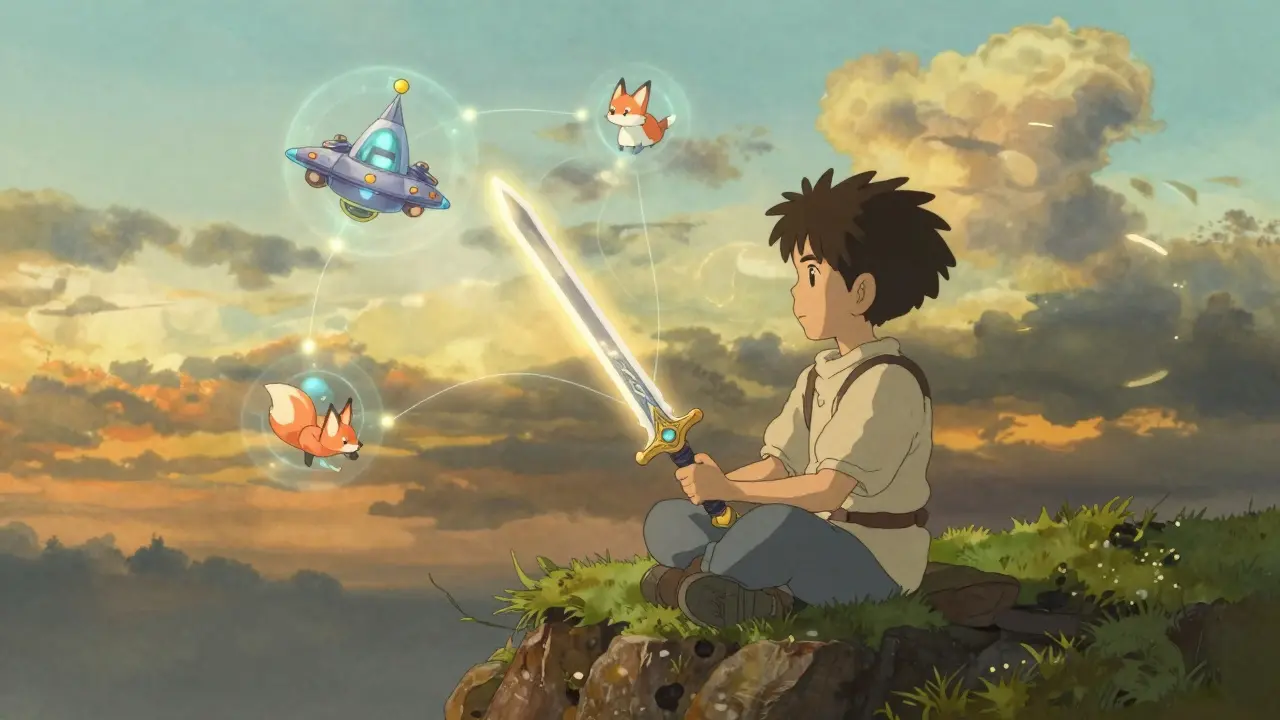
When you beat a boss in a game and walk away with a rare sword, who really owns it? The game company? Or you? For decades, the answer was always the company. But NFTs are changing that. In 2026, NFT gaming isn’t about hype anymore-it’s about whether players can actually keep what they earn, trade it across games, and make real value from their time. And that’s where things get interesting.
What NFTs Actually Do in Games
NFTs in gaming aren’t just digital stickers. They’re unique, verifiable digital items stored on a blockchain. That means if you buy a dragon skin in one game, you own it-not the publisher. You can sell it. Trade it. Use it in another game-if the developers allow it. This isn’t theory. Games like Axie Infinity, Splinterlands, and Alien Worlds have been running this model since 2021. Players earn tokens and NFTs by playing, then trade them on open marketplaces. Some have made thousands of dollars. Others lost everything when the market crashed.
The big shift? NFTs turn players into stakeholders. Instead of paying $70 for a game and never owning anything inside it, you’re investing in assets that can grow or lose value. It’s like buying a limited-edition sneaker-but it’s a sword, a spaceship, or a plot of virtual land. And unlike traditional games, where items are locked behind servers, NFTs live on public ledgers. No company can delete them. No server shutdown can erase your collection.
Why Play-to-Earn Failed (and What’s Coming Next)
Play-to-earn was the big promise. Play more, earn more, live off your gaming income. Sounds great-until you realize most players weren’t earning enough to pay rent. Axie Infinity’s economy collapsed in 2022 because too many new players flooded in, the token supply exploded, and the value of in-game assets tanked. The model relied on new players joining to pay old ones. When new players stopped coming, the whole thing fell apart.
By 2025, the industry learned the hard way: gamers don’t want to work for crypto. They want to have fun. A late-2024 survey showed over 50% of game developers felt the NFT gaming market was stagnant or declining. Why? Because too many studios focused on monetization instead of gameplay. Players noticed. They walked away.
Now, the smart developers are changing course. They’re not asking you to grind for tokens. They’re asking you to play. NFTs are being woven into the fabric of the game-not forced on top of it. Think of it like this: in a traditional RPG, you find a legendary weapon. In an NFT game, that weapon is yours forever. You can keep it, sell it, or even rent it out to other players. The game doesn’t need to pay you to play-it just gives you something real to hold onto.
Cross-Game Assets: The Real Game-Changer
The most exciting part of NFT gaming isn’t owning something-it’s using it everywhere. Imagine buying a helmet in one game, then walking into a totally different game and wearing it there. No re-buying. No re-earning. Just carrying your identity with you. That’s the dream of cross-game interoperability.
Right now, it’s rare. Most NFTs are locked to one game. But a few studios are testing it. A new project called RealmBridge launched in late 2024, letting players transfer NFT weapons between three indie games built on the same blockchain. It’s small, but it’s proof of concept. If this scales, it could change everything. Your rare armor from a fantasy RPG could become a prized outfit in a sci-fi shooter. Your virtual pet from a farming sim could become a companion in a racing game.
That’s not just convenient-it’s powerful. It turns your game library into a personal digital collection. And that’s something no game company can take away. Players are starting to care more about their digital identity than their high score.
Mobile Is Where the Players Are
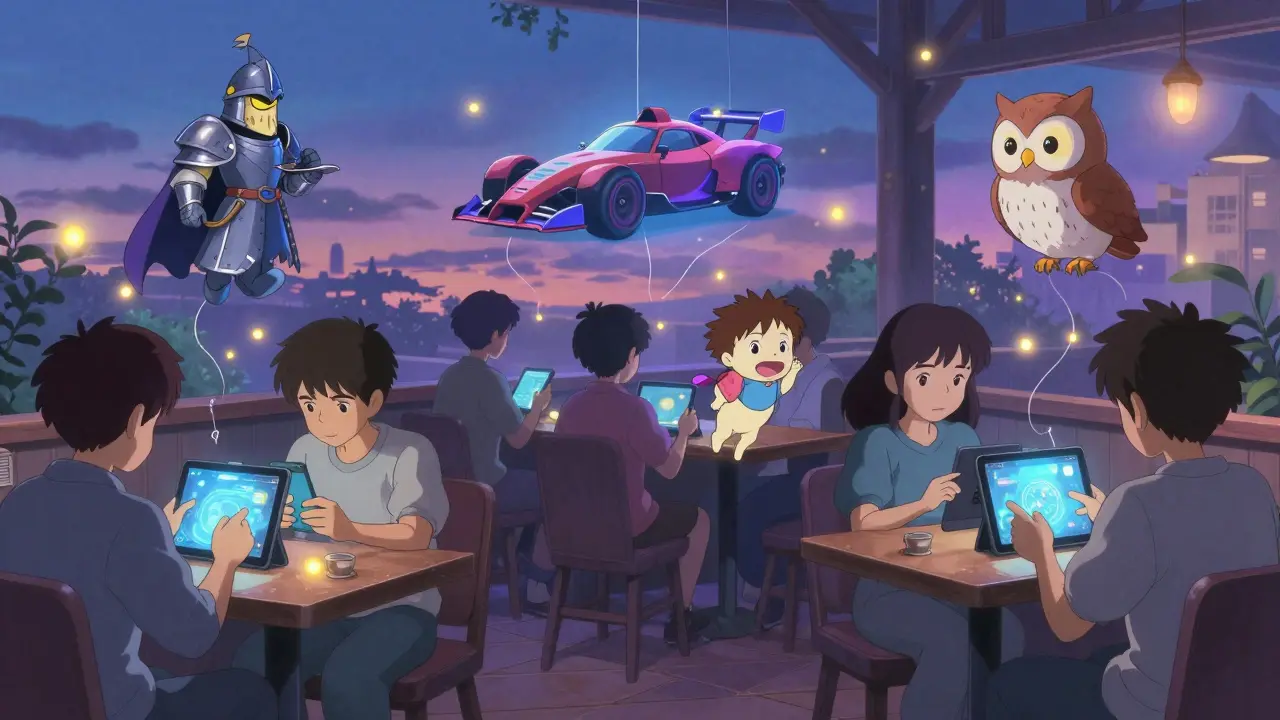
Half of all gamers play on mobile. Yet most NFT games are still built for PCs and consoles. That’s a mismatch. In 2026, the winners will be the ones who make blockchain gaming work on phones.
Companies are finally catching on. New tools let players create wallets with a single tap-no private keys, no seed phrases. Apps like MetaverseGo simplify the process so you don’t need to be a crypto expert to join. Mobile games like Pixel Heroes and ChainRacers now let you earn NFTs by playing 10-minute sessions during your commute. The goal isn’t to turn your phone into a mining rig-it’s to make ownership as easy as unlocking a new skin in Fortnite.
And it’s working. Mobile NFT game downloads grew 89% in 2025. The barrier to entry is dropping. The real challenge? Making the experience smooth. If your wallet takes three screens to open, or a transaction takes 12 seconds, you’ll lose players faster than a laggy match in Call of Duty.
AI and the Personalized NFT Economy
AI isn’t just changing how games look-it’s changing how they earn. In 2026, NFTs are becoming dynamic. Instead of a static sword, you might get one that evolves based on how you play. AI tracks your style-do you favor stealth? Aggression? Teamwork?-and adjusts your gear’s stats, appearance, or even rarity over time.
Imagine a sword that starts as common, but after 50 hours of playing as a healer, it transforms into a rare healing blade with unique abilities. That’s not just an NFT-it’s a personalized artifact. And because it’s on the blockchain, you own it forever, even if you switch games.
AI is also helping studios personalize rewards. Instead of giving everyone the same rare item after 100 quests, the game gives you something that matches your playstyle. This keeps players engaged longer. It also makes NFTs feel more valuable because they’re not just random drops-they’re tailored to you.
Why This Still Feels Risky
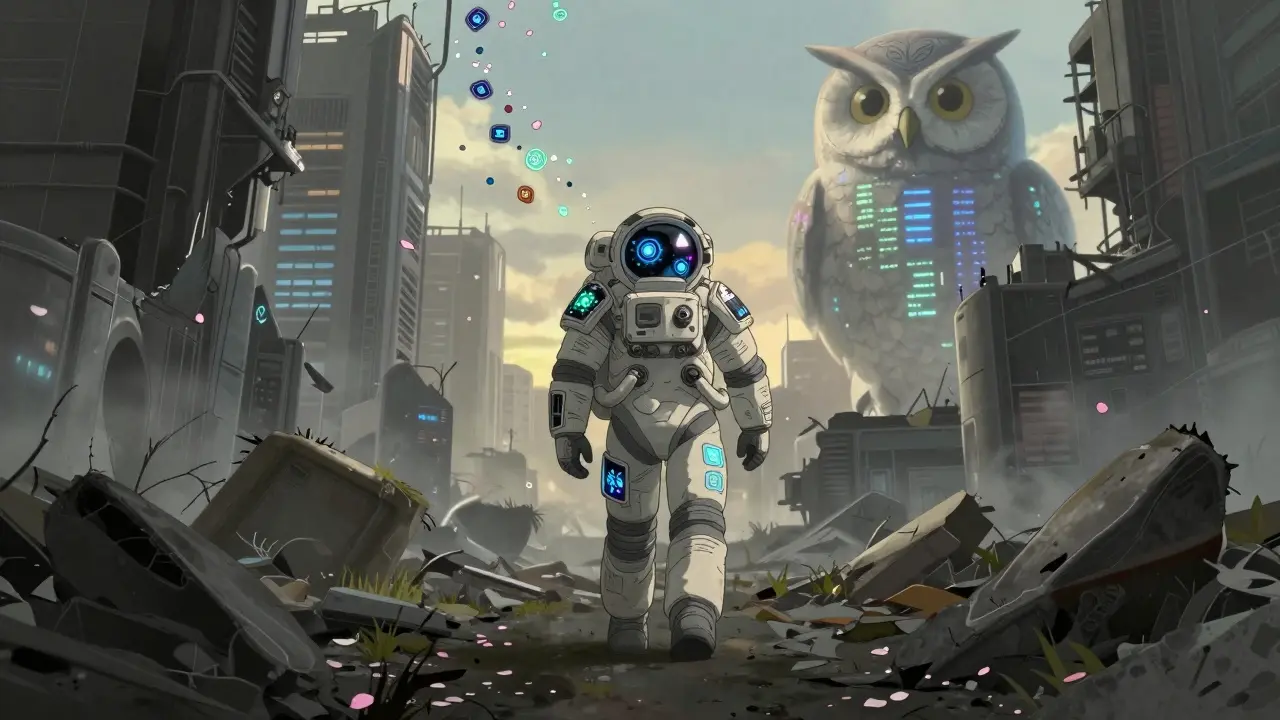
Let’s be honest: NFT gaming still feels like a gamble. Prices swing wildly. A dragon NFT might be worth $500 today and $50 next month. Regulatory uncertainty looms. Some countries are cracking down on crypto-based rewards. And let’s not forget the environmental concerns-though newer blockchains like Polygon and Solana use 99% less energy than Bitcoin, the stigma sticks.
Security is another worry. Smart contracts can have bugs. Wallets can be hacked. And if you lose your private key? That rare item? Gone forever. No customer service can help you. You’re on your own.
Plus, many gamers still see NFTs as a money grab. They remember the scams, the pump-and-dump schemes, the games that felt like casinos with graphics. That reputation won’t vanish overnight. Trust has to be earned, not bought.
What Success Looks Like in 2026
Successful NFT games in 2026 don’t scream “BUY NFTS.” They whisper: “Here’s something yours.”
They prioritize fun first. NFTs second. They make ownership simple. They let you trade without a PhD in blockchain. They build communities that last beyond the next price spike. And they’re not afraid to say no to bad ideas-like forcing players to pay to unlock basic content.
Look at Star Atlas. It’s not the biggest game. But it’s one of the few where the NFTs feel like part of the story. Your ship isn’t just an asset-it’s your identity in a dying galaxy. You fight for it. You upgrade it. You name it. That’s the difference.
The future of NFTs in gaming isn’t about turning every player into a trader. It’s about giving players real control over their digital lives. It’s about letting you keep what you earn, take it with you, and show it off-not just in one game, but across the whole digital world.
That’s not just a new business model. It’s a new kind of gaming.
Will NFTs Survive in Gaming? Yes-But Only If They Stop Trying to Be Crypto
The biggest mistake NFT gaming made was pretending it was a financial product. It’s not. It’s a game. And games succeed when they’re fun, immersive, and meaningful.
The players who stick around in 2026 aren’t the ones chasing quick profits. They’re the ones who love the world, the story, the challenge. The NFTs? They’re just the proof that their time mattered.
If developers keep building games first-and let NFTs enhance, not drive, the experience-then this isn’t a bubble. It’s a quiet revolution.


Write a comment
Your email address will be restricted to us