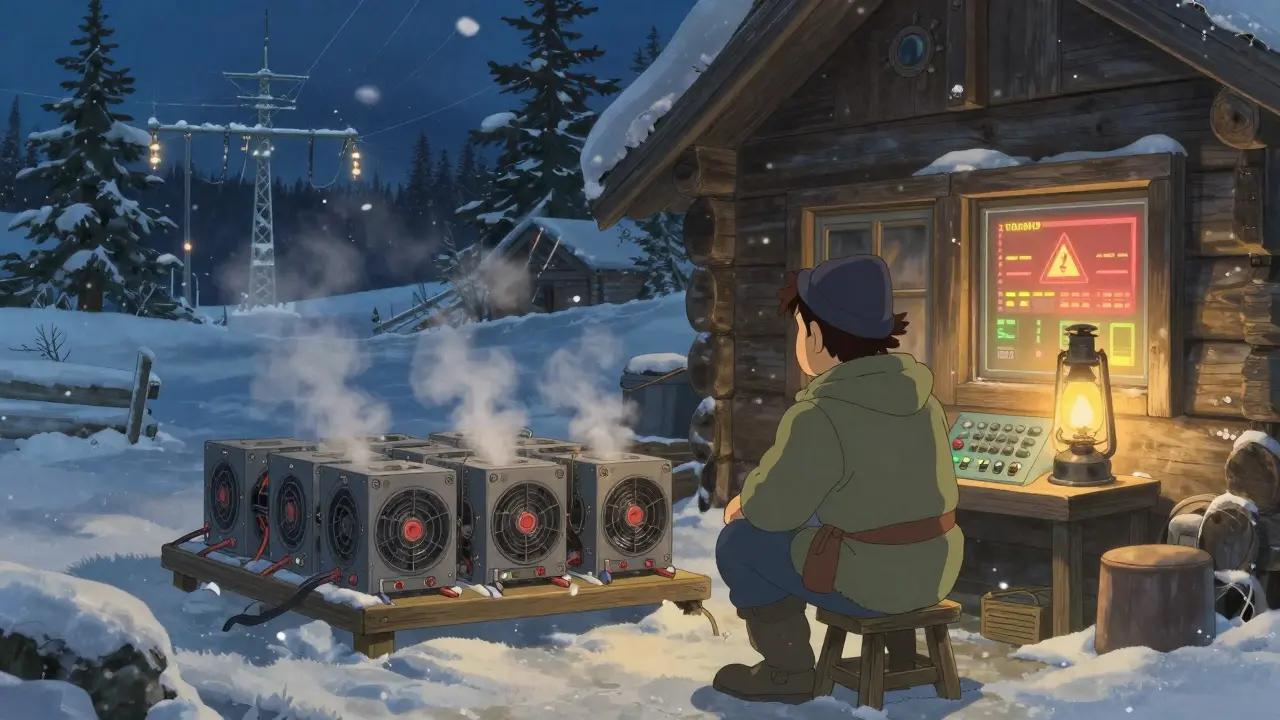
Bitcoin mining in Russia isn’t illegal anymore-but it’s far from free. Since January 1, 2025, the government has turned mining from a gray-market activity into a tightly controlled operation. If you’re thinking about setting up a rig in Russia, you need to know the rules-or risk fines, equipment seizures, or a sudden power cut.
What’s Legal and What’s Not
You can legally mine cryptocurrency in Russia, but only if you follow the rules. The government passed major laws in August and October 2024, and they took full effect on January 1, 2025. Mining itself is now recognized as a legal economic activity. But here’s the catch: you must register your equipment with the state. If you don’t, you’re breaking the law.Individuals using less than 6,000 kWh per month don’t need to register. That’s about the power used by a small farm of 5-7 ASIC miners running 24/7. But if you’re running more than that-whether as a hobbyist or a business-you’re required to enter the national miners’ registry. And if you skip this step? You’re looking at fines between 200,000 and 2 million rubles ($2,500-$25,500).
It’s not just about registration. All imported mining hardware must be labeled and certified. The government tracks every machine through a national database. That means they know exactly where your rig is, how much power it’s using, and when it’s running. If they decide to shut it off, they can do it remotely-no warning, no appeal.
Where You Can’t Mine at All
Russia doesn’t treat all regions the same. Ten regions have a complete, multi-year ban on mining. These include Dagestan, Chechnya, Ingushetia, Kabardino-Balkaria, Karachay-Cherkessia, North Ossetia, and the occupied territories of Donetsk, Lugansk, Zaporizhzhia, and Kherson. The ban runs through March 15, 2031. That’s not temporary. That’s a six-year freeze.Why these places? Energy shortages. These regions already struggle to keep lights on in homes and hospitals. The government decided mining rigs were a luxury they couldn’t afford. Even if you moved your equipment there illegally, you’d be cutting power from schools and clinics. And they’ll find you.
Seasonal Bans in Siberia
Three Siberian regions-Irkutsk, Buryatia, and Zabaikalsky-face seasonal restrictions. From November 15 to March 15 each year, mining is banned. That’s because winter is when electricity demand spikes. Heating homes, running public services, and keeping the grid stable comes first. Mining doesn’t make the cut.In 2025, the ban ran from January 1 to March 15. But starting in 2026, it’s locked in as a full four-month window. If you’re planning to mine in Siberia, you’ll need to shut down for four months every year. That cuts your annual profits by nearly a third. Some miners moved equipment to warmer regions during winter. Others just waited it out.
Power Comes First
This is the most important thing to understand: mining is the lowest priority on Russia’s power grid. You’re a “fourth category” consumer. That means when the grid gets overloaded, your miners get turned off before hospitals, schools, or even streetlights.The system works in real time. If there’s a cold snap in Moscow or a surge in demand in St. Petersburg, authorities can remotely cut power to thousands of mining rigs at once. No notice. No compensation. Just a blackout. Some operators installed backup generators. But diesel is expensive, and the government monitors fuel use too. Most don’t bother.
There’s no appeal process. You can’t argue that your rig is essential. You’re not essential. The state has full control.
Taxes and Reporting
If you make money mining, you pay taxes. Russia introduced a 15% profit tax on Bitcoin mining in November 2024. That applies to businesses and individuals who exceed the 6,000 kWh threshold. You must report earnings to the Federal Tax Service. And yes, they’re auditing.Only about 30% of miners registered by mid-2025. That means 7 out of 10 are operating illegally. The government knows this. Deputy Finance Minister Ivan Chebeskov said at the 2025 St. Petersburg Forum that “another two-thirds need to be cleaned up.” Expect more raids, more fines, and more pressure to register.
Even if you’re not mining at scale, you still have to report any crypto sales over 600,000 rubles ($7,500). The ruble is the only legal tender. You can’t use Bitcoin to buy groceries, pay rent, or hire a plumber. You can own it. You can mine it. But you can’t spend it.
Why the Crackdown?
Russia didn’t ban mining because it hates crypto. It banned unregulated mining because it was eating up power.After the 2024 laws opened the door to legal mining, demand for industrial-grade equipment tripled. Mines popped up in warehouses, abandoned factories, and even underground bunkers. But the grid wasn’t built for this. In some regions, electricity prices dropped so low that miners got subsidized power-while schools couldn’t afford heating.
The government’s goal? Control. They want to tax mining. They want to track it. They want to shut it off when needed. They don’t want it to destabilize the energy system or undermine the ruble.
It’s not about banning crypto. It’s about keeping it in a cage.
Who’s Still Mining?
Despite the restrictions, mining is still happening. Big players with industrial-scale operations are registering. They have lawyers, backup power, and contracts with regional energy providers. They accept the seasonal bans and remote shutdowns as part of doing business.Some miners moved to regions without bans-like Omsk, Krasnoyarsk, or even parts of the Urals. Others partnered with state-owned energy companies to get priority access during peak hours. A few even started building their own small hydro or wind plants to avoid grid dependence.
But for the average person? It’s getting harder. The cost of compliance-registration, certification, taxes, legal fees-is now higher than the profit margin for small rigs. Many have shut down. Others are waiting to see if the rules loosen.

What Happens If You Get Caught?
If you’re mining without registration and get caught, here’s what you can expect:- First offense: Fine of 200,000-500,000 rubles ($2,500-$6,400)
- Repeat offense: Fine up to 2 million rubles ($25,500)
- Equipment seizure: Authorities can confiscate your miners, power supplies, and cooling systems
- Remote shutdown: Your rig will be turned off immediately, even if you’re not home
- Account freeze: If you use Russian banks, your accounts could be frozen for suspicious transactions
There’s no jail time-for now. But the government is considering criminal charges for repeat offenders. And if you’re caught mining in a banned region? The penalties are doubled.
Is It Worth It?
If you’re a hobbyist with a few rigs and low power use? You can probably fly under the radar. But if you’re serious about scaling up, you need to play by the rules-or leave.The market still has potential. Russia has cheap electricity in some areas. It has cold winters that reduce cooling costs. And it has a government that’s finally treating mining as an industry, not a crime.
But the risks are real. Power cuts. Fines. Seizures. Bans. The rules could get stricter anytime. The government is already talking about raising fines from 200,000 to 2 million rubles across the board. They’re also testing AI systems to detect mining activity through power usage patterns.
Don’t think of mining in Russia as a get-rich-quick scheme. Think of it as a high-risk business with heavy regulation. Only those who plan for the restrictions can survive.
Future Outlook
The current rules run through March 2031. That’s six years of certainty. But that doesn’t mean they won’t change. The government is still working on new tools to track miners-like mandatory smart meters for mining equipment and mandatory reporting of electricity consumption every hour.Some experts believe Russia will eventually allow crypto payments, but only after a digital ruble is fully rolled out. Others think mining will be fully nationalized-controlled by state-owned energy firms.
One thing is clear: mining in Russia isn’t about freedom. It’s about control. And if you want to mine there, you’ll have to accept that.
Is cryptocurrency mining legal in Russia in 2026?
Yes, but only if you register your equipment with the state and follow the rules. Unregistered mining is illegal and carries heavy fines. Individuals using under 6,000 kWh per month are exempt from registration, but still subject to power shutdowns and regional bans.
Can I mine crypto in Siberia year-round?
No. Mining is banned in Irkutsk, Buryatia, and Zabaikalsky from November 15 to March 15 every year due to winter energy demand. This rule is locked in through at least 2031. You can mine during the other eight months, but not during peak winter.
What happens if my mining rig gets shut off remotely?
Nothing you can do. The government has the right to cut power to mining equipment anytime during high-demand periods. There’s no warning, no compensation, and no appeal. Your equipment will simply stop working. You’ll need to plan for downtime in your profit calculations.
Do I need to pay taxes on crypto mining profits in Russia?
Yes. A 15% tax applies to mining profits for businesses and individuals using more than 6,000 kWh per month. You must report earnings to the Federal Tax Service. Failure to do so can lead to audits, fines, or account freezes.
Can I use Bitcoin to pay for things in Russia?
No. Using cryptocurrency to pay for goods or services is illegal in Russia. The ruble is the only legal tender. You can own, mine, and trade crypto-but you can’t spend it in stores, restaurants, or online shops.
Are there any regions where mining is completely banned?
Yes. Ten regions, including Chechnya, Dagestan, and the occupied territories of Donetsk, Lugansk, Zaporizhzhia, and Kherson, have a complete ban on mining through March 15, 2031. Mining there is illegal regardless of registration status.
How do Russian authorities track mining equipment?
All imported mining hardware must be labeled and registered in a national database. Authorities use power consumption data, equipment serial numbers, and location tracking to identify unregistered rigs. Some regions use AI to detect mining patterns in electricity usage.
Can I avoid fines by turning off my miners during inspections?
No. The government tracks your equipment’s power usage continuously. Even if you turn it off when inspectors arrive, the historical data shows usage spikes consistent with mining. You’ll still be fined. The system doesn’t rely on surprise raids-it relies on data.







Write a comment
Your email address will be restricted to us