
Since early 2025, Australian crypto exchanges have stopped listing privacy coins like Monero, a cryptocurrency designed with advanced privacy features that obscure transaction details, Zcash, a digital currency using zero-knowledge proofs to hide sender, receiver, and amount, and Dash, a coin that offers optional private transactions through its PrivateSend feature. This isn’t a sudden law change - it’s the result of years of regulatory pressure, compliance demands, and global market shifts. If you’re in Australia and you want to trade these coins, you’ll find it nearly impossible on any major local exchange. But here’s the twist: you can still own them. You just can’t easily buy or sell them through regulated platforms.
Why Privacy Coins Got Banned
Privacy coins aren’t illegal in Australia. But they’re a nightmare for regulators. Unlike Bitcoin, where every transaction is visible on a public ledger, privacy coins use techniques like ring signatures, stealth addresses, and zero-knowledge proofs to hide who sent what, to whom, and how much. That’s great for personal privacy. It’s a disaster for anti-money laundering (AML) checks.
The Australian Transaction Reports and Analysis Centre (AUSTRAC) - the country’s financial intelligence unit - says these features make it impossible to trace criminal activity. Drug trafficking, ransomware payments, and tax evasion become harder to detect when no one can see the flow of money. In 2025, AUSTRAC started demanding that all digital asset exchanges prove they could monitor every transaction. Privacy coins? They couldn’t. So exchanges had to choose: remove them or lose their license.
It wasn’t just Australia. Global exchanges followed suit. Binance delisted Monero, Zcash, and Dash from its US and European platforms in February 2025. Kraken pulled them from Canada in March. Poloniex axed Monero globally in April after pressure from the U.S. Treasury Department. By the end of 2025, 73 exchanges worldwide had dropped privacy coins - up from just 51 in 2023. Australia’s move wasn’t unique. It was part of a global purge.
Who’s Behind the Ban
The two agencies driving this are ASIC, the Australian Securities and Investments Commission, which regulates financial products and services and AUSTRAC, which oversees anti-money laundering and counter-terrorism financing rules. ASIC doesn’t ban coins directly - it goes after exchanges that offer unlicensed financial services. In 2022, ASIC shut down Holon Investments for selling unregulated crypto funds. In 2024, it took legal action against Qoin and Finder Wallet for similar reasons.
AUSTRAC is the real enforcer. It can cancel an exchange’s registration if it fails compliance checks. In 2024, it suspended two exchanges for insolvency and failure to report suspicious transactions. Now, with new rules taking effect on March 31, 2026, AUSTRAC will regulate every single digital asset service provider - including wallet providers, crypto ATMs, and peer-to-peer platforms. That means no more gray areas.
Big institutional investors helped push this along. IDAX, Australia’s Independent Digital Assets Exchange, found that 78% of its institutional clients wanted privacy coins removed. Banks, hedge funds, and pension managers don’t want to touch assets they can’t audit. For them, privacy coins are too risky - not because they’re shady, but because they’re untraceable.
What This Means for You
If you’re an individual investor in Australia, you’re caught in the middle. You can still hold privacy coins if you bought them before the ban or acquired them overseas. But if you want to buy more, you’re stuck. Local exchanges like CoinSpot, Swyftx, and Independent Reserve no longer list them. You can’t trade them. You can’t deposit them. You can’t withdraw them.
Some users turned to peer-to-peer (P2P) platforms like LocalMonero. Activity there rose 19% after centralized exchanges dropped privacy coins. But P2P trading comes with its own dangers. You’re dealing with strangers. You could get scammed. You could pay too much. You could be targeted by fraudsters. And if you’re caught using a P2P platform to move large amounts, AUSTRAC might flag you anyway - even if you didn’t break any laws.
Others went overseas. Some Australians use Binance or Kraken from other countries. But that’s risky. If you’re an Australian resident, you’re still subject to Australian tax and reporting rules. The ATO (Australian Tax Office) doesn’t care where you bought your Monero - if you sold it, you owe capital gains tax. And if you’re caught using an unregulated platform, you could face penalties for failing to report transactions.

How It Compares Globally
Australia’s approach is middle-of-the-road. It’s not as strict as Japan, which banned privacy coins outright in 2018. It’s not as loose as Switzerland, where some exchanges still offer Monero under strict KYC rules. And it’s not as extreme as Dubai, which completely banned privacy coin trading.
The EU is coming. Starting July 2027, the bloc will ban all anonymous crypto accounts and privacy coins under its new AML regulation. The U.S. hasn’t banned them yet, but the IRS has offered $625,000 in bounties to anyone who can crack Monero’s privacy protocol. That’s how serious they are.
Most global exchanges have already pulled privacy coins. Bittrex, Huobi, and Kraken removed them from all their platforms - not just in Australia. That means even if you tried to access them from abroad, you’d likely hit the same wall.
The Technical Side: Why It’s So Hard to Track
Monero doesn’t just hide your address. It hides everything. Ring signatures mix your transaction with dozens of others, making it impossible to say which one is yours. Stealth addresses generate a new one for every payment, so you can’t link past transactions. Zero-knowledge proofs in Zcash prove a transaction is valid without revealing any details. These aren’t bugs - they’re features. And they’re built into the core of the protocol.
That’s why exchanges can’t just "add a filter" or "scan for red flags." There’s nothing to scan. No transaction history. No public ledger. No wallet addresses you can trace. Regulators can’t audit what they can’t see. And if they can’t audit it, they can’t comply with international banking standards. So they cut it out.
What’s Next?
March 31, 2026, is the turning point. That’s when AUSTRAC’s expanded powers kick in. Suddenly, every digital asset provider - even small P2P apps - will need to register and comply. That could shut down the last loopholes.
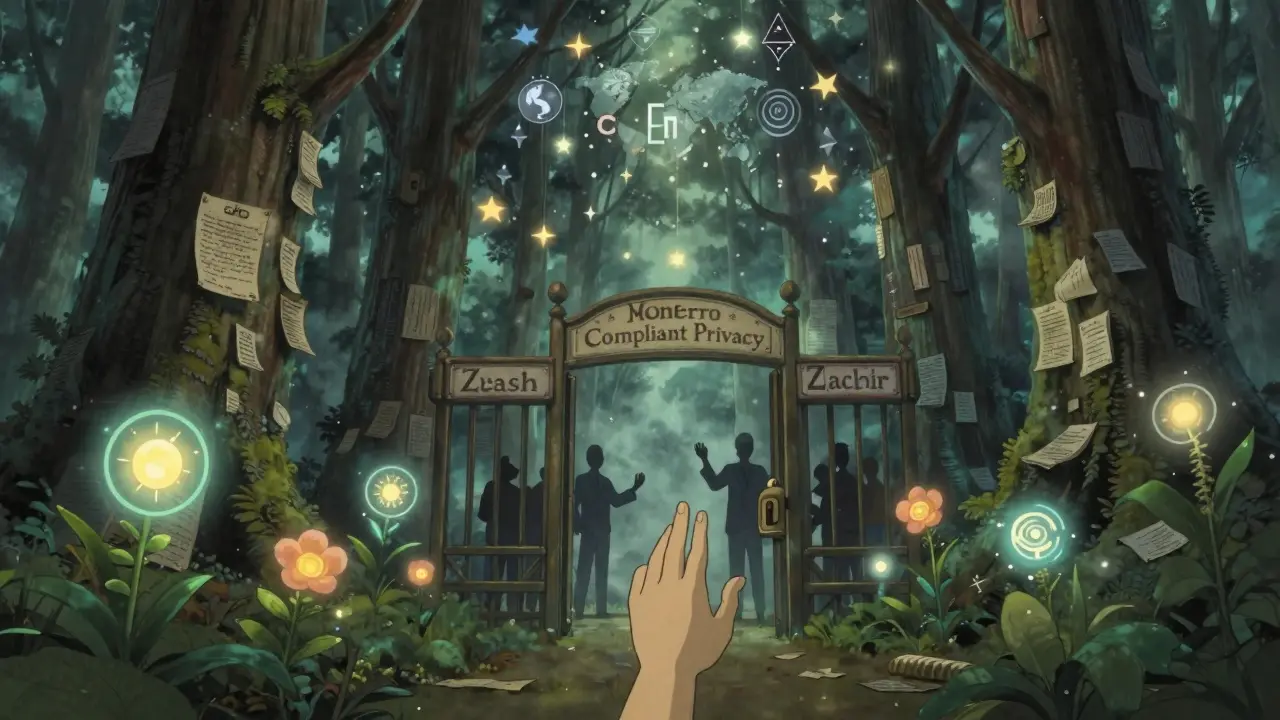
Some experts think privacy coins will adapt. Maybe they’ll build in "compliant privacy" - allowing regulators to view transactions with a key. But that defeats the whole point. If you can trace it, it’s not private. And users who want anonymity won’t use it.
Others believe the ban will backfire. With fewer legal options, more Australians might turn to decentralized exchanges, mixers, or even darknet markets. That could make the problem worse - not better.
For now, the message is clear: if you want to trade privacy coins in Australia, you’re on your own. The regulated system won’t help you. The law won’t protect you. And the government won’t stop watching.
Frequently Asked Questions
Can I still own Monero or Zcash in Australia?
Yes. Owning privacy coins is not illegal in Australia. You can hold them in your personal wallet. But you can’t buy, sell, or trade them on any licensed Australian exchange. If you already own them, you can keep them - but you won’t be able to convert them to AUD or other cryptocurrencies through local platforms.
Why did exchanges remove privacy coins if they’re not banned by law?
Exchanges don’t want to risk their licenses. AUSTRAC requires them to monitor every transaction for money laundering. Privacy coins make that impossible. If an exchange lists them and gets caught, it could lose its registration, face fines, or even be shut down. So they removed them to stay compliant - not because the law forced them, but because the cost of keeping them was too high.
Can I use a non-Australian exchange to trade privacy coins?
Technically, yes. But it’s risky. If you’re an Australian resident, you’re still required to report crypto transactions to the ATO. Using an offshore exchange doesn’t exempt you from tax or reporting rules. Plus, many international platforms are now delisting privacy coins too. And if you’re caught moving large amounts through unregulated channels, AUSTRAC may investigate you for potential money laundering.
Are there any privacy coins still available on Australian exchanges?
No. All major Australian exchanges - including CoinSpot, Swyftx, Independent Reserve, and Digital Surge - have removed Monero, Zcash, Dash, and other privacy-focused coins. Even if you see one listed, it’s likely outdated or fake. Check the exchange’s official announcement - all have confirmed removals since early 2025.
What happens if I use a P2P platform to buy Monero?
You won’t be arrested for buying Monero on a P2P platform. But you lose all protections. There’s no dispute resolution. No chargebacks. No consumer safeguards. And if you’re trading large sums, AUSTRAC might flag your bank account for unusual activity. You also risk scams - many fake sellers target users desperate for privacy coins. It’s legal, but not safe.







Write a comment
Your email address will be restricted to us