
Blockchain isn’t just about Bitcoin anymore. In 2026, the real story isn’t price charts or meme coins-it’s how blockchain is becoming a tool for sustainable blockchain practices that cut waste, verify ethics, and shrink carbon footprints. Forget the image of mining rigs guzzling electricity. The future of blockchain is quiet, efficient, and deeply tied to real-world environmental and social impact.
Why Sustainability Matters in Blockchain
Early blockchain networks, especially those using proof-of-work (PoW), were energy hogs. Bitcoin’s annual electricity use once rivaled small countries. That’s no longer the norm. By 2026, over 85% of active blockchain networks have switched away from PoW. The shift wasn’t just about public pressure-it was about survival. Companies couldn’t risk being labeled greenwashers when their tech used more power than a small city. The result? A clean, scalable, and verifiable infrastructure is now possible.The difference is staggering. Proof-of-stake (PoS) cuts energy use by 99.95% compared to PoW. That’s not a small tweak. It’s a complete redesign. Networks like Ethereum, Algorand, and Solana now run on far less power than a single data center. And they’re not slowing down-they’re speeding up. Solana processes over 50,000 transactions per second using renewable energy sources. That’s faster than Visa, with a fraction of the environmental cost.
How Sustainable Consensus Works
Not all blockchains are built the same. Here’s what’s actually driving sustainability today:- Proof-of-Stake (PoS): Validators are chosen based on how much crypto they “stake” as collateral. No mining rigs. No massive power draws. Just economic incentives to stay honest.
- Delegated Proof-of-Stake (DPoS): Token holders vote for a small group of validators. It’s faster and even more energy-efficient, used by networks like EOS and Tezos.
- Proof-of-Authority (PoA): Trusted entities validate transactions. Common in private and enterprise blockchains, it’s zero-energy at scale because only pre-approved nodes participate.
These aren’t theoretical. Algorand runs on a pure PoS model and claims zero carbon emissions by automatically offsetting every transaction. Hedera Hashgraph uses a different consensus called hashgraph, which is both fast and power-efficient-used by Google, IBM, and Boeing for enterprise systems. The tech is proven. The question isn’t whether it works-it’s whether your business is using it.
Supply Chains That Don’t Lie
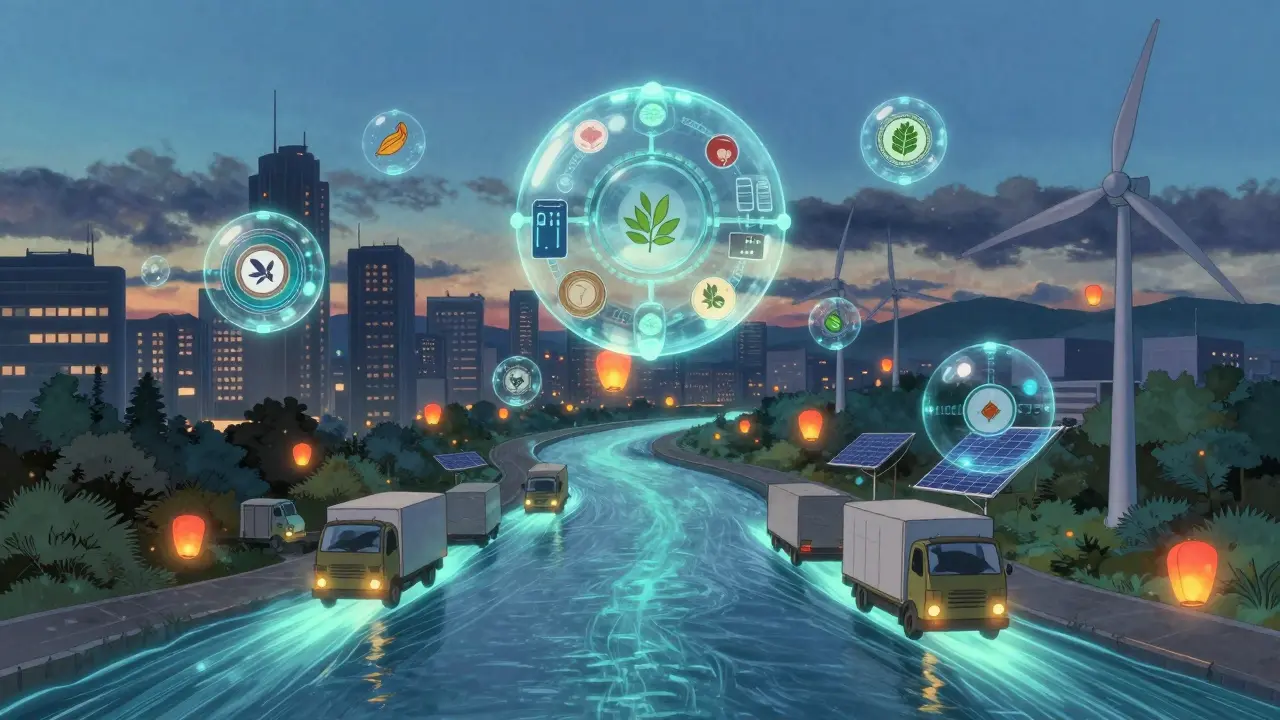
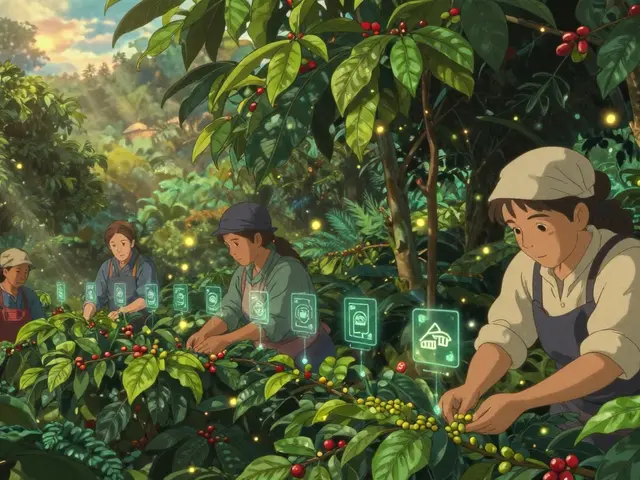
One of the most powerful uses of sustainable blockchain is in supply chains. Think coffee, fashion, or pharmaceuticals. These industries have long struggled with fraud, unethical labor, and hidden pollution. Blockchain changes that.Imagine a coffee bean moving from a farm in Colombia to your cup in Berlin. With blockchain, every step is recorded: who paid the farmer, how much, whether they were paid a living wage, if organic practices were used, how the beans were shipped, and whether the transport used electric vehicles. All of it. And once recorded, it can’t be erased.
Brands like Unilever and Patagonia now use blockchain to prove their claims. A 2025 study by McKinsey found that products with blockchain-verified sustainability labels sold for 7-22% more than similar products without them. Consumers aren’t just buying the product-they’re buying trust. And blockchain is the only tech that can deliver that trust at scale.
It also reduces waste. Retailers using blockchain for inventory tracking cut excess stock by 15-30%. Why? Because they see exactly where goods are, in real time. No more over-ordering. No more rotting products in warehouses. One European food distributor reduced spoilage by 40% in six months just by tracking shipments on-chain.
Tokenizing Nature and Carbon
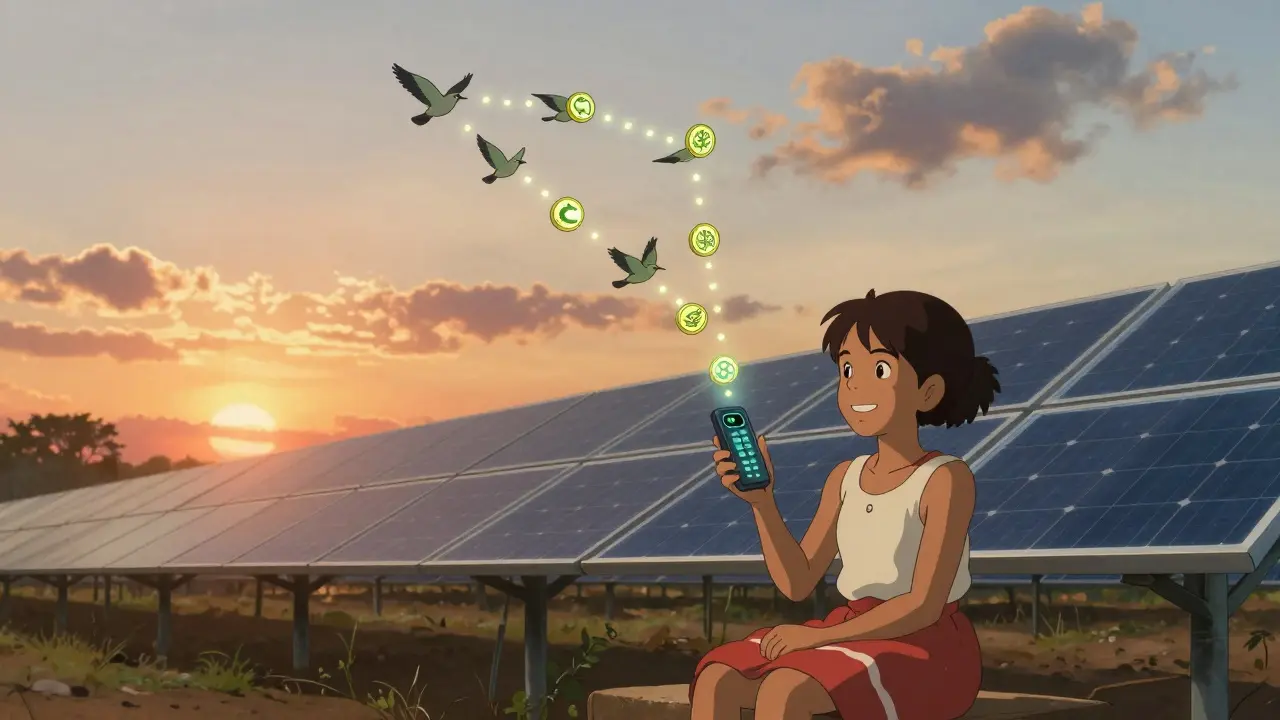
Sustainable blockchain is now turning environmental assets into tradable tokens. Solar panels, wind farms, reforestation projects-they’re being converted into digital tokens that investors can buy, sell, or use to offset emissions.Take a solar farm in rural Kenya. Instead of waiting years to attract traditional investors, the project is tokenized on a blockchain. Each token represents a share of the energy produced. Buyers get returns, and the community gets clean power. The blockchain records every kilowatt-hour generated and every carbon ton avoided. No middlemen. No opaque reporting.
Carbon credits are also going on-chain. Traditional carbon registries are slow, prone to double-counting, and easy to manipulate. New protocols like South Pole’s blockchain-based registry automatically retire a carbon credit the moment a transaction occurs. If a company buys a token to offset its emissions, that credit is permanently removed from circulation. No one can reuse it. No one can fake it.
Cornell University’s blockchain-based carbon verification system has already been adopted by 12 countries and 37 NGOs. It’s not just tech-it’s accountability.
Finance Is Going Green
Traditional finance (TradFi) and decentralized finance (DeFi) are merging in a big way. JPMorgan’s JPM Coin, Citi’s Token Services, and HSBC’s blockchain-based trade finance platforms are all live. These aren’t experiments anymore-they’re core operations.Why? Because blockchain makes cross-border payments faster, cheaper, and more transparent. A payment that used to take 3-5 days now settles in seconds. And because every step is recorded, regulators can audit transactions in real time. That’s a win for compliance and sustainability.
Asset tokenization is growing fast. Real estate, art, even carbon offsets are being split into digital shares. This opens investment to smaller players and increases liquidity. A farmer in Indonesia can now sell a portion of her future crop yield as a token. An investor in Canada buys it. Both benefit. The blockchain ensures the contract is honored. No paperwork. No fraud.
The World Economic Forum calls 2026 the year blockchain became infrastructure-not a novelty. That means governments, banks, and corporations are now building their core systems on these networks. Not because it’s trendy. Because it works.
What You Need to Do Now
If you’re a business leader, investor, or developer, here’s what matters:- Choose PoS, DPoS, or PoA: Avoid any blockchain still using proof-of-work. It’s outdated and unsustainable.
- Start with pilots: Don’t overhaul your whole supply chain overnight. Test blockchain on one product line. Track waste reduction, verification speed, and customer response.
- Verify your sources: Not all “green” blockchains are equal. Look for public energy reports, third-party audits, and transparency dashboards.
- Think interoperability: Your blockchain should talk to others. The future isn’t one chain-it’s many chains working together.
Regulators are catching up. The EU’s MiCA law, the U.S. SEC’s clarity on digital assets, and Singapore’s blockchain-friendly policies mean businesses can now operate with confidence. Tax authorities are tracking crypto transactions too-PwC reports that 90% of major jurisdictions now require blockchain-based reporting for crypto-related income.
The Bottom Line
Sustainable blockchain isn’t about saving the planet with tech magic. It’s about using technology to make systems honest, efficient, and transparent. It’s about proving your supply chain isn’t lying. It’s about giving farmers a fair shot. It’s about cutting waste so we don’t need to produce so much.The old model-energy-intensive, opaque, slow-is gone. The new one is quiet, verifiable, and built to last. And it’s already here.
Is blockchain really sustainable now?
Yes, but only if it’s built on energy-efficient consensus like proof-of-stake (PoS), delegated PoS, or proof-of-authority. Networks still using proof-of-work (like Bitcoin) are not sustainable. As of 2026, over 85% of active blockchains have switched to low-energy models. Ethereum, Algorand, Solana, and Hedera are all verified as sustainable.
Can blockchain help fight climate change?
Absolutely. Beyond reducing its own energy use, blockchain enables carbon credit tokenization, renewable energy trading, and transparent supply chains that cut emissions. For example, a blockchain-based carbon registry in Colombia reduced fraud by 92% and sped up credit verification from 18 months to 3 weeks. It’s not a silver bullet-but it’s a powerful tool for accountability.
Do I need to be a tech expert to use sustainable blockchain?
No. Most businesses use blockchain through third-party platforms or software integrations. For example, a fashion brand can plug into a blockchain supply chain tool like VeChain or IBM Food Trust without writing a single line of code. The tech handles the complexity. Your job is to choose the right partner and define what you want to track-ethics, emissions, or efficiency.
Are sustainable blockchains secure?
Yes, and often more secure than traditional systems. Proof-of-stake networks rely on economic incentives rather than brute-force computing. Attacking them is expensive and pointless-validators lose their staked funds if they cheat. Plus, immutable records mean tampering is impossible. The UNDP found that blockchain-based land registries in Ghana reduced land fraud by 76% in two years.
What’s the biggest barrier to adoption?
Lack of clarity. Many companies still think blockchain = Bitcoin = energy waste. They don’t realize most modern blockchains are clean. The real barrier is education and trust. Start small: run a pilot with one supplier or one product. Measure the results. Then scale. The tech is ready. The question is whether you are.







Write a comment
Your email address will be restricted to us