
When you hear the name Bgogo, you might think of another flashy crypto exchange trying to steal your attention with promises of free tokens and high rewards. But Bgogo isn’t just another platform. Launched in July 2018, it was built on a radical idea: let the community decide what coins get listed - and get paid for it. That idea, called the supernode system, still sets Bgogo apart today. But here’s the real question: is it still working in 2026?
How Bgogo’s Supernode System Actually Works
Most crypto exchanges list coins based on internal decisions or paid listings. Bgogo flipped that model. Instead of a boardroom deciding what tokens go live, each supernode holder gets to pick one coin to list. And it’s not just a vote - it’s a financial incentive. Every time someone trades that coin, the supernode holder gets 20% of the trading fee, forever. That’s not a bonus. That’s a lifetime income stream tied directly to the success of the asset they chose.And here’s the kicker: Bgogo publishes the full list of supernode holders and how many BGG tokens they own. You can go to their website right now and see who holds the most, how much they own, and which coins they listed. No other exchange does this. Not Binance. Not Kraken. Not Coinbase. Transparency like this isn’t just nice - it’s rare. It turns users into stakeholders and stakeholders into watchdogs.
The BGG Token: More Than Just a Utility Coin
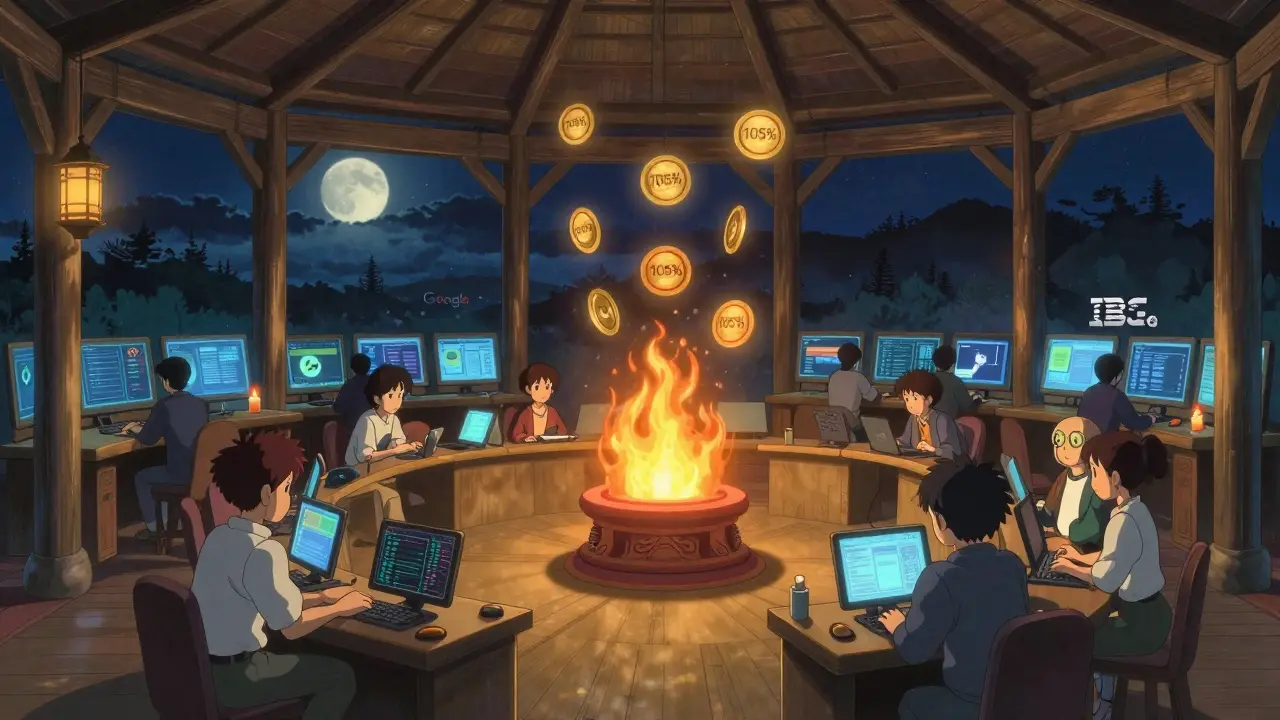
The BGG token isn’t just a way to pay fees. It’s the engine that drives the whole system. Every time you trade on Bgogo - whether you buy Bitcoin, Ethereum, or some obscure altcoin - you get back 105% of your trading fee in BGG tokens within 30 minutes. That means if you pay $1 in fees, you get $1.05 worth of BGG back. Effectively, you’re getting paid to trade.That’s not a gimmick. It’s a deflationary loop. Bgogo uses 100% of its daily trading commissions to buy back BGG tokens from the open market and sends them to a public burn address. That means the total supply of BGG goes down every day. Fewer tokens in circulation, more demand from traders getting paid to trade - that’s the math. And because the token is backed by real trading volume, not hype, it’s built on something real.
Who Backed Bgogo? Pantera Capital and a Pro Team
Bgogo didn’t launch with a TikTok ad campaign. It had serious backing. Pantera Capital, one of the earliest and most respected blockchain investment firms, put money into Bgogo early on. That’s not just a stamp of approval - it’s a signal that professional investors saw something in the model. The team behind the platform includes engineers who worked at Google, Facebook, Twitter, and IBM. That’s not a list of buzzwords. That’s real experience building systems that handle billions of transactions daily.They didn’t just build a trading interface. They built a backend that can handle high-frequency trading, real-time order matching, and secure wallet management. The mobile app, available on Android via Aptoide, lets you deposit, withdraw, track holdings, and even participate in platform events - all from your phone. The fact that they’ve maintained a functional app for over seven years, with regular updates, says something about their commitment.
Where’s the Community? Telegram, WeChat, Reddit
Bgogo never relied on mainstream marketing. Instead, they built communities in places where crypto traders actually live: Telegram groups in English, Korean, and Chinese; WeChat; KakaoTalk; Reddit; Twitter; and Medium. These aren’t just promotional channels - they’re active spaces where users ask questions, report issues, and share trading strategies. The platform even has dedicated emails for support ([email protected]) and business inquiries ([email protected]). That level of direct access is unusual for an exchange, especially one that isn’t trying to be the next Coinbase.The Big Question: Is Bgogo Still Alive in 2026?
Here’s the uncomfortable truth: there’s almost no recent data on Bgogo. No trading volume stats. No user reviews on Trustpilot or Reddit. No news articles from 2023 onward. The last major updates came in 2018 and 2019. That’s a red flag. Most exchanges that are thriving today are constantly posting updates, announcing new listings, or sharing metrics. Bgogo is silent.But silence doesn’t always mean death. Some platforms operate quietly because they don’t need to chase hype. Bgogo’s model doesn’t rely on new users flooding in - it relies on existing traders earning BGG and supernodes staying active. If the supernode holders are still getting paid, and the burn mechanism is still running, the system could be humming along under the radar.
Still, without recent data, you’re making a bet. You’re betting that the team hasn’t vanished, that the supernodes are still active, and that the BGG token still has value. You can check the token’s price on CoinCarp or other trackers, but those numbers don’t tell you if people are still using the exchange. That’s the gap.
Who Is Bgogo For? (And Who Should Avoid It)
If you’re a trader who loves earning while you trade, and you care about transparency, Bgogo could be worth a small position. It’s ideal if you already hold BGG or are willing to buy it on a decentralized exchange like Uniswap. The supernode system rewards long-term participation. If you’re looking to list a coin you believe in, this is one of the few platforms where you can actually get paid for it.But if you want a simple, fast, high-volume exchange with 500+ trading pairs, real-time customer support, and a polished interface - skip it. Bgogo isn’t designed for beginners. It’s not a replacement for Binance or Kraken. It’s a niche tool for people who believe in community-driven governance and deflationary tokenomics.
Final Verdict: A Quiet Experiment Still Running?
Bgogo isn’t dead. But it’s not booming either. It’s a quiet experiment that worked on paper and may still be working in practice. The supernode system was brilliant. The BGG token model was innovative. The team had the credentials. But without transparency about current activity - trading volumes, active supernodes, or user counts - you’re left guessing.If you’re curious, start small. Buy a little BGG. Try trading a few times. See if you get your fee rebates. Check the supernode list. See if it’s still updating. If the system still works, you might be part of something rare: a crypto exchange that actually lets its users control it.
But if you’re looking for a safe, mainstream, well-documented exchange - keep looking. Bgogo isn’t for everyone. It’s for the ones who believe in the original promise of crypto: decentralization, transparency, and community power.
Is Bgogo still operational in 2026?
There’s no official confirmation, but the core systems appear to still be running. The BGG token is still being traded on decentralized exchanges, and the supernode list is still publicly visible on their website. However, there have been no major updates, news, or trading volume reports since 2020. The lack of recent activity raises questions, but doesn’t confirm shutdown.
How do I buy BGG tokens?
You can’t buy BGG directly on Bgogo’s main platform anymore. Instead, you need to use decentralized exchanges like Uniswap, PancakeSwap, or through Binance’s P2P trading section. Make sure you’re using the correct contract address for BGG to avoid scams. Always verify the token symbol and contract on CoinCarp or another reliable tracker before trading.
Can I become a supernode holder on Bgogo?
Yes - but only if you already hold a large amount of BGG tokens. Supernode status is tied to token holdings, and the platform doesn’t accept applications. The exact threshold isn’t publicly listed, but historical data suggests you need to hold at least 1 million BGG or more. The system is designed to reward long-term holders, not new entrants.
Is Bgogo safe to use?
Bgogo has never been hacked, and its transparency measures - like public supernode holdings and daily token burns - are strong security signals. However, the platform isn’t regulated, and its mobile app is only available through Aptoide, not Google Play. That means you’re relying on the team’s integrity, not third-party oversight. Use only what you can afford to lose.
Why isn’t Bgogo as popular as Binance or Coinbase?
Bgogo never aimed to compete with centralized giants. It was built for a small group of believers in community governance, not mass adoption. It lacks the marketing budget, fiat on-ramps, and regulatory compliance that platforms like Coinbase rely on. Its model is niche, slow-growing, and focused on tokenomics over user numbers. That’s why it flies under the radar.
What happens if Bgogo shuts down?
If the platform shuts down, your funds on the exchange could become inaccessible. Bgogo doesn’t offer custodial withdrawal guarantees. However, the BGG token itself will continue to exist on blockchain networks like Ethereum or BSC, and you can still trade it on decentralized exchanges. The value of your BGG tokens would depend on market demand, not Bgogo’s existence.



Write a comment
Your email address will be restricted to us