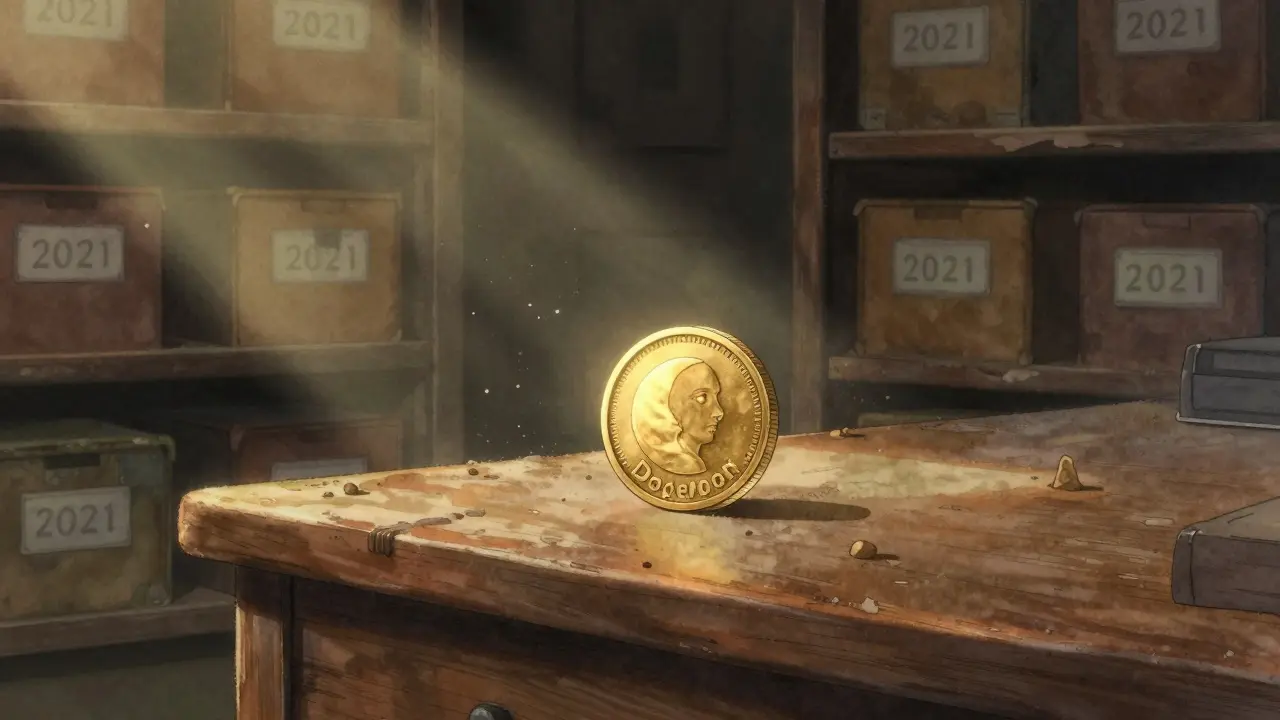
Have you seen the notifications popping up about "DogeMoon" or "DOGE TO MOON" airdrops lately? It is easy to get excited. The promise of free cryptocurrency always sounds too good to ignore. But before you rush to claim anything, you need to know exactly what you are dealing with. The crypto space is flooded with confusing names, copycat projects, and misleading promotions that can cost you time and money.
This guide cuts through the noise. We will look at the original DogeMoon token, explain why it likely does not have an active official airdrop program, and reveal what those popular "airdrop" campaigns on exchanges like Bitget actually are. Understanding the difference between these tokens is crucial for your financial safety in 2026.
The Original DogeMoon (DGMOON): A Dormant Charity Token
To understand the current situation, we first need to look at the original project. DogeMoon is a passive yield charity token built on the Binance Smart Chain (BSC), launched on March 8, 2021. The anonymous development team created it with a specific mission: combining decentralized finance mechanics with charitable giving. They partnered with organizations like Able Child Africa to distribute funds automatically.
The token operates on a unique burn-and-distribute model. At launch, over 61% of the total supply was burned permanently. The remaining liquidity was locked for 265 years until November 20, 2286, as verified by BscScan. This long-term lock was designed to prevent rug pulls, where developers abandon a project and take the investors' money. As of late 2024, approximately 3.8 billion tokens were in circulation, though activity has dropped significantly since its peak in 2021.
Here is the hard truth: the original DogeMoon project has been largely inactive since its launch. There are no official social media channels, no recent code updates, and no active development team. According to CoinGecko’s October 2024 token health assessment, DogeMoon received a score of only 2.1 out of 10 for "Project Activity." If you are looking for an official airdrop from the original creators, you will find nothing. They stopped communicating years ago.
Confusion Alert: DOG vs. DGMOON vs. DOGE
The biggest problem for users today is name confusion. Three different tokens sound almost identical, leading to widespread misunderstandings about airdrops.
| Token Name | Symbol | Network | Launch Date | Airdrop Status |
|---|---|---|---|---|
| DogeMoon | DGMOON | Binance Smart Chain (BSC) | March 2021 | No official airdrop; dormant project |
| Dog•Go•To•The•Moon | DOG | Bitcoin (Runes Protocol) | April 2024 | Massive launch airdrop completed |
| Dogecoin | DOGE | Dogecoin Blockchain | December 2013 | Never conducts airdrops (Official Statement) |
Dog•Go•To•The•Moon (often abbreviated as DOG) is a completely different project. Launched in April 2024 on the Bitcoin network using the Runes protocol, this token executed a massive airdrop of 100 billion tokens to 75,000 Runestone Ordinal NFT holders on its launch day. This strategy propelled its initial market value, reaching a market cap of $371.64 million by late 2024. Many users confuse this successful project with the older, dormant DogeMoon.
Then there is Dogecoin (DOGE). The Dogecoin Foundation explicitly stated in June 2025 that they will never conduct an airdrop. Any website or message claiming to offer free DOGE is a scam. Confusing DOGE, DOG, and DGMOON is the most common mistake new crypto users make.
Bitget's "Assist2Earn": Not a Traditional Airdrop
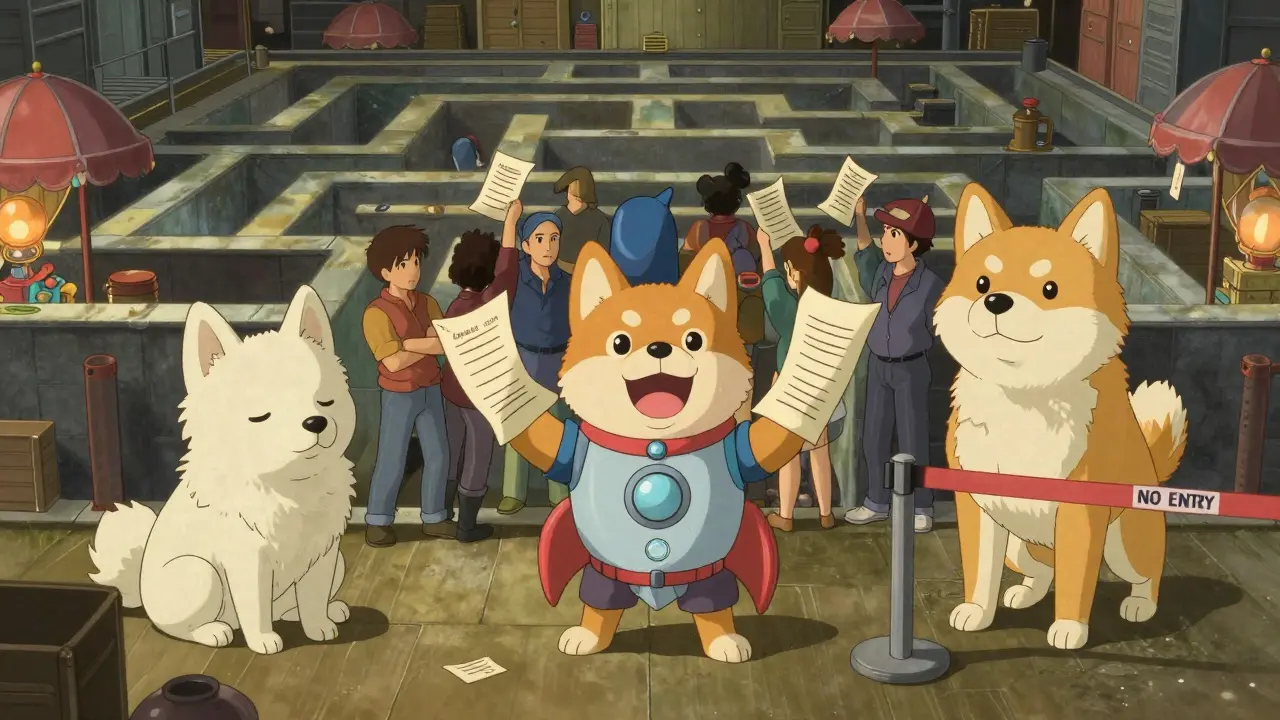
If you are seeing headlines about "DogeMoon airdrops" in 2026, they are likely referring to third-party exchange promotions, specifically Bitget's "Assist2Earn" program. These are not free giveaways from the token creators. They are marketing incentives tied to user activity.
To participate in Bitget's program offering "DOGE TO MOON" tokens, users must complete several steps:
- Create a verified Bitget account and complete KYC (Know Your Customer) identity verification.
- Invite at least three friends to the platform.
- Ensure each friend deposits at least $50 within 30 days.
- Earn rewards based on 50% of your friends' trading fees, paid out in DOGE TO MOON tokens.
Notice the requirements? You need to bring in paying customers to earn these tokens. This is a referral scheme, not a passive airdrop. Furthermore, the minimum withdrawal threshold is often set high, such as 1,000 tokens, which can be difficult to reach if your referred friends do not trade frequently.
User feedback on platforms like Reddit highlights the frustration with this model. In a July 2024 thread on r/CryptoMoonShots, users reported struggling to liquidate their positions due to near-zero liquidity. One user, u/CryptoHodler2021, noted that while they received the tokens, converting them to usable currency was nearly impossible without significant losses. Another user, u/DeFiNewbie99, admitted to wasting hours trying to claim what they thought was the original DGMOON, only to realize it was a different variant entirely.
Financial Reality: Low Liquidity and High Risk
Even if you manage to accumulate a large number of DGMOON or similar tokens, turning them into real money is challenging. Liquidity refers to how easily an asset can be bought or sold without affecting its price. DogeMoon suffers from extremely low liquidity.
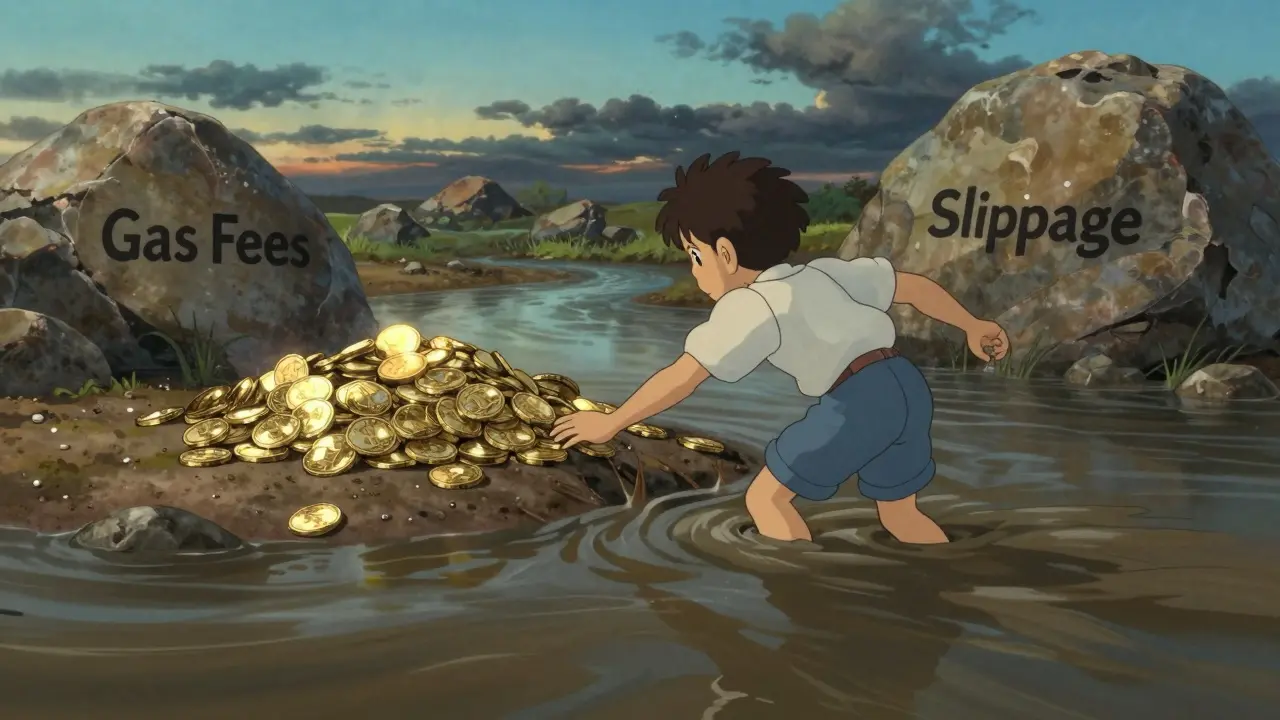
As of late 2024, DogeMoon had a 24-hour trading volume of just $11.53. For context, that is less than the cost of a single lunch in many cities. When you try to sell a significant amount of tokens on a decentralized exchange like PancakeSwap, you face massive slippage. Slippage is the difference between the expected price of a trade and the price at which the trade is executed.
A September 2024 Dextools analysis documented slippage rates of 25-40% on trades under $50 for DogeMoon. This means if you try to sell $10 worth of tokens, you might only receive $6 or $7 after the transaction costs and price impact. Additionally, you must pay gas fees on the Binance Smart Chain. While cheaper than Ethereum, BSC gas fees still range from $0.35 to $0.75 per transaction. If your token holdings are worth less than the gas fee, you cannot sell them without losing more money.
Dr. Elena Rodriguez, Blockchain Research Lead at Delphi Digital, summarized the risk in October 2024: "Tokens with sub-$250k market caps and negligible trading volumes like DogeMoon typically lack the ecosystem support necessary for sustained value. They are technically safe from rug pulls due to liquidity locks, but they are economically dead."
How to Protect Yourself from Scams
The confusion around similar names makes these tokens prime targets for scammers. Here is how to stay safe:
- Verify Contract Addresses: Never trust a name alone. Always check the smart contract address on a block explorer like BscScan. The original DogeMoon contract is 0x48f88c17b813b21a3d8838d72d8b0f78bc556b3d. If an airdrop site asks you to connect your wallet to a different address, it is likely a scam.
- Ignore Direct Messages: Legitimate projects do not DM you on Telegram, Twitter, or Discord offering free tokens. These messages often contain phishing links designed to steal your private keys.
- Check Official Sources: Look for announcements on official websites or verified social media accounts. Since DogeMoon has no active official presence, any new "official" channel is suspicious.
- Understand the Cost: If an opportunity requires you to spend money on gas fees to claim "free" tokens, calculate whether the potential reward outweighs the cost. In the case of low-liquidity tokens, it usually does not.
Conclusion: Is It Worth Your Time?
In 2026, the original DogeMoon (DGMOON) remains a dormant charity token with minimal trading activity and no official airdrop program. The "airdrops" you see advertised are mostly referral incentives from exchanges like Bitget, involving different tokens with similar names. These tokens suffer from extreme illiquidity, making it difficult and costly to convert them into real value.
While the concept of a charity-focused DeFi token is noble, the reality of DogeMoon is that it lacks the community engagement and development activity needed to sustain value. For most investors, the time and gas fees required to participate in these schemes far exceed the potential returns. If you are interested in crypto airdrops, focus on projects with active development teams, clear utility, and strong community support, rather than dormant tokens relying on name recognition.
Does DogeMoon (DGMOON) have an official airdrop in 2026?
No. The original DogeMoon project has been inactive since 2021 and does not run official airdrop programs. Any claims of official airdrops are likely scams or refer to third-party exchange promotions.
What is the difference between DGMOON and DOG?
DGMOON is a dormant BSC charity token launched in 2021. DOG (Dog•Go•To•The•Moon) is a separate, active token launched on the Bitcoin Runes protocol in 2024. They are unrelated projects with different technologies and communities.
Is the Bitget Assist2Earn airdrop legitimate?
It is a legitimate referral program offered by the exchange, but it is not a free giveaway. You must invite friends who deposit funds to earn rewards. The tokens distributed may have low liquidity, making them difficult to sell for profit.
Can I sell my DogeMoon tokens easily?
Selling is difficult due to extremely low trading volume. Users often face high slippage (25-40%) and must pay gas fees that may exceed the value of the tokens being sold.
Will Dogecoin (DOGE) ever have an airdrop?
No. The Dogecoin Foundation has officially stated that they will never conduct an airdrop. Any website offering free DOGE is a scam.





Write a comment
Your email address will be restricted to us