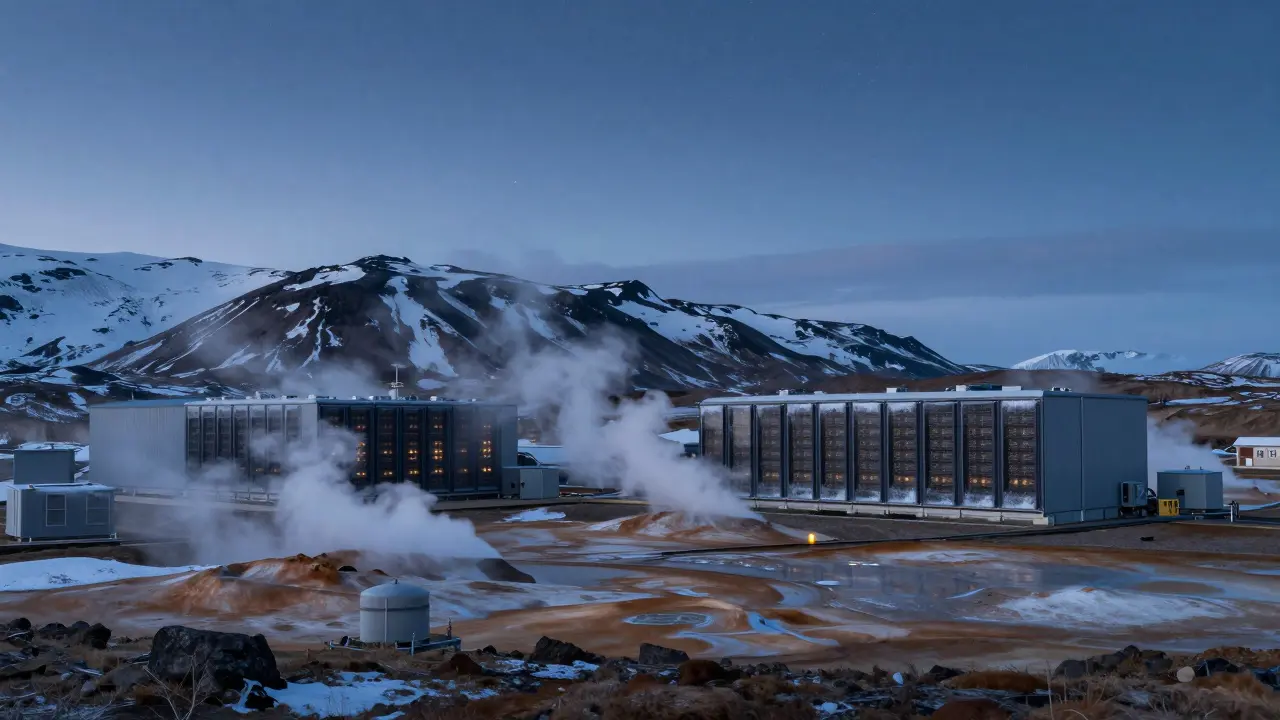
When crypto mining first arrived in Iceland, it felt like a perfect match. The country had cold air, cheap electricity, and a stable government. Miners flocked there because they could run their rigs 24/7 without worrying about blackouts or bans. But by 2026, that dream has hit a wall. Energy allocation is no longer a perk-it’s a bottleneck. And Iceland is saying no more.
Why Iceland Was the Go-To Place for Miners
Iceland’s natural advantages made it the ideal spot for crypto mining. Nearly all its electricity comes from renewable sources: 75% from hydropower and 25% from geothermal. That meant miners weren’t just using clean energy-they were using the cleanest energy on the planet. Combine that with year-round temperatures below freezing, and you didn’t need expensive cooling systems. Your servers naturally stayed cool. Plus, Iceland had zero political risk. No sudden bans, no corruption, no regulatory chaos. By 2024, Iceland was responsible for more than 1% of Bitcoin’s global hashrate. That’s a huge chunk for a country with a population of just 370,000. It wasn’t just small-time operations either. Big players like Genesis Mining, Advania, and Verne Global built massive data centers in Reykjavik and Keflavik. They signed long-term power contracts when electricity was cheap and abundant. For a while, it looked like Iceland was winning the mining race.The Energy Crunch Nobody Saw Coming
Here’s the problem: Iceland’s power grid isn’t getting bigger. It’s maxed out. The country’s hydroelectric dams and geothermal plants have been running at or near full capacity for years. There’s no spare capacity. No hidden reservoirs. No untapped volcanoes. The National Energy Authority confirmed that crypto mining alone used 8% of Iceland’s total electricity in 2023. That’s more than the entire country’s public transportation system. It’s more than all the data centers for cloud computing combined. And it’s not just about Bitcoin. Mining rigs today-like the Antminer S19 XP or Whatsminer M50S-pull 4,000 to 5,000 watts each. A single facility with 5,000 rigs needs 20 megawatts. That’s the equivalent of powering 15,000 homes. Iceland simply doesn’t have enough extra power to support new facilities. The result? New mining applications are stuck on a waiting list that’s years long. Some operators report waiting over 18 months just to get a connection. Others got turned down outright. The grid isn’t broken-it’s full.Government Shift: From Welcome Mat to No Entry
In 2020, Iceland was proud of its crypto miners. By 2024, that changed. Prime Minister Katrín Jakobsdóttir publicly stated that the government no longer sees crypto mining as a net benefit. The reasoning? It’s not about pollution-miners use 100% renewable energy. It’s about opportunity cost. Every kilowatt used by a mining rig is one less kilowatt for something else. What else could that energy do?- Power aluminum smelters that employ thousands of workers
- Expand data centers for AI and cloud computing
- Fund hydrogen production for export to Europe
- Improve heating systems for homes and hospitals
What Miners Are Saying
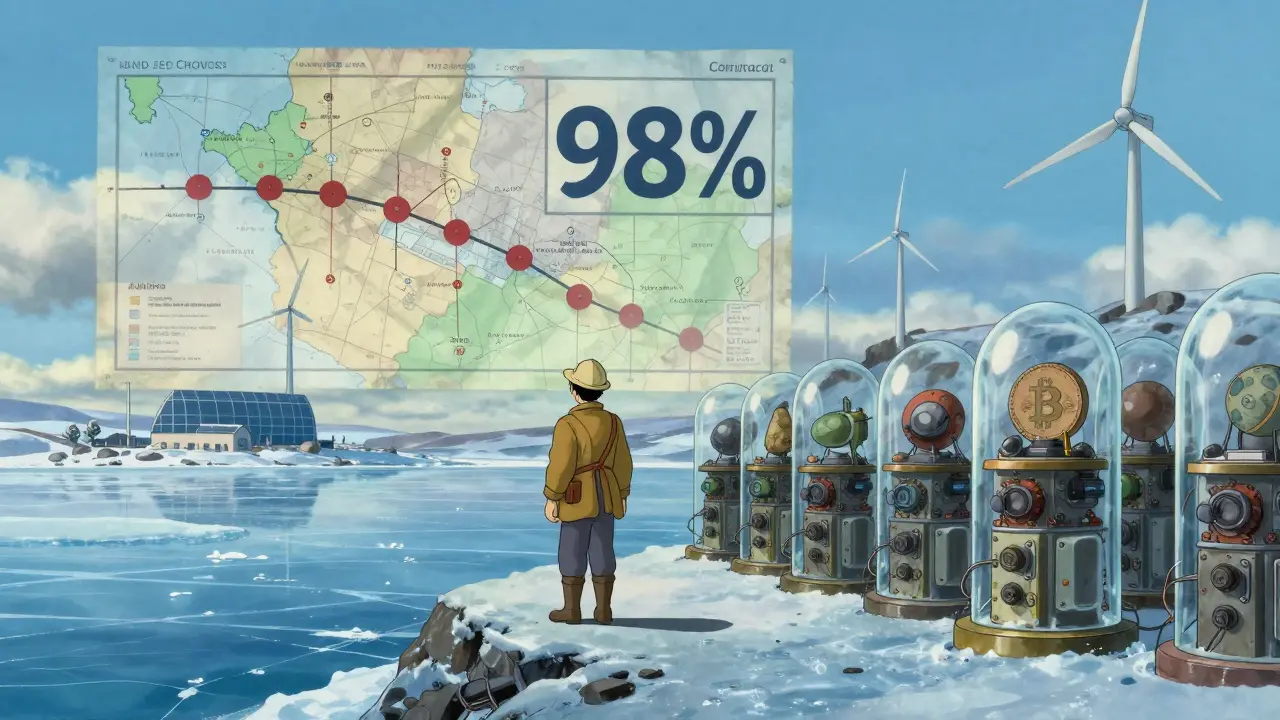
Operators who’ve been in Iceland for years are stuck. They can’t expand. They can’t upgrade. If their equipment fails, they can’t just plug in a new rig-they’d need more power they don’t have. On Reddit and Bitcoin Talk forums, miners are frustrated. One user wrote: "I’ve been here since 2016. My setup is efficient. I pay my bills. But when I asked for two more containers, they told me the grid is at 98%. No exceptions. Even if I pay triple the rate, they say no." But there’s still gratitude. Many miners say Iceland has been fair. Unlike China’s 2021 ban or Kazakhstan’s 2022 power cuts, Iceland never turned off the lights. No sudden raids. No confiscations. Just a slow, quiet shutdown of the door. The community’s mood? Bittersweet. Iceland was the gold standard. Now it’s a museum.The Economic Trade-Off
Iceland’s economy is small. Every dollar matters. Crypto mining contributed about 2% to GDP in 2024. That sounds impressive until you compare it to other industries. Aluminum production? 5% of GDP. Tourism? 8%. Data centers for AI? Projected to hit 3% by 2027. The government’s economists ran the numbers. A single megawatt of power going to mining generates roughly $50,000 in annual revenue. The same megawatt going to a hydrogen plant? $180,000. A data center for AI research? $220,000. And those industries create real jobs-engineers, technicians, maintenance staff-not just server racks. Iceland isn’t against technology. It’s against wasting its one finite resource: clean, reliable electricity.
What’s Next for Crypto Mining in Iceland?
The future is simple: no growth. Maybe a little maintenance. Existing mines will keep running. They’ve locked in low rates. Their equipment is paid off. As long as Bitcoin stays above $30,000, they’ll stay profitable. But new entrants? Forget it. There’s no pipeline. No plans. No permits. The government isn’t banning mining. It’s just not helping it grow. If a miner wants to expand, they’ll have to move-to Texas, to Kazakhstan, to Canada. Places with more power, more flexibility, and more willingness to trade energy for revenue. Iceland’s new focus? Blockchain applications that don’t need a power plant. Think central bank digital currency (CBDC), smart contracts for fisheries, or digital identity systems for tourism. Low-energy, high-value, and aligned with national priorities.Final Thought: A Lesson in Limits
Iceland didn’t fail crypto mining. It outgrew it. The country proved that renewable energy can power a global industry. But it also showed that even clean energy has limits. When a nation’s grid is at 98% capacity, you can’t just add more demand. You have to choose what matters most. For Iceland, that means letting go of mining-and building something better.Why can’t Iceland just build more power plants?
Iceland’s geography makes large-scale energy expansion difficult. Hydroelectric dams rely on rivers and water flow, which are already at maximum capacity. Geothermal plants tap into underground heat, but drilling deeper or adding more wells risks environmental damage and requires years of permitting. There’s no easy way to scale up. The country’s population is too small to justify massive infrastructure projects, and public opinion is against disrupting natural landscapes for mining.
Are crypto miners being kicked out of Iceland?
No. Existing mining operations are still fully allowed to operate. The government hasn’t shut any down. But new applications for power connections are being denied. Miners can’t expand, upgrade, or add new equipment unless they find spare capacity-which doesn’t exist. It’s a freeze, not a ban.
How much electricity does crypto mining use in Iceland?
In 2023, cryptocurrency mining consumed about 8% of Iceland’s total electricity. That’s roughly 120 megawatts continuously. To put that in perspective, that’s enough to power all the streetlights in Reykjavik and still have enough left over to run 30,000 average homes.
Is crypto mining still profitable in Iceland?
Yes, for existing operations. Because they locked in low power rates years ago and use 100% renewable energy, many miners still have some of the lowest operating costs in the world. As long as Bitcoin stays above $30,000, they remain profitable. But new miners can’t enter the market, so profitability is locked in for a shrinking group.
What industries are now getting priority for Iceland’s electricity?
Aluminum smelting remains the top user, followed by data centers for AI and cloud computing. The government is also prioritizing hydrogen production for export to Europe and expanding digital infrastructure for public services like healthcare and tourism. These industries create more jobs and economic stability than crypto mining does per unit of energy.







Write a comment
Your email address will be restricted to us