Every blockchain starts with a single point of origin. For Bitcoin, that moment happened on January 3, 2009. It wasn't just the first transaction; it was the creation of the entire ledger's root of trust. This first block, known as the Genesis Block, is the foundational first block in any blockchain network, specifically designated as Block 0 in modern implementations. Unlike every other block that comes after it, the genesis block has no parent. It stands alone at the start of the chain, anchoring billions of dollars worth of digital value to a specific moment in history.
You might wonder why you should care about a block from 2009. The answer lies in verification. When you connect a new node to the Bitcoin network, it doesn't just trust the next person it talks to. It traces the chain back to this very beginning. By analyzing the genesis block data on block explorers, which are web-based tools that allow users to search and display information about transactions on a blockchain, you can see exactly how this cryptographic anchor works. You get to inspect the unspendable coins, the embedded newspaper headline, and the unique hash that defines Bitcoin's identity.
What Makes the Genesis Block Unique?
To understand what you're looking at when you open a block explorer, you need to know what makes the genesis block different from Block 1 or Block 850,000. Regular blocks reference a previous block to prove they belong in the sequence. The genesis block has nothing to reference. Its "previous block hash" field is filled with 32 zero bytes. This isn't an error; it's a deliberate design choice by Satoshi Nakamoto, the pseudonymous creator of Bitcoin who designed the original protocol and mined the first block. It signals to every node: "This is where we start. There is no before."
The second major difference is the reward. In normal mining, the miner gets newly minted Bitcoin for solving the puzzle. In the genesis block, Satoshi created a coinbase transaction that awarded 50 BTC. However, he made this output intentionally unspendable. The script used to lock those coins cannot be satisfied by any private key. Those 50 BTC will never move. They are part of the code, not the economy. This proves that the block wasn't mined for profit but to establish the chain's integrity.
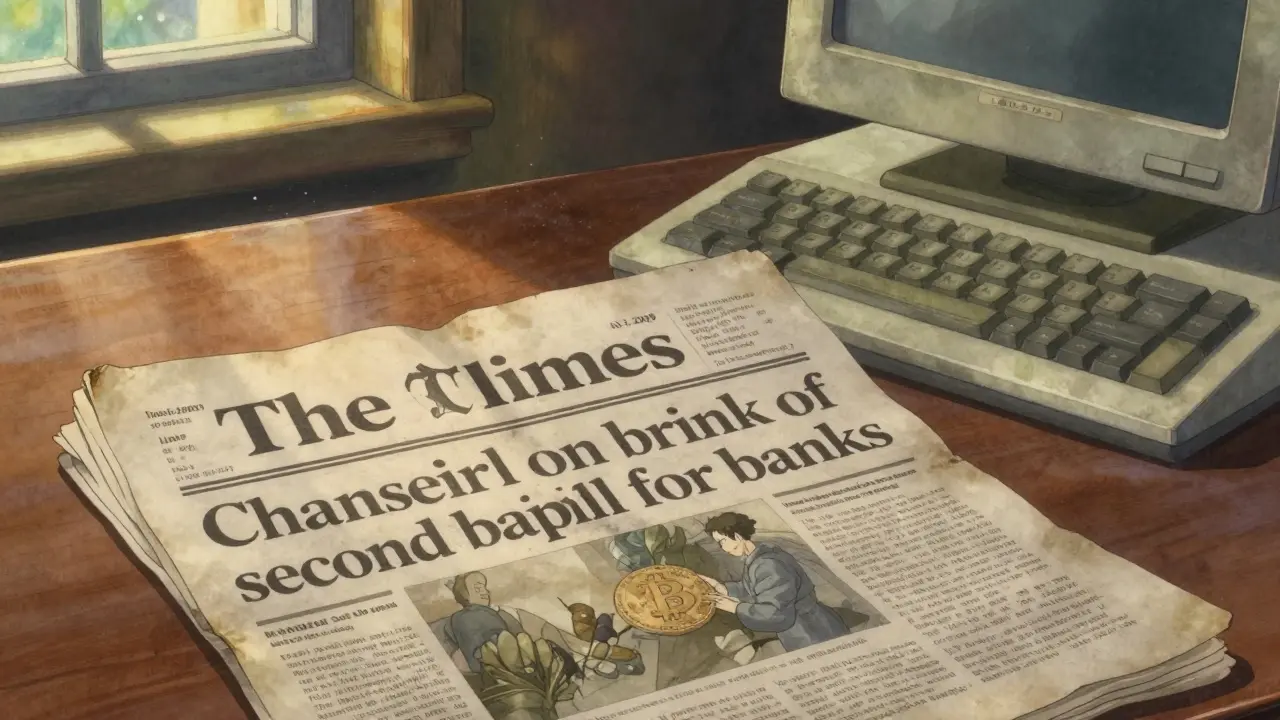
Finally, there is the message. Hidden in the coinbase data is a string of text that decodes to: "The Times 03/Jan/2009 Chancellor on brink of second bailout for banks." This references the front page of The Times newspaper. It serves two purposes. First, it timestamps the block, proving it couldn't have been created before that date. Second, it provides context. Bitcoin was born during a financial crisis, offering a decentralized alternative to traditional banking systems struggling with bailouts.
Key Data Points to Inspect
When you pull up the genesis block on a block explorer, you'll see a list of technical fields. Here is what each one means and why it matters for your analysis.
- Block Hash: The unique identifier for the block. For Bitcoin, this is
000000000019d6689c085ae165831e934ff763ae46a2a6c172b3f1b60a8ce26f. If you see a different hash, you are likely looking at a testnet or a fork, not the main Bitcoin network. - Previous Block Hash: As mentioned, this is all zeros (
0000...0000). This confirms the block has no predecessor. - Merkle Root: This is the hash of the single transaction in the block. Since there is only one transaction (the coinbase), the Merkle root is simply the hash of that transaction. It ensures the data inside the block hasn't been tampered with.
- Timestamp: Unix time
1231006505, which converts to January 3, 2009, at 18:15:05 UTC. This is the birth certificate of Bitcoin. - Nonce: The number
2083236893. Miners change this number repeatedly to find a hash that meets the difficulty target. Finding this specific nonce proved that computational work was done to create the block. - Bits/Difficulty: The initial difficulty was set to 1. This allowed the first block to be mined relatively quickly compared to today's standards, where difficulty adjusts to maintain a 10-minute block time.
Comparing Block Explorer Interfaces
Not all block explorers show this data in the same way. Some prioritize simplicity, while others offer deep technical details. Choosing the right tool depends on whether you want a quick overview or a forensic analysis.
| Explorer | User Interface | Technical Detail | Unique Features |
|---|---|---|---|
| Blockchain.com | Clean, beginner-friendly | Basic header info | Explicitly labels the 50 BTC as "unredeemable" |
| Blockstream Explorer | Minimalist, developer-focused | High (raw hex data) | Follows Bitcoin Core conventions strictly |
| Blockchair | Data-rich, comparative | Very High | Allows cross-chain comparison of genesis blocks |
Blockchain.com is a popular cryptocurrency exchange and wallet provider that also operates a widely used block explorer. It is great for beginners because it translates raw data into plain English. You won't just see a hex string for the coinbase; you'll see the decoded newspaper headline. It also clearly states that the reward is unredeemable, removing confusion for new users.
Blockstream Explorer is a a high-performance block explorer developed by Blockstream, known for its speed and adherence to Bitcoin Core standards. If you are a developer or want to see the raw structure of the block, this is your go-to. It displays the exact byte sequences and allows you to verify the cryptographic links manually. It treats the genesis block as Block 0, aligning with the internal logic of Bitcoin nodes.
Blockchair is a a multi-blockchain analytics platform that supports searching across dozens of networks simultaneously. Its strength is comparison. You can look at Bitcoin's genesis block alongside Ethereum's or Litecoin's. This helps you see patterns, like how many other chains also use unspendable initial rewards or embed messages in their first blocks.
Step-by-Step Guide to Analyzing the Genesis Block
You don't need to run a full node to analyze this data. Any modern web browser will do. Here is how to navigate the process effectively.
- Select Your Explorer: Start with Blockchain.com for a user-friendly view or Blockstream for technical depth. Open the website in your browser.
- Search for the Block: In the search bar, type
0(for height) or paste the genesis hash000000000019d6689c085ae165831e934ff763ae46a2a6c172b3f1b60a8ce26f. Press Enter. - Verify the Header: Look at the "Previous Block" field. Confirm it is all zeros. Check the timestamp. Does it match January 3, 2009? If yes, you are on the correct mainnet block.
- Inspect the Coinbase Transaction: Click on the single transaction listed. Scroll down to the "Inputs" section. Look for the coinbase data. On most explorers, this will be displayed in hexadecimal format. Look for the ASCII decode option if available. You should see the "The Times" headline.
- Check the Output Script: Go to the "Outputs" section. You will see 50 BTC. Note the script type. It will often be labeled as "Unspendable" or "OP_RETURN" equivalent. This confirms the coins are locked forever.
- Cross-Reference: Open a second explorer (like Blockchair). Compare the Merkle Root and Nonce values. They must match exactly. Any discrepancy indicates a fork or a testnet environment.
Why This Analysis Matters Today
In 2026, Bitcoin is a mature asset class. Yet, the genesis block remains the ultimate proof of authenticity. When security experts audit a node or a wallet connection, they often trace the chain back to this block. If a malicious actor tries to present a fake chain, it will fail at the genesis block because the hash won't match the hardcoded value in your software.
For developers, understanding the genesis block is crucial for building compliant applications. If you are creating a lightweight client, you need to know how to validate the root of trust. For investors, it offers historical perspective. Seeing the "Chancellor on brink of second bailout" message reminds us of the economic conditions that sparked the creation of decentralized finance. It grounds the technology in real-world events.
Moreover, as blockchain forks become more common, distinguishing between the mainnet genesis block and fork genesis blocks is a vital skill. Many altcoins copy Bitcoin's structure but change the genesis message or the initial reward distribution. By mastering the analysis of the original Bitcoin genesis block, you gain a template for evaluating any new blockchain's foundational integrity.

Common Pitfalls to Avoid
Even experienced users can make mistakes when analyzing genesis data. Here are the most common errors.
- Confusing Testnet with Mainnet: Bitcoin has test networks for development. Their genesis blocks have different hashes and timestamps. Always check the network label in the explorer's header. If it says "Testnet," you are not looking at real Bitcoin data.
- Misinterpreting the Unspendable Reward: Some assume the 50 BTC were lost due to a mistake. They were not. The script was deliberately constructed to be unsatisfiable. Recognizing this intentional design is key to understanding Satoshi's priorities.
- Ignoring the Nonce: Beginners often overlook the nonce. But without the correct nonce, the block hash wouldn't meet the difficulty target. The nonce proves that work was performed. A valid genesis block requires a valid nonce.
- Assuming All Chains Are Identical: While many blockchains follow Bitcoin's model, others differ. Ethereum's genesis block, for example, had a pre-mined supply distributed to early contributors. Don't assume Bitcoin's rules apply universally without checking.
Future of Genesis Block Verification
As blockchain technology evolves, so do the tools we use to analyze it. We are seeing a shift toward more interactive educational features. Explorers are adding tooltips and visual guides to explain complex fields like Merkle roots and nonces to newcomers. This democratizes access to blockchain data, allowing anyone to verify the chain's integrity without a computer science degree.
Additionally, regulatory frameworks like the EU's MiCA may influence how historical data is presented. While the genesis block itself is immutable, the way explorers index and display it could change to comply with transparency standards. However, the core data-the hash, the timestamp, the message-will remain untouched. It is the bedrock of the system.
For now, the best way to stay informed is to practice. Spend ten minutes exploring the genesis block on different platforms. Notice the differences in presentation. Decode the hex strings. Verify the hashes. This hands-on experience builds a deeper intuition for how blockchain trust is established, maintained, and verified. It turns abstract concepts into concrete, observable facts.
What is the hash of the Bitcoin Genesis Block?
The hash of the Bitcoin Genesis Block is 000000000019d6689c085ae165831e934ff763ae46a2a6c172b3f1b60a8ce26f. This unique identifier is hardcoded into every Bitcoin client and serves as the root of trust for the entire network.
Why is the 50 BTC reward in the Genesis Block unspendable?
Satoshi Nakamoto intentionally designed the coinbase transaction's output script to be unspendable. This demonstrates that the block was created to establish the chain's integrity rather than for personal profit. The coins are locked forever and cannot be moved or spent.
What message is hidden in the Bitcoin Genesis Block?
The message is "The Times 03/Jan/2009 Chancellor on brink of second bailout for banks." It references the front page of The Times newspaper, providing a timestamp and contextual commentary on the financial crisis that led to Bitcoin's creation.
How can I distinguish the Genesis Block from other blocks?
The Genesis Block is identified by its height (0) and its previous block hash, which consists of 32 zero bytes. No other block in the Bitcoin network has a previous block hash of all zeros, making it uniquely identifiable as the starting point.
Which block explorer is best for analyzing the Genesis Block?
It depends on your needs. Blockchain.com is best for beginners due to its clear explanations and decoded messages. Blockstream Explorer is ideal for developers who need raw data and strict adherence to Bitcoin Core standards. Blockchair is useful for comparing genesis blocks across multiple cryptocurrencies.
Is the Genesis Block immutable?
Yes, the Genesis Block is immutable. It is hardcoded into the source code of Bitcoin clients. Any attempt to alter its data would result in a mismatch with the expected hash, causing nodes to reject the modified chain as invalid.
What does the nonce in the Genesis Block represent?
The nonce is a number (2083236893 in Bitcoin's case) that miners change repeatedly to find a block hash that meets the network's difficulty target. It proves that computational work was performed to create the block, securing the network against spam and attacks.
Can I mine the Bitcoin Genesis Block again?
No, the Genesis Block is a historical artifact. It was created once on January 3, 2009. While you can simulate mining processes on testnets, the mainnet Genesis Block is fixed and cannot be recreated or altered.
Why is the previous block hash all zeros?
The previous block hash is all zeros because the Genesis Block is the first block in the chain. It has no predecessor to reference. This zero-value acts as a special marker indicating the start of the blockchain.
How do I verify I am looking at the mainnet Genesis Block?
Verify the block hash matches 000000000019d6689c085ae165831e934ff763ae46a2a6c172b3f1b60a8ce26f and check that the explorer interface explicitly states "Mainnet." Testnet and Signet networks have different genesis hashes and should be clearly labeled.