Remember the frenzy of September 2021? Crypto Twitter was on fire, gas fees were skyrocketing, and everyone seemed to be hunting for the next big thing. Amidst that chaos, Smartlink launched its SMAK X CoinMarketCap Campaign airdrop, handing out $20,000 worth of tokens to early adopters. It sounded like free money. But here is the kicker: if you grabbed those SMAK tokens back then, what are they worth today? Spoiler alert: it’s not pretty.
This article isn’t just a nostalgia trip. We’re digging into the details of that specific airdrop, how the Smartlink ecosystem actually works, and why the market cap tells a cautionary tale about hype versus utility. If you missed the drop or are wondering whether Smartlink has any future left, stick around. We’ll break down the mechanics, the tech stack, and the brutal reality of current trading volumes.
What Was the SMAK X CoinMarketCap Campaign?
The CoinMarketCap airdrop wasn’t some shady Telegram group giveaway. It ran from September 13 to September 23, 2021, leveraging one of the most trusted data sources in the crypto world. The goal? Exposure. Smartlink wanted eyes on their product, and CoinMarketCap had millions of users looking for new opportunities every day.
Participants had to jump through a few hoops-following social media accounts, joining communities, and completing tasks on the CMC platform. In return, they received a slice of the $20,000 USD allocation. For a project that was barely off the ground, this was a significant marketing spend. It signaled intent. They weren’t just launching a token; they were trying to build a community before the mainnet fully matured.
But let’s be real. Did this translate to long-term holding? Or did people dump as soon as the tokens hit their wallets? The data suggests the latter. While the campaign successfully generated buzz, the subsequent price action shows that most recipients treated it as quick liquidity rather than a long-term investment.
Understanding Smartlink (SMAK) and Its Tech Stack
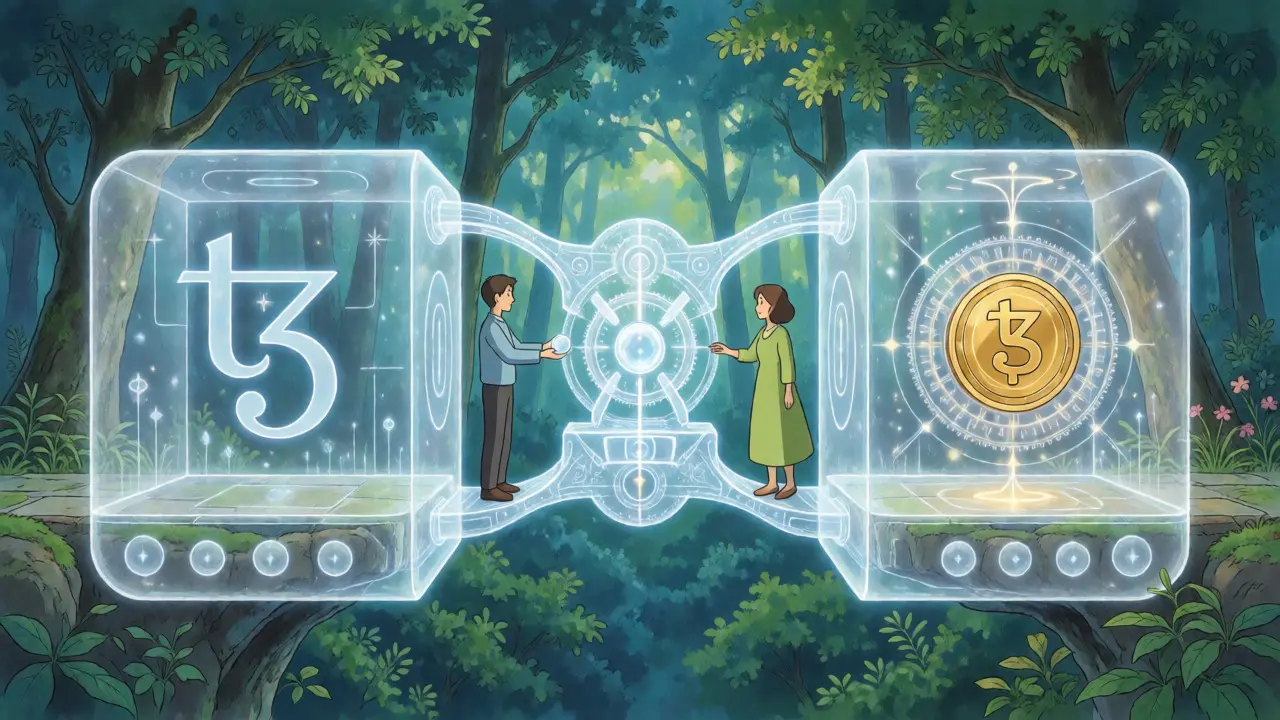
To understand why the airdrop mattered, you need to know what Smartlink actually does. Smartlink is a decentralized escrow platform built on the Tezos blockchain. If you aren’t familiar with Tezos, think of it as the efficient cousin of Ethereum. It uses Liquid Proof-of-Stake, which means lower transaction fees and less energy consumption. That sounds great on paper, right?
The core idea is simple: trust issues kill online deals. Whether you’re buying a used car from a stranger or hiring a freelancer, who holds the money until the job is done? Traditional banks are slow and expensive. Smartlink steps in as the digital middleman. Their Escrow Service supports B2C, B2B, and C2C transactions. You lock your funds in a smart contract; the seller delivers the goods; the buyer confirms receipt; the contract releases the funds. No middlemen taking a huge cut, no risk of running away with the cash.
Beyond escrow, the ecosystem includes payment processing tools and a decentralized marketplace. The SMAK token is the fuel for all this. Holders get fee exemptions and rewards. It’s also a governance token, meaning holders can vote on key protocol changes. On paper, it’s a solid utility model. In practice, adoption has been sluggish.
The Price Collapse: From Hype to Zero Volume
Let’s look at the numbers, because they don’t lie. After the 2021 airdrop, SMAK saw some initial interest. But fast forward to 2025 and 2026, and the picture is grim. As of recent data, SMAK trades between $0.000113 and $0.000137. That’s a massive drop from its highs. More painfully, it represents a ~94% decline compared to its value a year prior.
Why such a steep fall? Several factors play into this:
- Liquidity Crisis: The 24-hour trading volume is often near zero. When there’s no volume, prices become erratic and unreliable. You might see a price on a chart, but try selling 10,000 SMAK without crashing the market yourself.
- Exchange Limitations: SMAK doesn’t trade on Binance or Coinbase. It’s mostly listed on smaller exchanges like Gate.io. This limits accessibility for retail investors who prefer major platforms.
- Supply Confusion: There’s a discrepancy in circulating supply reports. Some sources say 305 million tokens are circulating; others report zero. This lack of transparency erodes trust.
The 47% weekly decline and 60% monthly drop indicate that even the die-hard believers are exiting. When a token loses over half its value in a month with negligible volume, it’s usually a sign of fundamental disconnects between the team’s vision and market demand.

Comparing Smartlink to Other Escrow Solutions
You might ask, "If the tech is good, why isn’t anyone using it?" To answer that, we have to compare Smartlink to its competitors. The decentralized finance (DeFi) space is crowded. Users have options like OpenSea’s integrated escrow for NFTs, or specialized DeFi protocols on Ethereum and Solana.
| Feature | Smartlink (SMAK) | Ethereum DeFi Protocols | Solana DeFi Protocols |
|---|---|---|---|
| Blockchain | Tezos | Ethereum | Solana |
| Transaction Fees | Very Low ($0.01-$0.05) | Variable ($1-$50+) | Low ($0.001-$0.01) |
| Primary Use Case | C2C/B2B Escrow | DEXs, Lending, NFTs | High-Frequency Trading, NFTs |
| Token Utility | Fees, Governance | Governance, Staking | Governance, Staking |
| Adoption Level | Niche/Low | Massive | High |
Notice the pattern? Smartlink solves a real problem (trust in transactions), but it operates in a niche that hasn’t exploded yet. Most crypto users are still focused on speculation, lending, and NFTs. Peer-to-peer escrow for physical goods or freelance work is a harder sell because it requires bridging the gap between traditional commerce and blockchain. Smartlink tried to do this on Tezos, a chain that, while technically superior in many ways, lacks the sheer user base of Ethereum or Solana.
Lessons from the SMAK Airdrop
So, what should you take away from the SMAK X CoinMarketCap campaign? First, an airdrop is a marketing tool, not a guarantee of success. The $20,000 spent on the campaign bought visibility, but it didn’t buy product-market fit. Second, technical excellence doesn’t always win. Tezos offers great scalability, but network effects matter more. If developers and users aren’t building on your chain, your token’s utility remains theoretical.
For investors, the SMAK story highlights the importance of checking liquidity before jumping in. A low price per token looks attractive, but if you can’t sell it when you want, that price is meaningless. Always check the order books on exchanges like Gate.io. If the spread is wide and the depth is thin, tread carefully.
For the Smartlink team, the path forward involves either pivoting to a more active ecosystem or doubling down on partnerships that drive actual usage. Without real-world transactions flowing through their escrow service, the token will continue to struggle against gravity.
Is the SMAK X CoinMarketCap airdrop still active?
No, the SMAK X CoinMarketCap Campaign airdrop took place in September 2021 and has concluded. It was a time-limited event designed to distribute tokens and generate awareness during the project's early launch phase.
What blockchain is Smartlink built on?
Smartlink is built on the Tezos blockchain. This choice provides advantages such as lower transaction fees and higher energy efficiency compared to proof-of-work chains, utilizing a Liquid Proof-of-Stake consensus mechanism.
Where can I buy or trade SMAK tokens now?
SMAK tokens are primarily traded on smaller exchanges, with Gate.io being one of the most notable platforms listing SMAK pairs. Availability on major exchanges like Binance or Coinbase is limited or non-existent, which impacts liquidity.
Why has the SMAK price dropped so significantly?
The price drop is attributed to low trading volume, limited exchange listings, and potentially slower-than-expected adoption of the escrow services. Broader market conditions and competition from other DeFi projects have also contributed to the devaluation.
What is the utility of the SMAK token?
SMAK serves as the native utility token for the Smartlink ecosystem. It allows holders to receive escrow fee exemptions, earn escrow rewards, and participate in governance decisions regarding the platform's development and upgrades.