You have probably seen the ticker $D pop up on your screen and wondered what it actually does. It is not just another meme coin chasing hype. The DAR Open Network is a blockchain infrastructure project that blends artificial intelligence with gaming and Web3 utilities. If you are trying to figure out if this token is worth your attention, you need to look past the price charts and understand the technology underneath. This guide breaks down exactly what the network is, how the $D token works, and why it matters in the current crypto landscape of 2026.
The Core Concept: AI Meets Blockchain
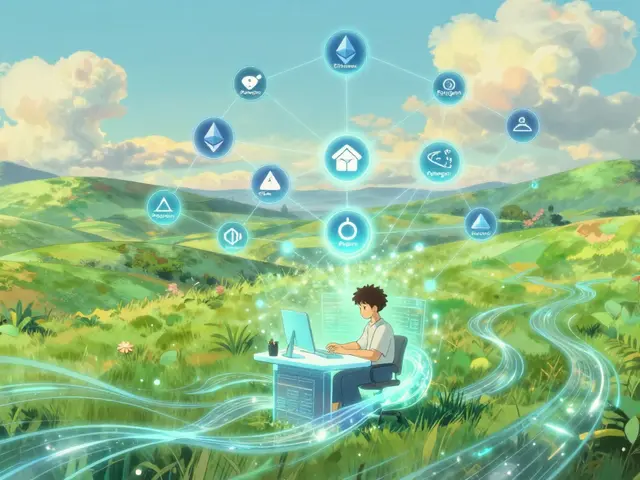
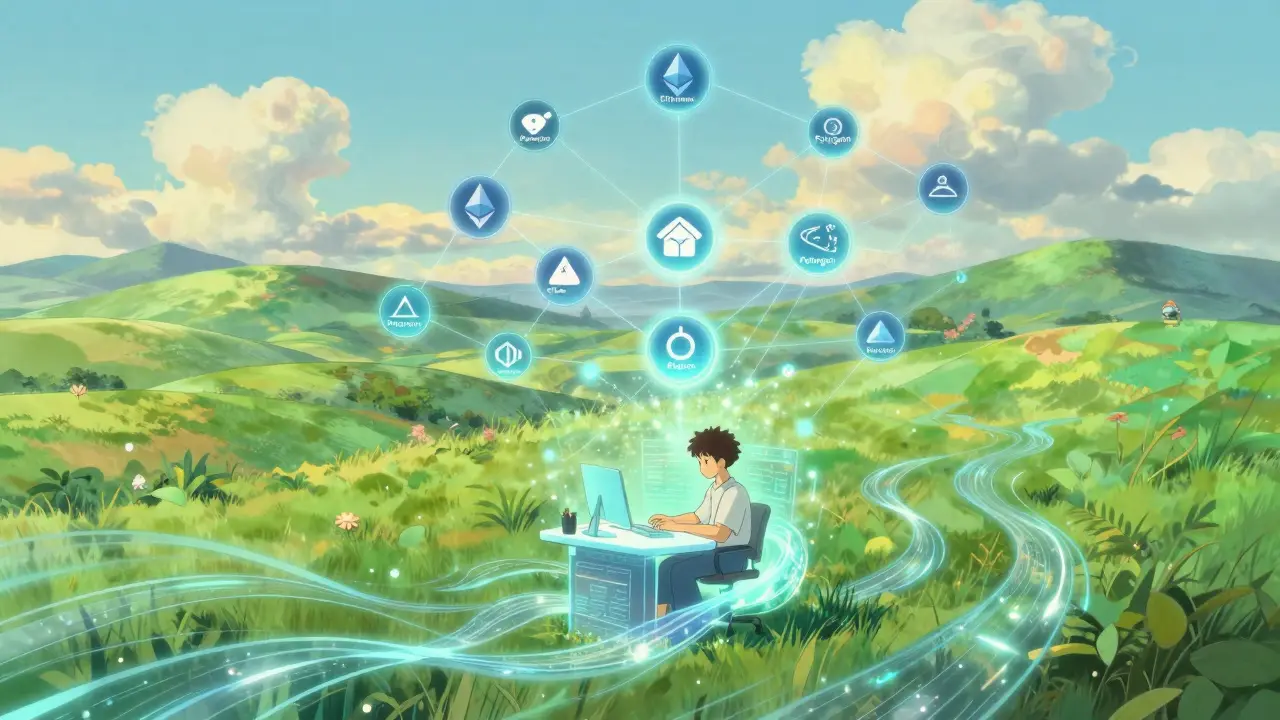
At its heart, the DAR Open Network is designed to be chain-agnostic. That is a fancy way of saying it does not care which blockchain you use. It can operate across Ethereum, BNB Chain, Polygon, and others simultaneously. Most blockchains are silos; moving assets between them is often clunky and expensive. DAR aims to fix that by providing a shared layer where technology, assets, and user experiences flow freely.
What makes it different from other interoperability projects like Polkadot or Cosmos is the heavy integration of Artificial Intelligence. The network uses AI agents to optimize transactions, manage security, and even generate dynamic content for games. For developers, this means they can build applications that get smarter over time without rewriting their code from scratch. For users, it translates to lower fees and faster interactions. The team behind the project originally built the hit play-to-earn game Mines of Dalarnia, so they understand the pain points of gamers who hate waiting for transactions to confirm.
How the Technology Works
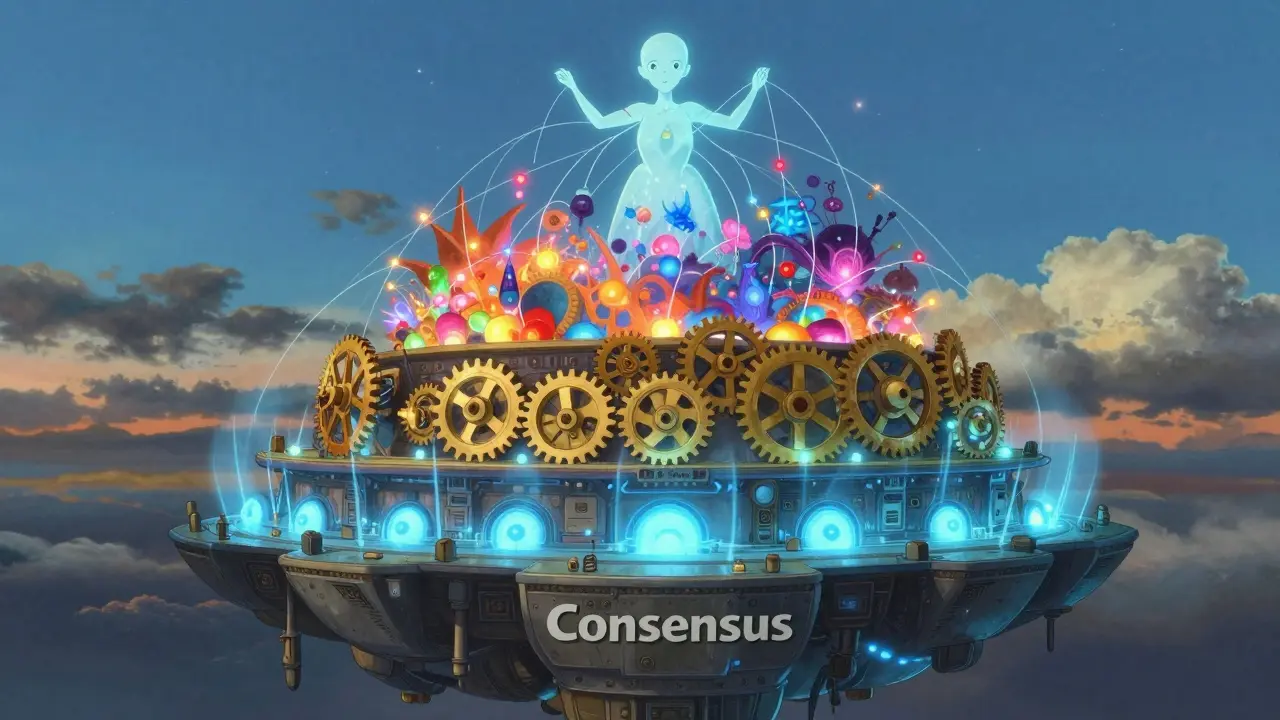
Speed and security are the two biggest hurdles for any blockchain. DAR tackles these with a hybrid consensus mechanism. It combines Proof-of-Stake (PoS), which secures the network through validators staking tokens, with Byzantine Fault Tolerance (BFT), which ensures agreement among nodes even if some fail or act maliciously.
This setup allows the network to handle up to 28,400 transactions per second (TPS). To put that in perspective, Ethereum handles roughly 15 to 45 TPS under normal conditions. While Solana boasts high theoretical speeds, DAR’s architecture is specifically tuned for the bursty traffic patterns of gaming and social apps. The network is modular, split into three layers:
- Execution Layer: Handles smart contracts and app logic.
- Settlement Layer: Manages cross-chain transactions so you can move assets seamlessly.
- Consensus Layer: Validates blocks and maintains network integrity.
Developers can write code in Solidity, Rust, or the proprietary DAR Script. This flexibility is crucial because it lowers the barrier to entry. You do not need to learn a new language to start building; you can use tools you already know. The network also uses proxy contracts, which allow upgrades without hard forks. This means the platform can improve itself without disrupting existing applications-a feature that has reportedly cut development downtime by 76% compared to traditional architectures.
Understanding the $D Token
The $D token is the fuel that keeps this engine running. It is not just a speculative asset; it has real utility within the ecosystem. Here is how it functions in practice:
- Medium of Exchange: About 78% of all network operations use $D for transaction fees. Because the network burns 0.5% of every transfer fee, the supply decreases over time, creating deflationary pressure.
- Staking Rewards: You can stake your tokens to help secure the network. As of late 2025, staking yielded an annual percentage rate (APY) of around 8.7%. This is attractive for passive income seekers who want exposure to the ecosystem’s growth.
- Governance: Holding $D gives you a voice. One token equals one vote in protocol decisions. This decentralizes control, allowing the community to steer the project’s future rather than a central team.
- Access Key: Premium AI features and certain high-tier gaming assets require $D to unlock. This creates constant demand from active users.
The tokenomics structure is transparent but requires careful reading. The total supply is capped at 800 million $D tokens. Of these, approximately 743 million were in circulation by early 2026. The allocation splits include 40% for staking and community rewards, 25% for the team and advisors (locked for four years), 20% for strategic investors, 10% for marketing, and 5% reserved for long-term development. This distribution aims to balance immediate liquidity with long-term stability.
| Feature | DAR Open Network ($D) | Polkadot (DOT) | Render Network (RNDR) |
|---|---|---|---|
| Primary Focus | AI x GameFi Infrastructure | Cross-chain Interoperability | GPU Computing for AI |
| Native AI Integration | Yes (Deeply integrated) | No | Yes (Compute only) |
| Transaction Speed (TPS) | Up to 28,400 | Varies by Parachain | Dependent on underlying chain |
| Developer Languages | Solidity, Rust, DAR Script | Rust, Ink! | Various (via APIs) |
| Best Use Case | Gaming & Social Apps | Enterprise DeFi & dApps | Video Rendering & AI Training |
Market Position and Real-World Usage
As of early 2026, DAR Open Network holds a market capitalization of around $9.2 million, ranking it outside the top 100 cryptocurrencies. However, market cap alone does not tell the whole story. The network boasts 2.4 million unique wallet addresses, with significant activity coming from Asia-Pacific regions, particularly Indonesia and Vietnam. These users are drawn to the low fees and the seamless experience provided by the flagship game, Mines of Dalarnia, which reports over 1.2 million monthly active users.
The "AI x GameFi" sector is exploding. Analysts projected this niche to grow by 320% between 2023 and 2025, and momentum continues into 2026. DAR positions itself squarely in this sweet spot. Unlike pure DeFi chains that struggle with user retention, DAR benefits from the sticky nature of gaming communities. Players stay engaged for entertainment, not just financial speculation, which provides a more stable base for token usage.
However, there are risks. The project relies heavily on the gaming sector. If interest in GameFi wanes, as seen in previous bear markets, $D could suffer. Additionally, while the technology is robust, developer adoption lags behind giants like Ethereum and Solana. With only about 1,842 active developers compared to thousands on larger chains, the ecosystem is still maturing. Regulatory uncertainty in major markets like the United States also poses a challenge, though the project has clear operational approval in jurisdictions like Indonesia.
Getting Started with DAR Open Network
If you decide to participate, the process is straightforward but requires a bit of technical patience. First, you need a compatible wallet. The official DAR Wallet is available for iOS, Android, and desktop. Setup takes about 10 minutes. Once installed, you can connect to decentralized exchanges (DEXs) or centralized platforms like Indodax or Poloniex to purchase $D tokens.
New users often struggle with cross-chain transactions. If you hold assets on Ethereum and want to move them to the DAR network, you will need to use the settlement layer bridges. The documentation includes 17 step-by-step video tutorials to help with this. Joining the DAR Academy Discord server is highly recommended; it hosts over 14,000 members who share tips and troubleshoot issues in real-time. Remember to always verify contract addresses before interacting with any dApp to avoid phishing scams.
Future Roadmap and Outlook
The team has outlined an ambitious roadmap for the rest of 2026. Key developments include the launch of the DAR AI Agent Marketplace in Q2, which will allow developers to buy and sell pre-built AI modules. In Q3, an enhanced cross-chain privacy protocol is expected to roll out, addressing growing concerns about data transparency. By Q4, an Enterprise API Suite aims to bring institutional players into the fold.
A strategic partnership with Chainlink announced in January 2026 will integrate decentralized AI data feeds, further boosting the network’s machine learning capabilities. Industry analysts like Delphi Digital see a 68% probability of sustained relevance through 2030, citing strong ecosystem growth. Conversely, Bernstein Research remains cautious due to the gaming dependency. Regardless of the prediction, DAR Open Network is carving out a distinct niche. It is not trying to be everything to everyone; it is building specialized infrastructure for the next generation of intelligent, interactive web applications.
Is the $D token a good investment?
Investment potential depends on your risk tolerance. $D offers utility through staking yields (around 8.7% APY) and governance rights. However, it is a mid-cap token with high volatility and reliance on the gaming sector. Always conduct your own research and never invest more than you can afford to lose.
What is the difference between DAR and Polkadot?
Polkadot focuses purely on connecting different blockchains for interoperability. DAR Open Network also connects chains but adds a native layer of Artificial Intelligence and is optimized specifically for gaming and social applications. DAR supports Solidity and Rust, making it easier for web2 developers to migrate.
How do I stake my $D tokens?
You can stake $D through the official DAR Wallet or supported exchanges like Indodax. Staking helps secure the network via the Proof-of-Stake consensus mechanism. Rewards are distributed automatically and typically yield an annual return of around 8-9%, depending on network conditions.
Is DAR Open Network safe to use?
The network uses a hybrid PoS/BFT consensus and employs AI-powered threat detection systems. It has undergone multiple security audits. However, no system is immune to risk. Users should always use hardware wallets for large holdings and enable two-factor authentication on all associated accounts.
Can I develop apps on DAR Open Network?
Yes. Developers can use Solidity, Rust, or DAR Script. The network provides a comprehensive SDK and documentation. Its chain-agnostic nature allows apps to interact with assets on Ethereum, BNB Chain, and others seamlessly, reducing the complexity of cross-chain development.