Cross-Chain Transfer Calculator
Wanchain Transfer Calculator
Estimate transfer time and fees for cross-chain transactions between major blockchains using Wanchain.
Transfer Estimate
Estimated Time:
Transaction Fee:
Note: This is an estimate. Actual transfer time may vary based on network conditions.
Comparison with Alternatives
| Feature | Wanchain | Polkadot | Cosmos |
|---|---|---|---|
| Transfer Time | 8 minutes | 15-20 minutes | 10-15 minutes |
| Uptime (last 18mo) | 99.98% | 98.5% | 98.2% |
| Decentralized | Yes | Partially | Partially |
| Supports NFTs | Yes | Limited | Limited |
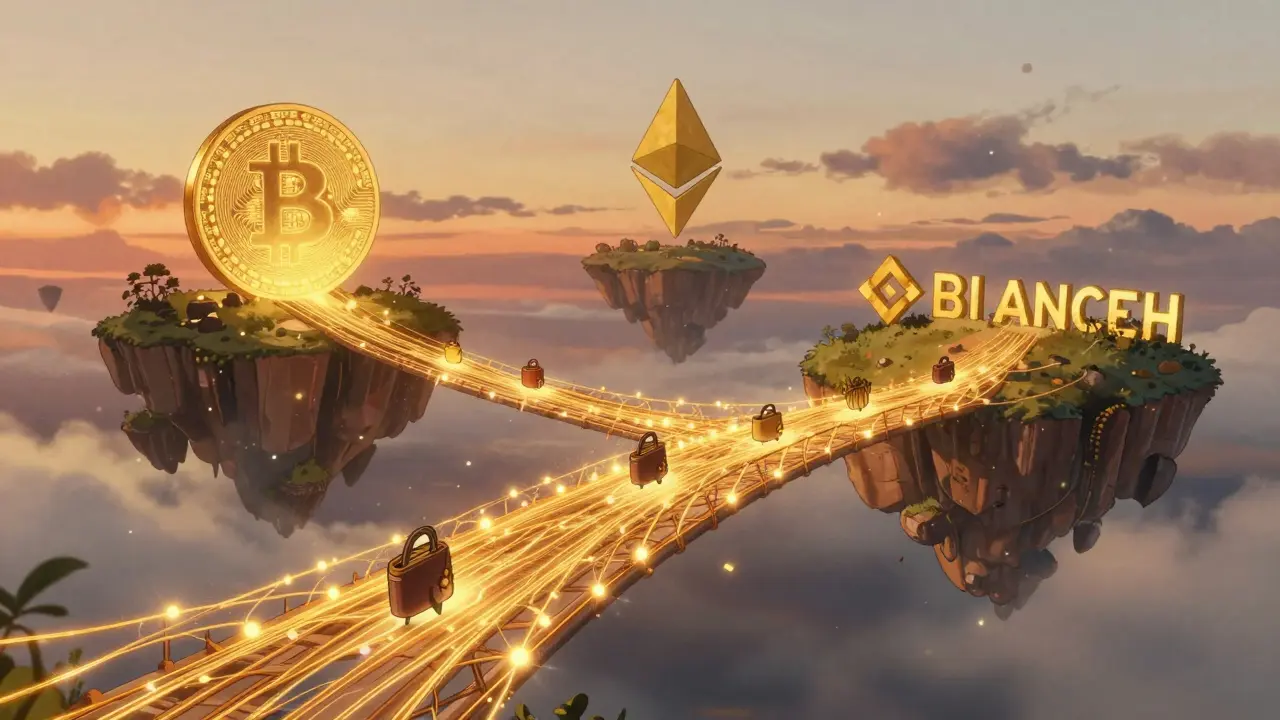
Wanchain (WAN) isn’t just another cryptocurrency. It’s a bridge - and not just any bridge, but one that lets Bitcoin talk to Ethereum, Ethereum talk to Binance Smart Chain, and so on, without needing a middleman. If you’ve ever tried sending ETH to a wallet on Solana or BTC to a DeFi app on Avalanche, you know how messy that usually is. Most solutions rely on wrapped tokens or centralized exchanges. Wanchain cuts out the middleman entirely. That’s the core idea.
What Wanchain Actually Does
Wanchain is a Layer 1 blockchain built from the ground up to connect other blockchains. It doesn’t try to be the fastest or the cheapest. It doesn’t compete with Ethereum or Solana. Instead, it solves a real, frustrating problem: blockchain isolation. Each chain operates in its own silo. Wanchain builds direct, secure tunnels between them.
Think of it like a global postal system where each country (blockchain) has its own mail rules. Normally, to send a letter from the U.S. (Ethereum) to Japan (Solana), you’d have to hand it to a courier company (a centralized exchange or bridge). Wanchain is like installing a direct, encrypted mail chute between every pair of countries. No courier needed. No holding tank. Just direct delivery.
The technology behind this is called Secure Multiparty Computation (sMPC) combined with Shamir’s Secret Sharing. In plain terms: instead of one entity holding your crypto while it moves between chains, thousands of nodes split the responsibility. No single node ever sees your full private key. That’s why experts like Dr. Gavin Andresen call it one of the most secure cross-chain methods available.
The WAN Token: Supply, Use, and Distribution
The WAN token is the fuel of this system. It’s not just a speculative asset - it has real utility. Here’s how it’s structured:
- Total supply: Exactly 210 million WAN
- Initial ICO (2018): 104 million WAN distributed
- Foundation reserve: 36 million WAN
- Ecosystem development: 30 million WAN
- Community incentives: 40 million WAN
WAN is used to pay for cross-chain transaction fees, secure the network through staking, and vote on governance proposals. Unlike many coins that keep printing new tokens, Wanchain’s supply is fixed. No inflation. No surprise dilution.
Staking WAN gives users a chance to become validators - the nodes that help process cross-chain transfers. Validators earn rewards in WAN, and they’re slashed if they act maliciously. It’s a classic Proof of Stake model, but optimized for security over speed.
How Fast and Reliable Is It?
Wanchain isn’t trying to be Solana. It’s not aiming for 50,000 TPS. But it doesn’t need to. For cross-chain transfers, reliability matters more than raw speed.
- Block time: 4.5 seconds
- Throughput: ~1,500 TPS
- Bridge uptime (last 18 months): 99.98%
That uptime number is critical. Most cross-chain bridges have gone down during market spikes, locking users’ funds for hours or even days. Wanchain’s bridges stayed up through the 2022 crash, the 2023 AI coin boom, and the Fed rate hikes. Users on Reddit and Trustpilot report 12+ successful transfers with zero failures. That’s not luck - it’s architecture.
Transaction times average 8 minutes from start to finish. That’s slower than some centralized bridges, but far safer. You’re not trusting a company. You’re trusting math.
What Blockchains Does Wanchain Connect?
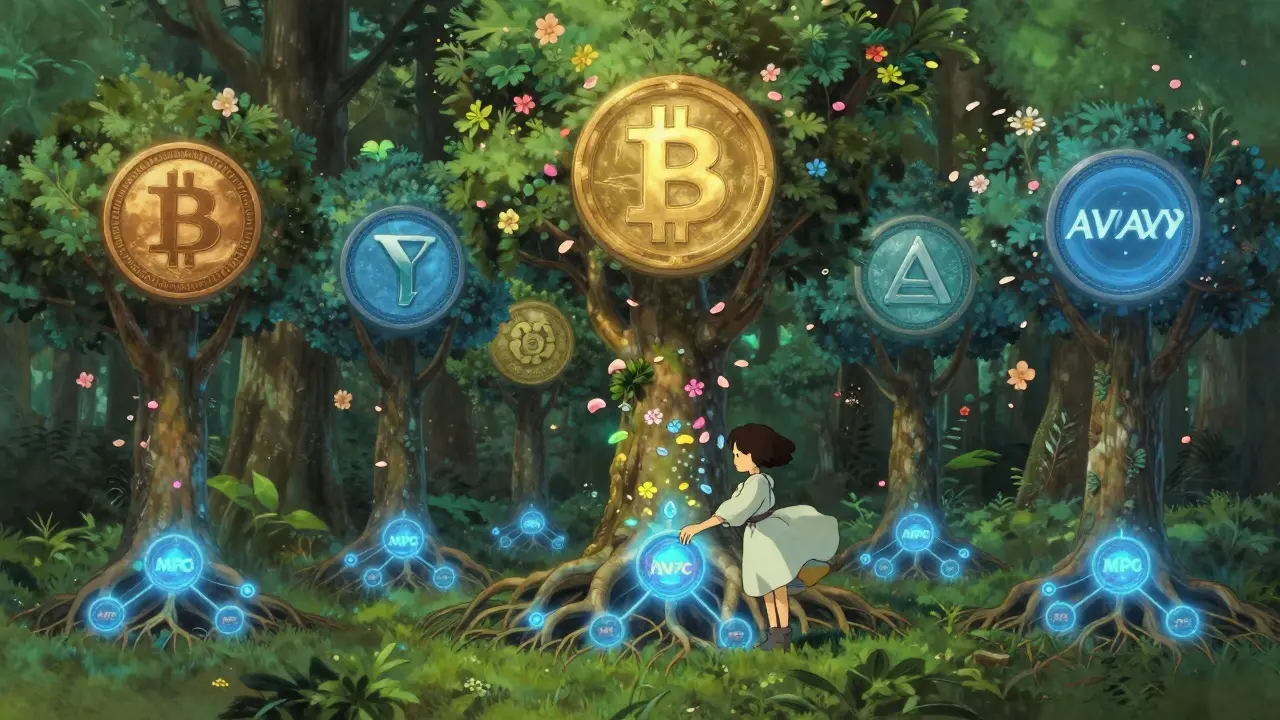
Wanchain doesn’t just connect a few chains. It connects the big ones:
- Bitcoin (BTC)
- Ethereum (ETH)
- Binance Smart Chain (BSC)
- Avalanche (AVAX)
- Fantom (FTM)
- Litecoin (LTC)
- Moonbeam
- Moonriver
- XRP Ledger
- Polkadot (DOT)
That’s 12 major networks - and counting. The upcoming Wan Me 3.0 upgrade (launched October 2023) already added support for non-EVM chains like Bitcoin and XRP Ledger with full NFT transfers. That’s rare. Most bridges only handle ERC-20 tokens. Wanchain moves NFTs too - like CryptoPunks or Bored Apes - directly between chains without wrapping them.
Compare that to Cosmos or Polkadot. Cosmos requires chains to connect through the Cosmos Hub. Polkadot uses a relay chain. Wanchain skips the hub. Every chain connects directly to every other chain. Fewer hops. Fewer points of failure.
How Does It Compare to Other Cross-Chain Solutions?
Here’s how Wanchain stacks up against the main alternatives:
| Feature | Wanchain (WAN) | Polkadot (DOT) | Cosmos (ATOM) |
|---|---|---|---|
| Architecture | Direct peer-to-peer bridges | Relay chain with parachains | Hub-and-spoke (IBC protocol) |
| Centralized intermediaries? | No | Yes (relayer nodes) | Yes (relayers) |
| Supports non-EVM chains? | Yes (BTC, XRP, LTC) | Yes (wide variety) | Yes (with IBC) |
| Uptime (last 18 mo) | 99.98% | 98.5% | 98.2% |
| Developer adoption | Medium (EVM-friendly) | High (Substrate ecosystem) | High (Go-based) |
| Best for | Security-focused institutions, direct transfers | Modular app chains | Inter-chain communication between IBC-ready chains |
Wanchain wins on security and uptime. It loses on developer tools. Polkadot and Cosmos have bigger communities and better documentation. But if you’re moving $10 million in crypto between chains for a bank or hedge fund, you care more about security than how easy it is to deploy a DApp.
Who Uses Wanchain?
It’s not just retail traders. Wanchain is quietly becoming the infrastructure behind institutional cross-chain payments.
According to Wanchain’s own case studies, 17 financial institutions - including two major global banks - now use its technology to move assets between blockchains. One bank in Europe uses it to settle cross-border payments in real-time between BTC and EUR-backed tokens. Another uses it to tokenize bonds on Ethereum and settle them on BSC for liquidity.
On the retail side, users on Reddit and Trustpilot praise it for low fees and reliability. One user wrote: “I’ve sent ETH to BTC 12 times. Never failed. Took 8 minutes each time. My centralized bridge froze last month - Wanchain didn’t.”
Developers also like it. If you’ve built on Ethereum, you can deploy your Solidity smart contracts on Wanchain with almost zero changes. One developer on GitHub said: “Migrated my DApp in under two hours. The EVM compatibility is genuinely impressive.”

Challenges and Criticisms
Wanchain isn’t perfect.
First, the wallet support is limited. You can’t use MetaMask out of the box. You need a Wanchain-compatible wallet like WanWallet or a multi-chain wallet like Rabby or Trust Wallet (with custom RPC). That’s a barrier for beginners.
Second, documentation for non-EVM chains is inconsistent. If you’re trying to bridge Litecoin or XRP, you’ll find fewer examples than for Ethereum.
Third, scalability under extreme load is still untested. Blockchain researcher Dan Robinson questioned whether sMPC can handle 10x the current volume without slowing down. So far, it hasn’t been stressed - but it’s a risk.
And finally, the developer community is small. Ethereum has millions of devs. Wanchain has a few thousand. That means fewer DApps, fewer tools, fewer tutorials.
What’s Next for Wanchain?
The roadmap is focused on enterprise adoption and scaling.
- Q1 2024: Integration with Solana
- Q2 2024: Privacy features for cross-chain transactions (think ZKPs)
- Q3 2024: Enterprise governance tools for institutional users
Analysts at Delphi Digital predict Wanchain will become the “de facto standard for institutional cross-chain transactions by 2025.” CoinShares Research gives it a 78% chance of remaining relevant through 2030 - higher than most Layer 1s.
Why? Because interoperability isn’t a trend. It’s a necessity. Blockchains won’t die. They’ll multiply. And someone has to connect them. Wanchain is betting it’s that someone.
Is Wanchain Worth Your Attention?
If you’re a trader looking for quick swaps - stick with centralized exchanges. If you’re a developer building a DApp on Ethereum - Wanchain might not be your first choice.
But if you care about:
- True decentralization in cross-chain transfers
- Security over speed
- Moving assets between Bitcoin and DeFi without wrapping
- Long-term infrastructure, not short-term hype
Then Wanchain isn’t just worth watching - it’s worth understanding. It’s not the flashiest coin. But it’s one of the few solving a problem that every other blockchain will eventually need to solve.
WAN might not hit $100 tomorrow. But if blockchain becomes the backbone of global finance - Wanchain will be one of the pipes carrying the water.
Is Wanchain (WAN) a good investment?
Wanchain isn’t a typical speculative crypto. Its value comes from utility - not hype. If you believe cross-chain interoperability is essential for crypto’s future, WAN is a bet on infrastructure, not price. It’s not for day traders. It’s for long-term holders who understand blockchain’s underlying problems. Historical performance shows resilience through market cycles, but like all crypto, it carries risk.
Can I stake WAN tokens?
Yes. Wanchain uses a Proof of Stake model. You can stake WAN to become a validator or delegate to one. Validators help secure cross-chain transfers and earn rewards in WAN. The annual yield typically ranges between 5% and 8%, depending on network participation. You can stake through Wanchain’s official wallet or supported third-party platforms like Gate.io and Bitget.
How do I send crypto from Ethereum to Bitcoin using Wanchain?
You don’t convert ETH to BTC. You transfer ETH to a Wanchain bridge, and it locks ETH on Ethereum while releasing an equivalent amount of BTC on the Bitcoin network - without wrapping. You need a Wanchain-compatible wallet like WanWallet. Connect your Ethereum wallet, select ETH as the source, BTC as the target, enter the amount, and confirm. The transfer takes about 8 minutes. Your BTC arrives in your Bitcoin address. No KYC. No exchange.
Does Wanchain support NFTs?
Yes. Wanchain’s bridges support full NFT transfers between chains. You can move a CryptoPunk from Ethereum to Binance Smart Chain, or an Art Blocks piece from Ethereum to Polkadot. The NFT isn’t wrapped or tokenized - it’s moved natively. This is rare among cross-chain solutions and makes Wanchain valuable for NFT marketplaces and collectors.
Is Wanchain regulated?
Wanchain itself is a decentralized protocol, so it doesn’t require a license. But cross-chain transfers are under scrutiny in places like the EU under MiCA regulations. The decentralized, non-custodial nature of Wanchain aligns with regulatory trends favoring user control. However, exchanges or services using Wanchain may need to comply with local AML/KYC rules. Users transferring assets should understand their local legal obligations.




Write a comment
Your email address will be restricted to us