
When someone sends bitcoin to a wallet linked to a sanctioned entity, it doesn’t disappear into thin air. It leaves a trail - a permanent, public record on the blockchain. But finding that trail? That’s where blockchain forensics comes in. Law enforcement agencies, banks, and regulators aren’t guessing anymore. They’re using advanced tools to track every coin, trace every transfer, and shut down illegal networks - even when criminals think they’re hidden.
How Blockchain Forensics Works
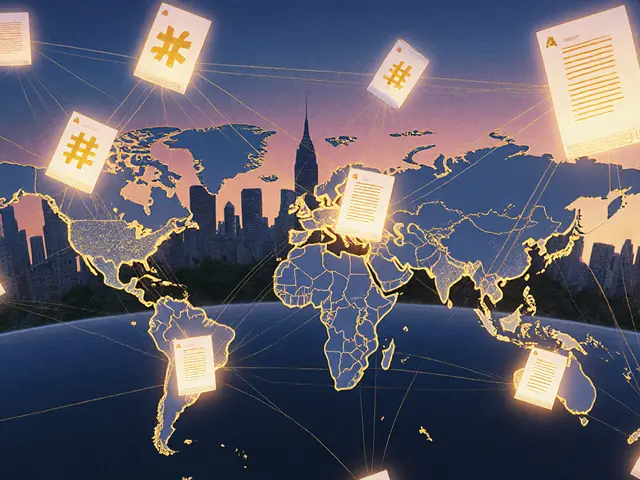
Unlike bank accounts, crypto wallets don’t have names. They have addresses - long strings of letters and numbers. But every transaction between them is recorded forever on a public ledger. Blockchain forensics turns that openness into a strength. It doesn’t break privacy; it reads what’s already there. Tools like those from Elliptic and TRM Labs map out transaction networks in real time. They don’t just follow one payment. They trace chains of dozens or hundreds of transfers across multiple blockchains - from Bitcoin to Ethereum to newer chains like ICP. These systems look for patterns: money flowing from a darknet market into a mixer, then splitting into dozens of small payments to evade detection. That’s called a fan-in/fan-out pattern. Or money collected from hundreds of wallets into one central address - a gather-scatter pattern. These aren’t random. They’re signatures of laundering. The Helix case changed everything. In 2016, investigators had to manually review hundreds of thousands of transactions to find Larry Dean Harmon’s trail. Today, the same analysis takes minutes. Automated systems flag suspicious behavior, prioritize high-risk wallets, and build complete case files with timestamps, amounts, and linked addresses. Harmon was caught not because he made a mistake - he used a mixing service. But the mixing service paid commissions to his wallet. That one payment, traced back, was enough to convict him.Tracking Sanctions Evasion
When countries impose sanctions on Russia, Iran, or North Korea, they don’t just block bank accounts. They block crypto addresses too. But criminals don’t just send money directly. They use bridges, tumblers, and decentralized exchanges to hide the trail. TRM Labs has identified five common ways sanctions are evaded using crypto, though full details are kept private to avoid giving criminals a playbook. One known method? Layering. A sanctioned entity sends ETH to a non-sanctioned wallet. That wallet sends it to a DeFi protocol. The protocol swaps it for another token. That token gets moved to a different chain. Then it’s converted back to ETH and withdrawn to a new wallet - all without touching a centralized exchange. The money changes form, location, and chain, but the origin is still traceable. Platforms now monitor thousands of on-chain addresses tied to sanctioned jurisdictions. If a wallet has ever interacted with a known terrorist financing address or a Russian exchange blacklisted by the EU, it gets flagged. Exchanges like Bitget use these tools to screen every deposit and withdrawal before it hits their system. One false positive? That’s better than letting $5 million in ransomware cash slip through.How Law Enforcement Uses It
Police don’t need to hack wallets. They don’t need secret keys. They need transaction history. In the case of the Internet Watch Foundation (IWF), blockchain forensics helped shut down websites selling child abuse imagery. Criminals demanded payment in Bitcoin. Investigators traced those payments back to wallets, then linked them to real-world identities through exchange KYC data. The same technique is used for ransomware gangs. When a hospital pays $2 million in Bitcoin, authorities don’t just watch the payment. They follow where the ransomware group moves the money - to mixers, to exchanges, to overseas wallets. That’s how they find the operators. The process starts with a tip, a seized device, or a compromised wallet. From there, analysts build a map. Every transaction is a node. Every wallet is a point. Connections between them reveal relationships - who’s working with whom, who’s controlling multiple wallets, who’s moving money for others. That map becomes evidence in court.
What Crypto Businesses Must Do
If you run an exchange, a wallet service, or even a crypto-enabled business, you’re now part of the compliance chain. Regulators expect you to know where your customers’ money came from. The FATF’s Travel Rule requires exchanges to share sender and receiver info for transfers over $1,000. But that’s not enough. Many criminals use peer-to-peer trades, non-KYC platforms, or privacy coins to bypass this. That’s why top exchanges integrate blockchain analytics directly into their systems. They don’t just check if a wallet is on a sanctions list. They check if it’s ever been near one. They look at the wallet’s history - how many transactions, how fast money moves, whether it interacts with mixers like Tornado Cash or Wasabi. Smaller platforms can’t build this themselves. That’s why they buy tools from Elliptic, Chainalysis, or TRM Labs. These vendors update their databases daily with new sanctioned addresses, new laundering patterns, and new risky protocols. A business that ignores this isn’t just taking a risk - it’s inviting fines, shutdowns, or criminal liability.The New Tools: MPOCryptoML and Beyond
The game is changing. Criminals are getting smarter. So are the tools. A new method called MPOCryptoML, developed by academic researchers, can detect multiple laundering patterns at once - something older systems struggled with. It doesn’t just look at one transaction. It analyzes the entire graph of activity around a wallet. It uses something called Personalized PageRank to find hidden connections - like a detective tracing a suspect’s friends, then their friends’ friends. In tests, MPOCryptoML beat seven existing systems. It improved precision by over 9%, recall by over 10%, and overall accuracy by nearly 10%. That means fewer false alarms and more real criminals caught. It also scales better. Law enforcement doesn’t have to wait weeks to analyze a case. They can run hundreds of investigations in parallel. The next frontier? Cross-chain tracking. Most criminals now move money between Bitcoin, Ethereum, Solana, and others. Forensic tools must follow them across all of them. Systems now integrate data from over 100 blockchains. Smart contract analysis is also growing - tracking how DeFi protocols are used to launder funds through liquidity pools and flash loans.









Write a comment
Your email address will be restricted to us