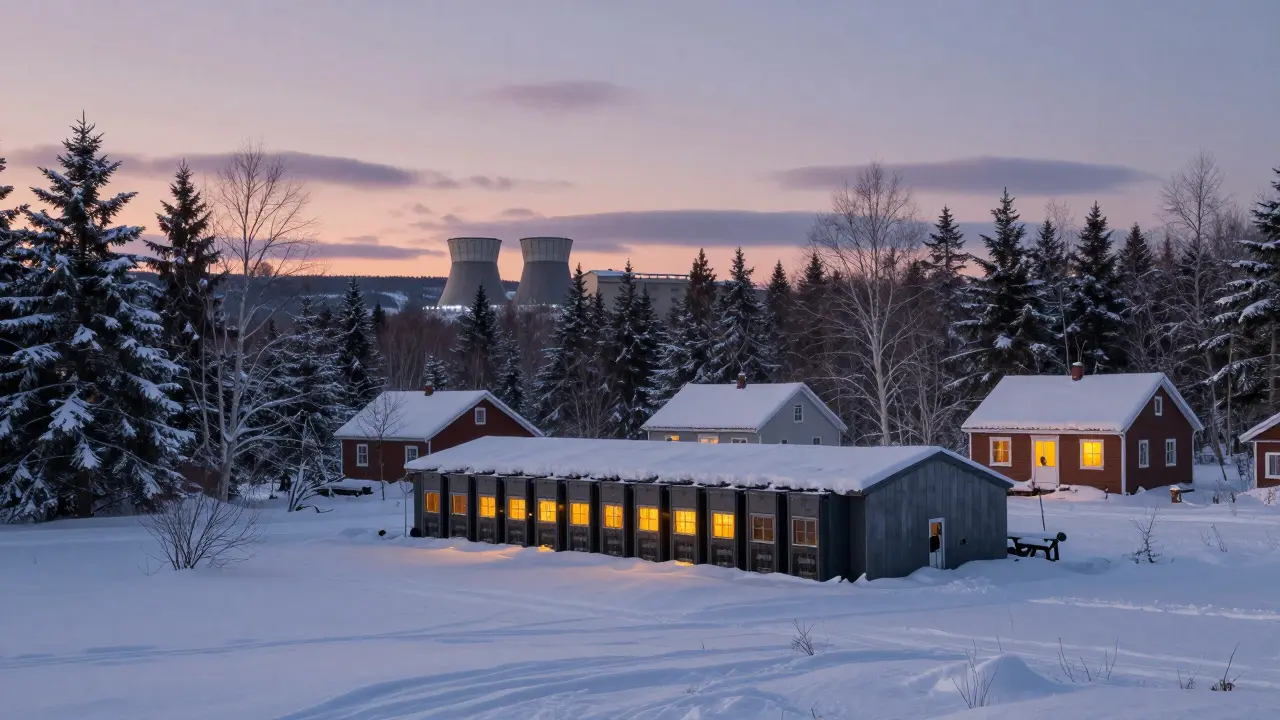
On March 1, 2022, New Brunswick quietly stopped accepting new electricity connections for cryptocurrency mining operations. It wasn’t a press release that made headlines across the country-it was a cabinet order. By November 2023, that pause became a full moratorium. Crypto mining in New Brunswick isn’t just restricted-it’s frozen in place. No new mines can hook up to the grid. No existing ones can expand. And there’s no end date in sight.
Why New Brunswick Said No to Crypto Mines
New Brunswick doesn’t have a lot of spare electricity. Its power system, run by Crown corporation NB Power, is already stretched thin during winter months. When crypto mining companies started showing up with requests for hundreds of megawatts-enough to power entire towns-the province took notice. One mining proposal alone wanted 1,000 megawatts. That’s more than the entire electricity demand of Saint John, the province’s second-largest city. If every company that had expressed interest in 2022 had connected, the province’s total load would’ve jumped by nearly 4,600 megawatts. At the time, NB Power’s total capacity was only about 6,100 megawatts. That’s not a small bump-it’s a 75% surge in demand from one industry. The government didn’t want to raise rates for families and small businesses to pay for it. They didn’t want to delay renewable energy projects or grid upgrades. And they certainly didn’t want to risk blackouts during cold snaps when heating demands spike. So they pulled the plug. Literally.What the Moratorium Actually Blocks
This isn’t a ban on owning Bitcoin. It’s not even a ban on running a small home rig. The rule targets one thing: large-scale electricity connections for crypto mining. Specifically, Proof of Work operations like Bitcoin mining, which use massive amounts of power to solve complex math problems. Here’s what’s forbidden:- New mining facilities applying for electricity service from NB Power
- Existing mines requesting more power to add more mining rigs
- Any project that would increase the province’s electricity load for mining purposes
How This Compares to Other Canadian Provinces
New Brunswick isn’t alone in cracking down-but it’s the strictest. Manitoba paused new connections in November 2022 and extended it through April 30, 2026. That’s a temporary freeze with a clear end date. British Columbia passed a law giving BC Hydro the power to deny mining requests, and they won a court case against a company trying to force access to 2.5 million megawatt-hours per year. Hydro-Québec raised rates for miners and capped their usage. But only New Brunswick made it indefinite. No review date. No sunset clause. No promise to revisit. It’s a permanent shutdown unless the government changes its mind. Alberta, on the other hand, is the opposite. With deregulated energy markets and low electricity prices, it’s become Canada’s top destination for crypto miners. Companies that once looked at New Brunswick now set up shop in Calgary or Edmonton.The Bigger Picture: Energy, Climate, and Public Interest
This isn’t just about New Brunswick. It’s part of a global shift. China shut down its entire crypto mining industry in 2021, taking out nearly 75% of the world’s Bitcoin mining capacity overnight. Countries like Egypt, Morocco, and Vietnam followed with bans. The reason? Energy use. Bitcoin mining now consumes more electricity annually than entire countries like Argentina or the Netherlands. Governments are starting to ask: Should we be using our clean hydroelectric power to mine digital coins-or to heat homes, charge electric cars, and power hospitals? New Brunswick’s answer is clear. Their hydroelectric dams were built to serve people, not machines. And they’re not willing to trade reliability and affordability for a speculative industry.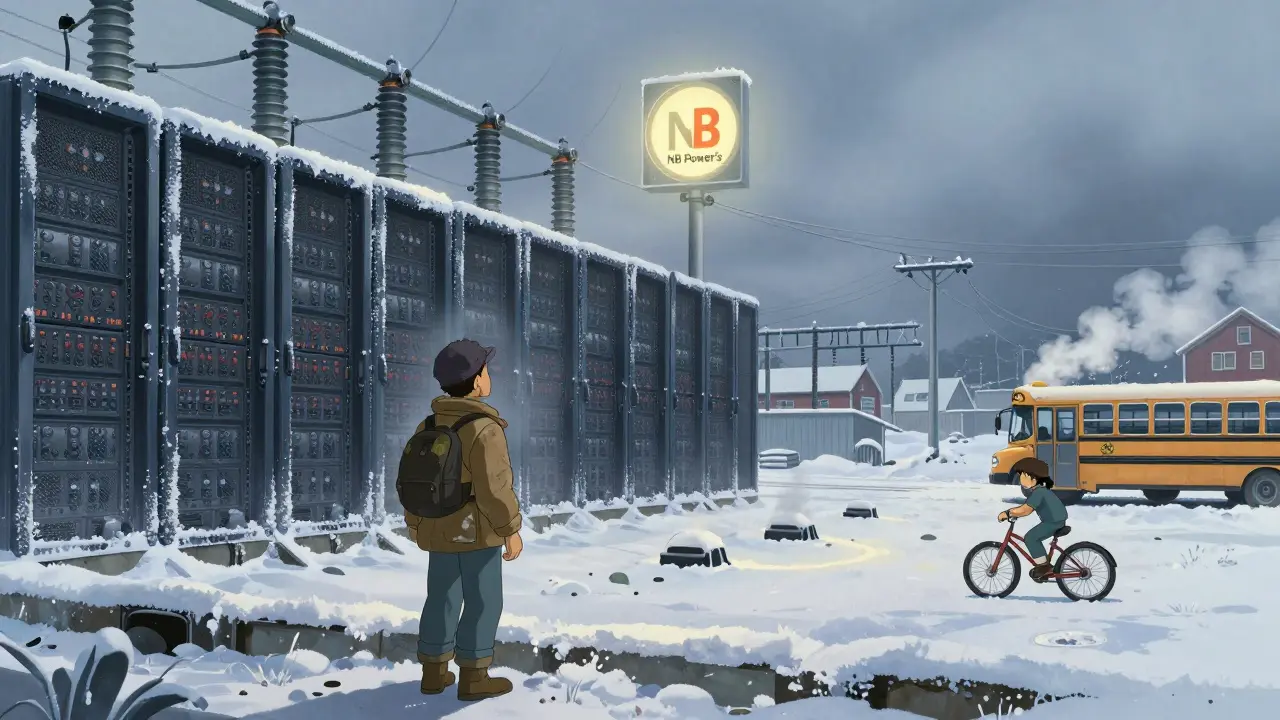
What Happened to Miners Already in New Brunswick?
Some mines were already running before the moratorium. They’re still operating-but they’re stuck. No upgrades. No new rigs. No expansion. If a cooling system fails or a power supply burns out, they can’t just add more capacity to fix it. They have to work with what they’ve got. A few operators tried to reroute power through private generators or solar setups, but those solutions don’t scale. The cost of running diesel generators for thousands of rigs is astronomical-and environmentally worse than grid power. Most have either scaled down or left. Some moved to Alberta. Others went to the U.S., where states like Texas and Georgia offer cheap power and fewer restrictions. A handful tried to rebrand as “data centers” to slip through the rules-but NB Power’s policy is broad enough to catch them.Is There Any Way Around the Ban?
Not really. The moratorium is enforced at the utility level. You can’t just buy power from a private supplier and connect to the grid. NB Power controls all transmission and distribution infrastructure in the province. No connection = no mining. Even if you build a mine on private land with your own solar panels, you still need to connect to the grid for backup power. That’s blocked too. The policy is designed to be foolproof. Some miners have looked at offshore solutions-floating data centers or offshore rigs-but those are still experimental and far from practical. For now, New Brunswick is closed.What This Means for the Future of Crypto Mining in Canada
New Brunswick’s move has sent a message: if your industry demands more power than the public can afford, you won’t get it. Other provinces are watching closely. Ontario and Quebec have seen mining interest grow, but so far, they’ve kept a cautious stance. If New Brunswick’s grid stays stable and electricity rates stay low, other provinces may follow suit. The industry’s future in Canada now depends on three things:- Energy efficiency: Can mining tech use less power per hash? (It’s improving, but slowly)
- Location: Alberta and parts of the U.S. are winning the race
- Policy: Will more provinces adopt similar bans?

Will This Ever Be Reversed?
There’s no sign it will. The provincial government hasn’t mentioned a review date. NB Power hasn’t signaled any change. No minister has suggested lifting the ban. Even if Bitcoin’s price skyrockets or new mining tech cuts energy use by 50%, the political will to reverse this doesn’t exist. The public supports it. A 2024 poll showed 68% of New Brunswickers backed the ban, saying they’d rather see electricity go to schools, hospitals, and heating than to server farms. Until the province builds new power plants-something that takes 10 to 15 years-or until mining becomes dramatically more efficient, this moratorium will stay.What Miners Should Do Now
If you’re a miner with operations in New Brunswick:- Accept you can’t grow. Focus on optimizing what you have.
- Consider relocating. Alberta, Saskatchewan, or even parts of the U.S. Midwest offer better conditions.
- Don’t waste money on legal loopholes. The rules are clear and enforced.
- Avoid New Brunswick. It’s off the table.
- Look at Alberta first. It’s the only province with open access and low rates.
- Check local utility policies. Even in Alberta, some municipalities have zoning restrictions.
What This Means for Bitcoin’s Future
Bitcoin mining isn’t going away. It’s just moving. The industry is becoming more geographically diverse. After China’s ban, miners scattered. Now, with New Brunswick and other provinces closing doors, the focus is shifting to places with cheap, reliable power-and no political resistance. The result? Mining is becoming less about speculation and more about logistics. The winners will be those who can find the cheapest, cleanest, and most stable energy sources-not those who lobby the hardest. New Brunswick didn’t ban Bitcoin. It just said no to using public power for it. And in a world where energy is scarce and climate goals are urgent, that’s not a bad rule.Is crypto mining completely banned in New Brunswick?
No, it’s not a complete ban. Existing crypto mining operations that were connected before the moratorium can still run-but they can’t expand or add more equipment. No new mines can connect to the grid at all. The restriction targets electricity service, not ownership or operation of Bitcoin.
Why did New Brunswick target crypto mining and not other industries?
Crypto mining uses far more electricity per dollar of economic output than most industries. A single large mining facility can consume as much power as a small city. Other industries like manufacturing or data centers don’t typically request hundreds of megawatts in one go. The scale and speed of crypto mining’s demand caught the province off guard-and it was seen as unsustainable.
Can I mine Bitcoin at home in New Brunswick?
Yes, as long as you’re using standard household electricity and not requesting a dedicated commercial connection. A single rig or even a small setup of 5-10 rigs won’t trigger the moratorium. The ban is only for industrial-scale operations that need significant grid upgrades or new power lines.
What happens if a crypto miner tries to sneak in power from a private source?
It’s nearly impossible. All electricity distribution in New Brunswick is controlled by NB Power. Even if you use solar panels or generators, you still need to connect to the grid for backup power-and that connection is blocked under the moratorium. Any attempt to bypass the system would likely be detected and shut down.
Could New Brunswick change its mind in the future?
Technically yes, but it’s unlikely. There’s no political momentum to reverse the ban. Public opinion supports it, and the province has no immediate plans to expand power generation. Unless Bitcoin mining becomes dramatically more efficient or the province builds new hydroelectric capacity, the moratorium will likely remain in place indefinitely.






Write a comment
Your email address will be restricted to us