
You have probably seen an ad for Fides promising massive returns with zero risk. Maybe a pop-up on a news site claimed it is the next big thing in cryptocurrency trading. Before you send any money to this platform, you need to stop and look at the facts. There is no legitimate record of a major, regulated cryptocurrency exchange operating under the name "Fides." This silence from the financial world is not a good sign. In the crypto industry, if a platform cannot be found on regulatory lists or reputable review sites, it is usually hiding something dangerous.
This review will help you understand why you should stay away from unverified platforms like Fides. We will look at how these scams operate, what red flags you missed, and how to protect your hard-earned money from disappearing forever. The goal here is simple: keep your assets safe by avoiding traps that look like opportunities.
The Silence of Regulatory Bodies
In the world of finance, legitimacy comes from oversight. Legitimate exchanges do their best to show off their licenses. They want you to know they are safe. A real crypto exchange will display its registration numbers from authorities like the Financial Conduct Authority (FCA) in the UK, the SEC in the US, or ASIC in Australia right on their homepage. When we search for Fides crypto exchange, there is a complete lack of such information. No license number. No physical address that matches a corporate office. No public records of incorporation.
Regulatory bodies exist to protect investors. If a platform operates without their permission, it means there is no one to call when things go wrong. You are playing in the wild west. Without a license, the platform has no obligation to segregate client funds, meaning they can mix your money with their own operational costs or personal accounts. This is a classic setup for a rug pull, where the operators simply vanish with the deposited capital.
- No FCA Registration: Not listed in the UK financial register.
- No SEC Oversight: Not registered with US securities regulators.
- No Public Audits: No proof of reserves or third-party security checks.
How Fake Exchanges Operate
Scammers are clever. They build websites that look professional, often copying the design of trusted giants like Binance or Coinbase. They use high-quality graphics and promise features like "AI-driven trading bots" or "guaranteed daily profits." These claims are mathematically impossible in volatile markets. If someone had a way to guarantee profit, they would not need your investment; they would just trade their own money.
The typical lifecycle of a fake exchange like Fides follows a predictable pattern. First, they attract users through aggressive advertising on social media or via fake celebrity endorsements. Next, they allow small withdrawals initially to build trust. Once you deposit a larger amount, the problems begin. You might see fake profits on your dashboard, but when you try to withdraw, you are told you must pay a "tax," a "verification fee," or a "security deposit." This is the trap. Every time you pay, they invent another fee. Eventually, the website goes offline, and your contact with support vanishes.
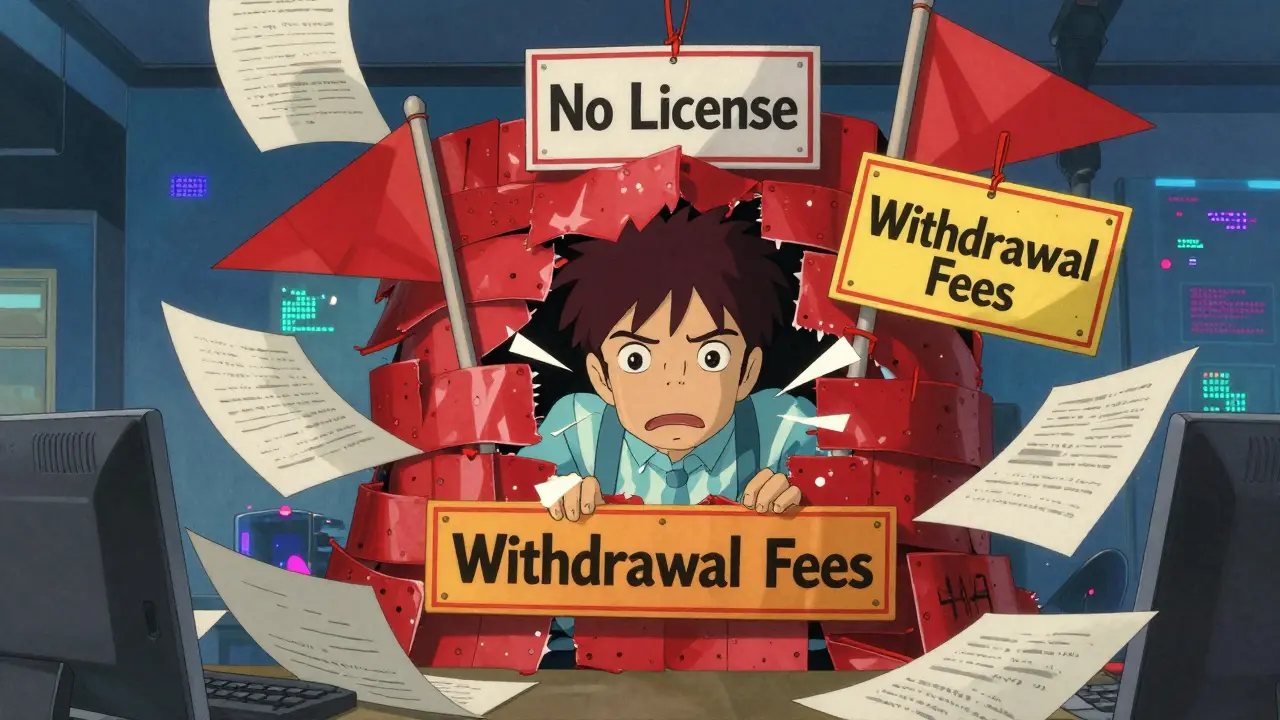
Red Flags to Watch For
You can spot a fraudulent platform before you lose money by looking for specific warning signs. These indicators are universal across all types of investment scams. If you see three or more of these, close the browser tab immediately.
| Red Flag | What It Means |
|---|---|
| Guaranteed Returns | All investments carry risk. Promises of fixed, high yields are lies. |
| Pressure to Deposit | Scammers create urgency to stop you from thinking critically. | r>
| Withdrawal Fees | Legitimate exchanges deduct fees from the withdrawal amount, not ask for extra deposits. |
| Poor Website Quality | Broken links, bad grammar, or stolen images indicate a rushed operation. |
| Anonymity | No team photos, no LinkedIn profiles, no company history. |
Another major red flag is the communication style. Do you receive messages from Telegram groups or WhatsApp contacts urging you to invest? Legitimate financial institutions do not recruit clients through informal chat apps. They use official email channels and verified customer service portals. If your "account manager" is texting you personally, asking for screenshots of your ID, and pushing you to move money faster, you are being manipulated.
Verifying Exchange Legitimacy
Before trusting any platform with your funds, you must perform due diligence. This does not require a degree in finance; it just requires a few minutes of searching. Start by checking the domain age. Use tools like Whois lookup. If the website was registered only a few months ago, it is too new to have a track record. Established exchanges have been around for years, surviving multiple market crashes and upgrades.
Next, look for independent reviews. Be careful with reviews on the exchange's own site or forums they control. Look for discussions on Reddit, Trustpilot, or specialized crypto communities like Bitcointalk. Search for terms like "[Exchange Name] withdrawal issues" or "[Exchange Name] scam." If you find stories of people unable to get their money out, that is the truth. Real users share their pain openly.
Finally, check for proof of reserves. Reputable exchanges publish monthly attestation reports from top-tier accounting firms. These reports prove that the exchange actually holds the assets it claims to hold. If a platform cannot provide this transparency, assume they do not have the money. They are likely running a Ponzi scheme, using new deposits to pay old investors until the flow stops.

Safe Alternatives for Trading
If you are looking to enter the cryptocurrency market, stick to platforms that have stood the test of time. These exchanges are publicly traded, heavily regulated, and have millions of verified users. They may not offer "guaranteed" profits, but they offer guaranteed access to your funds.
- Coinbase: Listed on the NYSE, making it subject to strict US financial regulations. Great for beginners.
- Binance: The largest exchange by volume, offering a wide range of coins and low fees. Available globally with local compliance efforts.
- Kraken: Known for strong security and excellent customer support. Has never been hacked since its launch.
- Bitstamp: One of the oldest exchanges, operating since 2011 with a focus on European compliance.
These platforms charge standard trading fees, which are transparent and deducted automatically. They do not ask you to wire money to personal bank accounts or buy Bitcoin on Cash App to fund your account. They integrate directly with banking systems and credit cards securely.
Recovering Lost Funds
If you have already sent money to Fides or a similar unknown platform, act quickly. Time is your enemy. First, contact your bank or credit card issuer. Explain that you were a victim of fraud. They may be able to reverse the transaction if it was recent. Provide them with all transaction IDs and screenshots of communications.
Second, report the incident to your local law enforcement. In the UK, you can report to Action Fraud. In the US, file a complaint with the FBI’s Internet Crime Complaint Center (IC3). While recovery is difficult, reporting helps authorities track down criminal networks and prevent them from targeting others.
Do not fall for "recovery scammers." After losing money, you are vulnerable. People on social media will claim they can hack the exchange and get your money back for a fee. These are also scammers. No one can force a rogue server to release funds. Only official legal channels have any chance, however slim.
Is Fides crypto exchange a scam?
Yes, it is highly likely that Fides is a scam. There is no regulatory record, no verifiable company information, and no reputable user feedback for a platform by this name. These are classic signs of a fraudulent operation designed to steal deposits.
How can I tell if a crypto exchange is legitimate?
Check for regulatory licenses from bodies like the FCA or SEC. Look for transparent fee structures, proof of reserves, and independent user reviews on third-party sites. Legitimate exchanges have been in business for several years and have clear contact information.
What should I do if I lost money to a fake exchange?
Contact your bank immediately to request a chargeback. Report the fraud to local authorities and cybercrime units. Do not trust anyone online who claims they can recover your funds for a fee, as these are secondary scams.
Why do fake exchanges promise guaranteed profits?
They use guaranteed profits as bait to attract inexperienced investors. In reality, no investment is risk-free. These promises are lies used to lure victims into depositing money that the scammers intend to keep.
Are there any safe alternatives to Fides?
Yes, stick to well-known, regulated exchanges like Coinbase, Binance, Kraken, or Bitstamp. These platforms have proven track records, security audits, and comply with international financial laws.