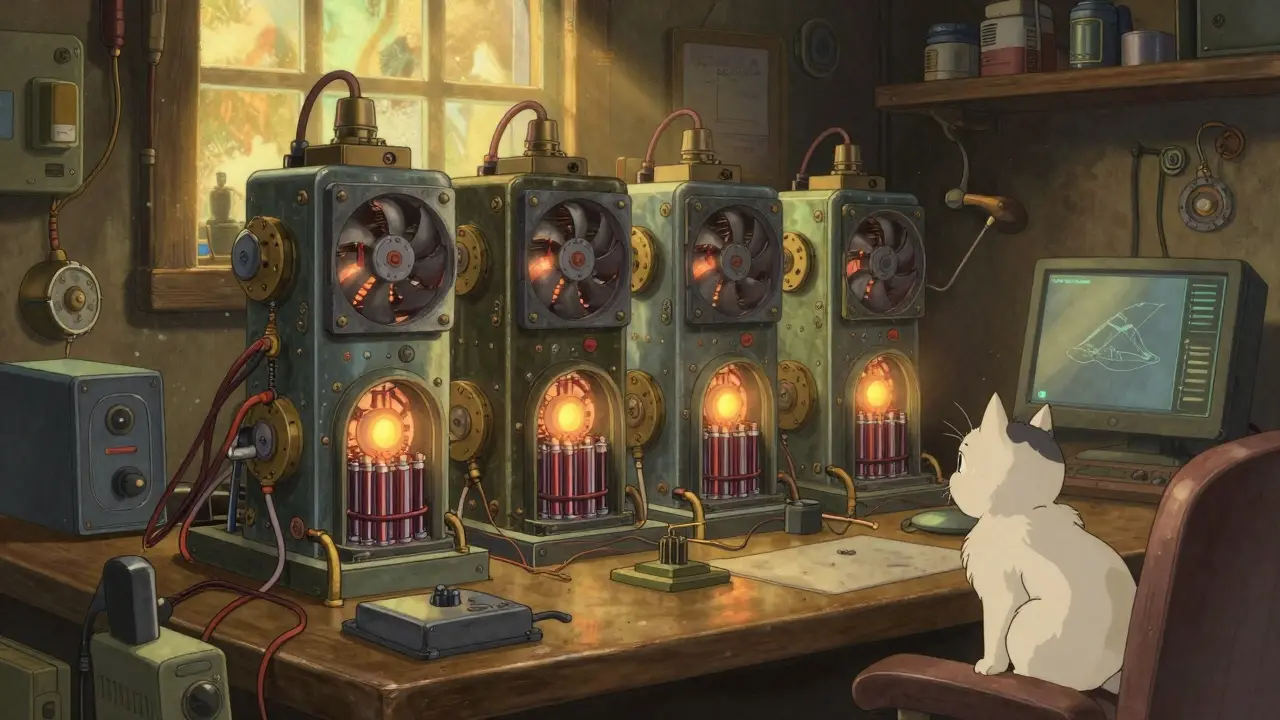
Imagine waking up to find out that the payment you get for your hard work has just been cut in half, but you still have to do the same amount of labor. That is exactly what happens to thousands of people in the crypto world every few years. In the world of blockchain, block reward distribution is the heartbeat of the network. It is the primary reason why people spend thousands of dollars on loud, power-hungry machines to keep the ledger secure. Without this incentive, the whole system would collapse because there would be no reason to protect the network from attacks.
What Exactly Is a Block Reward?
At its core, a block reward is a prize. When a miner successfully solves a complex mathematical puzzle, they get to add a new block of transactions to the chain. For this service, the network pays them in two ways: a newly minted coin (the subsidy) and the transaction fees paid by the users whose transfers were included in that block.
Bitcoin is the first cryptocurrency to implement this system, launched in January 2009 by Satoshi Nakamoto. It uses a Proof-of-Work (PoW) consensus mechanism, meaning miners must expend physical energy and computational power to earn these rewards. This ensures that adding a block has a real-world cost, making it incredibly expensive for any single bad actor to cheat the system.
Think of it like a digital gold mine. In the early days, gold was easy to find, and miners got a lot of it for every shovel of dirt they moved. As time goes on, the gold gets deeper and harder to reach, and the amount you find per shovel decreases. This is precisely how the distribution is designed to maintain scarcity.
The Mechanics of the Payout Process
Getting paid isn't as simple as clicking a button. It happens in a specific cycle that repeats roughly every 10 minutes on the Bitcoin network. Here is how the actual distribution unfolds:
- Mining: Miners use specialized hardware, like an ASIC (Application-Specific Integrated Circuit), to guess a random number called a nonce.
- Verification: Once a miner finds the correct hash, the rest of the network quickly checks if the work is valid.
- Block Addition: The new block is appended to the existing chain, officially recording the transactions.
- Reward Collection: The miner receives the current block subsidy plus all the fees from the transactions in that block.
To keep this 10-minute window consistent, the network performs a difficulty adjustment every 2,016 blocks (about every two weeks). If more miners join and blocks are found too fast, the puzzle gets harder. If miners quit, the puzzle gets easier. It's a self-correcting system that ensures coins aren't released too quickly.

The Halving: Why Rewards Shrink
One of the most famous parts of Bitcoin is the "halving." Every 210,000 blocks, the amount of new BTC given to miners is cut by 50%. This is a hard-coded rule that ensures there will never be more than 21 million coins in existence.
| Event/Date | Reward per Block | Impact on Supply |
|---|---|---|
| Launch (Jan 2009) | 50 BTC | Rapid initial distribution |
| 1st Halving (Nov 2012) | 25 BTC | Supply growth slowed by 50% |
| 2nd Halving (July 2016) | 12.5 BTC | Increased scarcity |
| 3rd Halving (May 2020) | 6.25 BTC | Price volatility increased |
| 4th Halving (April 2024) | 3.125 BTC | Heavy reliance on transaction fees |
This shrinking reward is why many solo miners eventually struggle. If your electricity bill is $100 a day but your reward drops from 6.25 BTC to 3.125 BTC, you might suddenly be losing money. This creates a natural evolutionary pressure: only the most efficient miners with the cheapest electricity survive.
Comparing Distribution Models: PoW vs. PoS
Not every blockchain distributes rewards the same way. While Bitcoin sticks to the "work" model, others have shifted to "ownership" models. The biggest example is Ethereum is a decentralized platform that transitioned from Proof-of-Work to Proof-of-Stake in September 2022 during an event called 'The Merge'.
In a Proof-of-Stake (PoS) system, you don't need a noisy machine. Instead, you "stake" or lock up your coins to become a validator. The rewards are distributed based on how many coins you have staked and how long you've held them. This is far more energy-efficient, but it changes the distribution from a competition of hardware power to a competition of capital.
Then there is Delegated Proof-of-Stake (DPoS), used by networks like TRON. Here, users vote for "delegates" who handle the block production and split the rewards. It's more like a representative democracy than a raw computational race.
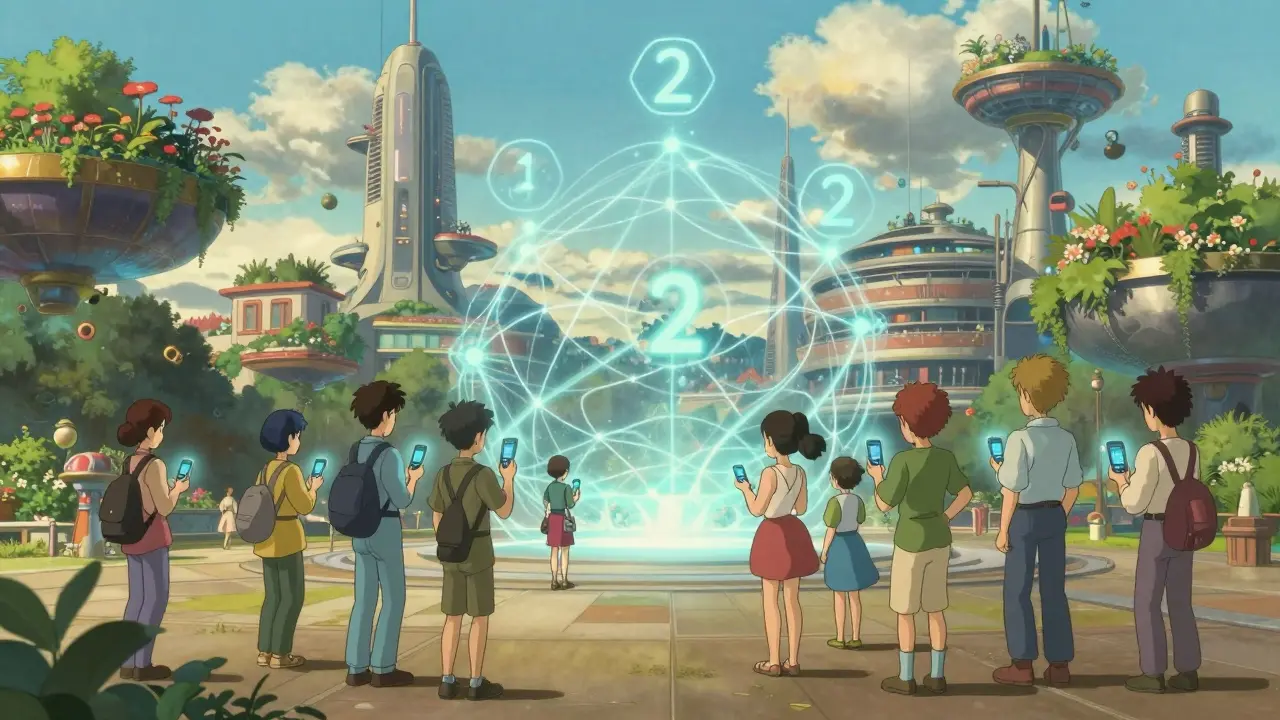
The Shift Toward Transaction Fees
There is a looming question in the industry: what happens when the block subsidy hits zero? Around the year 2140, Bitcoin will stop minting new coins entirely. At that point, miners will be paid 100% in transaction fees.
This is already starting to happen. In 2015, fees were a tiny fraction of a miner's income. By late 2023, they made up nearly 24% of total revenue. This shift transforms the miner from a "coin hunter" into a "service provider." They are essentially charging a toll for the limited space available in each 1MB block.
However, this is a double-edged sword. If transaction volume drops or fees are too low, miners might shut down their machines. If the total hashrate (the amount of computing power) drops too low, the network becomes easier to attack. To solve this, many developers are pushing for Layer-2 solutions like the Lightning Network, which handles thousands of small payments off-chain and only records the final settlement on the main blockchain, keeping the base layer efficient but valuable.
Practical Realities: Solo Mining vs. Pool Mining
If you're thinking about getting into mining to earn these rewards, you have a big choice to make. Solo mining is the "lottery ticket" approach. You keep 100% of the reward if you find a block, but since the network is so massive, your chances of finding one are almost zero. Some solo miners go months without a single payout.
Most people use Mining Pools. A pool is basically a cooperative where thousands of miners combine their computing power. When the pool finds a block, the reward is split among everyone based on how much power they contributed. You get smaller, more frequent payouts, which makes it much easier to pay your electricity bills.
For example, a miner using a single Antminer S19 XP might only earn a tiny fraction of a BTC daily in a pool, but it's a steady stream. A solo miner with the same machine might earn nothing for a year and then suddenly hit a jackpot of 3.125 BTC. Most people can't afford that kind of risk.
What happens to the block reward after the final halving?
Once the maximum supply of 21 million BTC is reached (around 2140), the block subsidy becomes zero. From that point forward, miners will be compensated entirely through transaction fees paid by users to have their transactions processed.
Why do block rewards decrease over time?
The reward decreases to prevent inflation. By limiting the number of new coins entering the system, the network creates artificial scarcity, which is intended to make the currency a store of value rather than a currency that loses value as more is printed.
Is mining still profitable after the 2024 halving?
It depends on two main factors: your hardware efficiency and your electricity cost. Miners with the latest generation ASICs and electricity costs below $0.06/kWh typically remain profitable, while those with older machines often find their operations no longer cover the power bill.
What is the difference between a block reward and a transaction fee?
A block reward (subsidy) is newly created currency minted by the network to incentivize miners. A transaction fee is an existing amount of currency sent by a user to a miner to prioritize their transaction in the next block.
Do all cryptocurrencies have halving events?
No. While Bitcoin and Litecoin use halving, many other coins have different issuance schedules. Some have a fixed supply from day one, while others (like Ethereum) have an uncapped supply with rewards based on staking rather than mining puzzles.



Write a comment
Your email address will be restricted to us