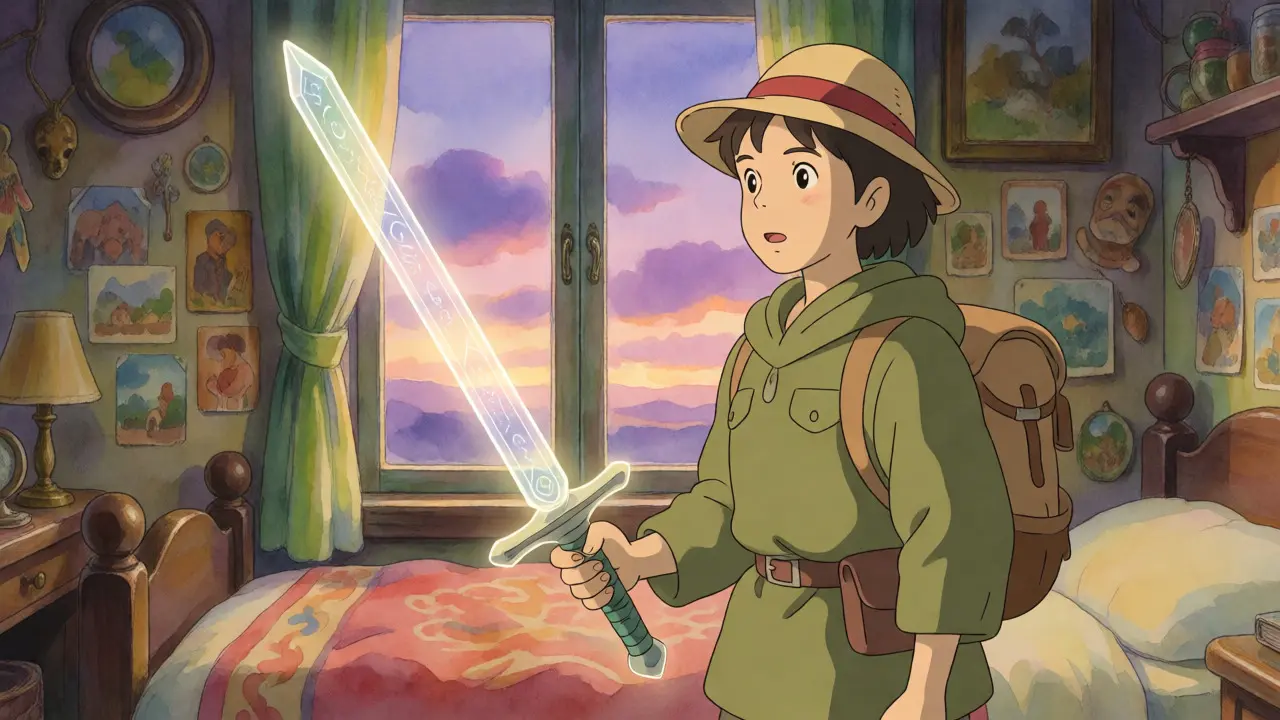
Remember the last time you spent hours grinding for a rare sword in an RPG, only to realize you didn't actually own it? You paid for it, sure. But if the servers shut down tomorrow, that sword vanishes into the digital ether. That’s the old way. Gaming NFTs are changing this dynamic by giving players true, provable ownership of their digital assets. They aren't just fancy JPEGs; they are unique tokens on a blockchain that let you buy, sell, and keep your loot even when you log off. If you’ve been confused by the hype or the hate around these tokens, you’re not alone. Let’s break down what they actually are, how they work, and whether they’re worth your time.
The Core Concept: Why "Non-Fungible" Matters in Games
To understand Gaming NFTs, you first need to grasp the term non-fungible token. In plain English, "fungible" means interchangeable. One dollar bill is exactly the same as another. Bitcoin is fungible. But your character’s skin in a game isn’t. It’s unique. An NFT is a digital certificate of authenticity stored on a blockchain. Think of the blockchain as a public ledger-a giant spreadsheet that everyone can see but no one can cheat. When you own a gaming NFT, your name (or rather, your wallet address) is permanently written next to that item’s ID number.
This solves a massive problem in traditional gaming. Usually, you license items from the developer. You don’t own them; you rent them. With NFTs, the asset lives on the chain, not just on the developer’s server. This means scarcity is real. If there are only 10,000 "Dragon Helmets" minted, the code proves it. No developer can quietly print more to dilute the value. This concept of provable scarcity turns digital items into collectibles with actual market value, similar to physical trading cards, but without the risk of someone swapping the card while you blink.
How Gaming NFTs Differ From Traditional In-Game Items
The difference isn't just technical; it's economic. In a standard game like World of Warcraft, if you find a legendary drop, you can trade it, but usually only within that game’s closed ecosystem. You can’t take that item out, put it on eBay, or use it in a different game. The economy is walled off.
Gaming NFTs break those walls. Because the token exists on a shared network like Ethereum or Polygon, it has a value defined by the open market, not just the game’s internal currency. Here is how the two models stack up:
| Feature | Traditional Asset | Gaming NFT |
|---|---|---|
| Ownership | Licensed by developer; revocable | True ownership via blockchain key |
| Transferability | Within game platform only | Sellable on open markets (e.g., OpenSea) |
| Scarcity | Controlled by dev patch notes | Coded limit; immutable |
| Value Retention | Zero if servers close | Persists as long as blockchain exists |
| Interoperability | None | Potential for cross-game use (future) |
This shift creates a new incentive structure. Players aren't just spending money; they are investing capital into assets they hope will appreciate. This leads us to the most popular implementation of this tech: Play-to-Earn.
The Play-to-Earn Model: Earning While You Grind
You’ve likely heard of Axie Infinity. During its peak in 2021, it wasn't just a game; it was a livelihood for thousands of people in the Philippines and Venezuela. How? By combining Gaming NFTs with cryptocurrency rewards. In this model, you buy three characters (NFTs), battle others, and earn governance tokens (like SLP). These tokens can be swapped for cash.
It sounds like free money, but it’s more complex. You have upfront costs. To start Axie Infinity back then, you needed to invest roughly $300-$500 just to buy the starter team. If the game’s popularity dropped-as it did-the value of both your NFTs and your earned tokens plummeted. This volatility is the double-edged sword of Web3 gaming. For some, it’s a paycheck. For others, it’s a risky speculative bet.
Not all games are pure Play-to-Earn, though. Many modern titles use a "Play-and-Earn" hybrid. You might earn cosmetic NFTs through skill rather than just grinding time. This aims to balance the fun factor with the financial incentive, trying to avoid the "treadmill" effect where players feel forced to play to pay bills rather than for enjoyment.
Technical Barriers: Wallets, Gas Fees, and Onboarding
If you want to try this, you can’t just download a game and click "Start." You need a crypto wallet. MetaMask is the industry standard here. Think of it as your bank account for the internet. You’ll also encounter "gas fees." These are transaction fees paid to miners or validators to process actions on the blockchain. On Ethereum, these could hit $50 for a single trade during congestion. That’s why many games migrated to Layer-2 solutions like Immutable X or chains like Solana, where fees are fractions of a cent.
The learning curve is steep. A 2022 survey showed that 43% of new users struggled with wallet connectivity. You have to manage private keys-if you lose them, you lose your assets forever. There is no "Forgot Password" button in DeFi. For non-crypto natives, this friction kills the experience before it begins. Developers are working on "custodial wallets" that hide the complexity, but purists argue this defeats the purpose of decentralization.
The Controversy: Scams, Volatility, and Environmental Impact
Let’s address the elephant in the room. Critics call Gaming NFTs a bubble. And sometimes, they’re right. The market saw a 90% correction in 2022. Many projects were "rug pulls," where developers took the initial investment and vanished. Steam, the largest PC gaming store, banned NFT games entirely in 2021, citing concerns over speculation and environmental impact.
Speaking of environment, early proof-of-work blockchains like Ethereum consumed massive amounts of energy-up to 707 kWh per transaction at one point. However, since Ethereum’s "Merge" in 2022, which switched to proof-of-stake, energy consumption dropped by over 99%. Most gaming-focused chains were already low-energy. So, while the criticism was valid in 2021, it’s less relevant in 2026.
Still, skepticism remains. Jason Schreier of Bloomberg famously called NFTs "a solution in search of a problem." His argument? Most gamers just want a good game. If the gameplay isn’t fun, no amount of blockchain tech will save it. The best projects now focus on utility first, tokenomics second.

Key Takeaways
- True Ownership: Gaming NFTs give you legal and technical control over your digital items, allowing you to sell them outside the game.
- Volatility Risk: Asset values can swing wildly based on crypto market trends, not just game performance.
- Entry Costs: Expect upfront investments for characters or land, plus gas fees for transactions.
- Evolution: The sector is moving from pure speculation to utility-driven models with better user experiences.
Frequently Asked Questions
Do I need to be a crypto expert to play NFT games?
Not necessarily. While understanding basics helps, many modern games use custodial wallets or simple interfaces that handle the blockchain complexity for you. However, knowing how to secure your private keys is essential to avoid losing your assets.
Can I use my NFTs in multiple games?
Technically yes, because the token exists on the blockchain independently of any specific game. Practically, no. Most games do not yet support interoperability, meaning you can't take your Axie Infinity sword into a Call of Duty match. Cross-game compatibility is a future goal, not a current standard.
Are Gaming NFTs bad for the environment?
This concern is largely outdated for major platforms. Since Ethereum switched to proof-of-stake in 2022, its energy usage dropped by over 99%. Most gaming-specific blockchains like Polygon and Solana were designed to be energy-efficient from the start.
What happens if the game studio shuts down?
Your NFT still exists on the blockchain. You won't be able to play the game anymore, but you retain ownership of the token. Its resale value might drop significantly since there's no active player base, but it doesn't disappear like a traditional in-game item would.
Is Play-to-Earn sustainable?
Pure Play-to-Earn models often struggle because they rely on new players funding old players' earnings (a Ponzi-like structure). Sustainable models are shifting toward "Play-and-Earn," where revenue comes from external sources like advertising, brand partnerships, or micro-transactions, rather than just new investor capital.
Next Steps for Curious Gamers
If you’re intrigued but wary, start small. Don’t dump your savings into a new project. Pick a game with a strong community and a free-to-play entry point. Try setting up a MetaMask wallet with just $20. Buy one cheap NFT. Sell it. Feel the flow of funds. This low-risk experiment teaches you the mechanics without breaking the bank. Keep an eye on developments from studios like Ubisoft and Electronic Arts, as their eventual full-scale adoption will likely bring mainstream polish to the space. Until then, treat every NFT purchase as a speculative hobby, not a guaranteed income stream.