You’ve probably seen the name Crypto Inu (ABCD) pop up in a search result or maybe on a small exchange listing. It promises to be a community-driven coin with a built-in real-estate game. But does it actually work? Is it safe? Or is it just another forgotten experiment from the early days of meme-inspired tokens?
If you are holding some ABCD tokens right now and wondering why they seem impossible to sell, or if you are just curious about what this project actually is, you are in the right place. We will break down exactly what Crypto Inu claims to be, how its technology works, and-most importantly-the harsh reality of its current market status as of mid-2026.
The Quick Reality Check: What Is Crypto Inu (ABCD)?
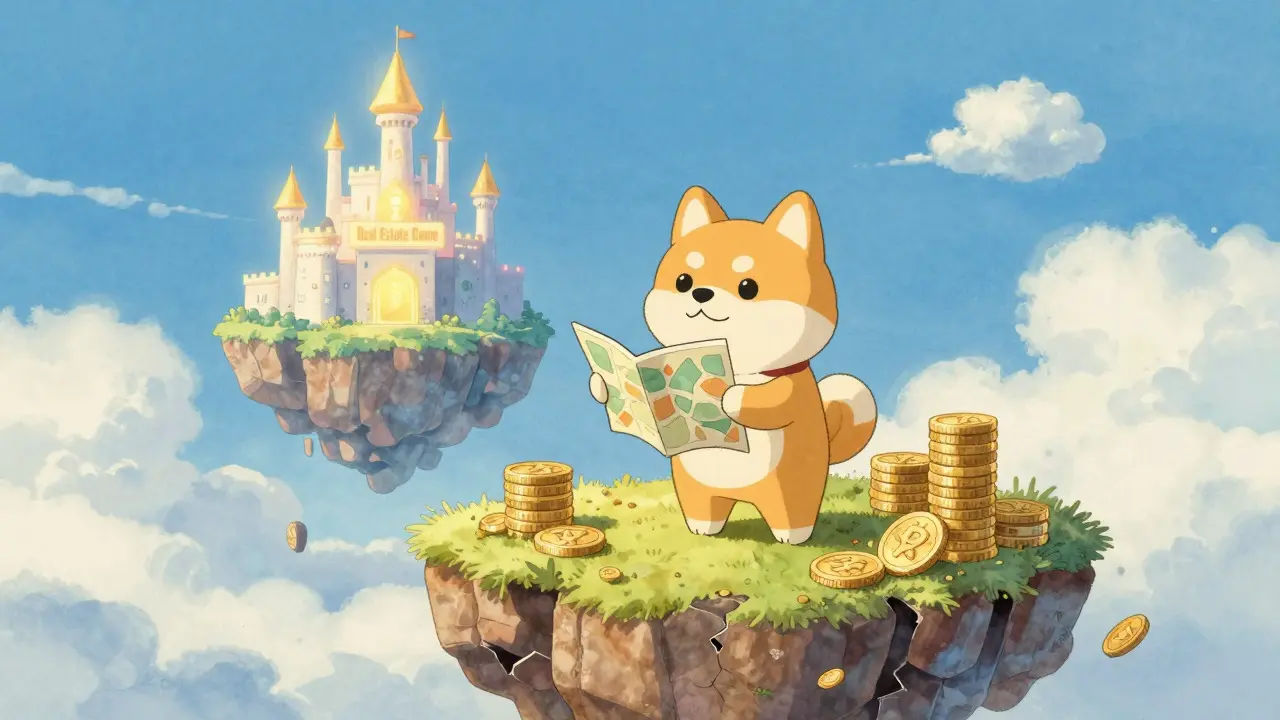
Crypto Inu (ABCD) is a cryptocurrency token launched on January 22, 2022, designed to operate on the BNB Smart Chain using the BEP20 standard. It was marketed as a dual-purpose asset: a peer-to-peer currency that rewards holders through automated farming, and the backbone for a multiplayer blockchain real-estate game inspired by Monopoly but featuring NFTs.
Here is the short version of where things stand today:
- Blockchain: BNB Smart Chain (BSC)
- Total Supply: 47.35 trillion ABCD tokens
- Contract Address: 0xa0cc3a881aef241d6cb3b7db3168bd26094560be
- Market Status: Extremely low liquidity, negligible trading volume, and minimal active development.
While the initial pitch sounded ambitious, combining DeFi rewards with play-to-earn mechanics, the execution has fallen far short of expectations. Most major data aggregators classify it as a micro-cap token with virtually no daily trading activity.
How Does The Crypto Inu Ecosystem Claim To Work?
To understand why people bought into ABCD back in 2022, we need to look at its two main pillars: the financial side and the gaming side.
Automated Rewards Farming
The core financial mechanism promised by Crypto Inu is Automated Rewards Farming. This means that simply holding your tokens in a compatible wallet should theoretically generate more ABCD over time. The idea is to incentivize long-term holding (often called "HODLing") without requiring users to actively stake their coins in complex pools. You buy the token, you keep it, and the protocol distributes rewards automatically.
In practice, however, these rewards are only valuable if you can eventually spend or sell them. With near-zero liquidity, receiving more tokens doesn't necessarily increase your wealth-it just increases the number of unsellable assets in your wallet.
The Blockchain Real-Estate Game
The second pillar is the game itself. Crypto Inu described its platform as a multiplayer board game similar to Monopoly. Players would use ABCD tokens to buy properties, which were represented as Non-Fungible Tokens (NFTs). The goal was to create a circular economy where playing the game required buying the token, and winning the game generated rewards.
The project even touted features like "3D and VR modes" to make the experience immersive. However, independent checks of public repositories and user reviews show zero evidence of functional VR implementation or an active player base. As of 2024 and continuing into 2026, there are no verified reports of actual gameplay occurring on the platform.
Technical Specifications: Under The Hood
If you are technical enough to check the contract yourself, here are the specific details you need to verify before interacting with ABCD. Note that while early documentation mentioned Ethereum, all current authoritative sources confirm it lives exclusively on the BNB Smart Chain.
| Attribute | Value / Detail |
|---|---|
| Network | BNB Smart Chain (BSC) |
| Token Standard | BEP20 |
| Contract Address | 0xa0cc3a881aef241d6cb3b7db3168bd26094560be |
| Decimals | 9 |
| Total Supply | 47.35 Trillion |
| Security Audits | None publicly documented |
The use of 9 decimal places is notable. It allows for very small fractional transactions, which is useful for micro-payments within games. However, without a functioning game or exchange liquidity, this technical feature offers little practical benefit to the average holder.
The Liquidity Problem: Why You Can’t Sell
This is the most critical section for anyone holding ABCD. If you have tried to sell your tokens on decentralized exchanges like PancakeSwap and failed, you are not alone. The issue isn't your wallet; it's the market structure.
Liquidity refers to the amount of money available in a pool to facilitate trades. For a healthy token, you need a deep pool so that when you sell, someone else buys. For Crypto Inu, the liquidity pool is essentially empty.
- Trading Volume: Major trackers like CoinMarketCap and LiveCoinWatch have recorded 24-hour trading volumes as low as $0 to $86 at various points in recent years. Compare this to established gaming tokens like Gala or Enjin, which handle millions in daily volume.
- Slippage Issues: Users report needing to set slippage tolerance to extreme levels (0.5% or higher) just to attempt a trade, and even then, transactions fail due to insufficient liquidity.
- Holder Discrepancy: While records show over 300,000 unique holders, the number of *active* addresses moving funds is tiny (sometimes fewer than 12 per day). This suggests many wallets are dormant or belong to bots/distributors rather than active traders.
When volume drops to near zero, the price becomes meaningless. A listed price might show $0.09 on one site and <$0.000001 on another because there are no actual trades happening to establish a fair market value. This is a classic sign of a "zombie token"-one that exists on the ledger but has no economic life.
Risk Assessment: Is Crypto Inu Safe?
Let’s be direct: investing in low-cap, low-liquidity tokens carries extreme risk. Here is how Crypto Inu stacks up against common red flags identified by blockchain analytics firms like Chainalysis.
- No Security Audit: There is no record of an independent security firm auditing the smart contract. This means vulnerabilities could exist that allow developers to manipulate supply or halt transfers.
- Zero Development Activity: Public code repositories (like GitHub) associated with the project show zero commits. No new features, bug fixes, or updates have been pushed since the early stages.
- Negligible Market Cap: With a market capitalization often fluctuating below $20,000, ABCD sits in the bottom 0.5% of all tracked cryptocurrencies. These tokens are highly susceptible to abandonment.
- Community Sentiment: Social sentiment analysis across Reddit, Twitter, and Telegram channels shows overwhelmingly negative feedback. Common complaints include "stuck tokens," "no utility," and "abandoned project."
Industry analysts generally categorize tokens with these characteristics as high-risk speculative assets. They lack the institutional backing, transparent team structure, and active user base required for long-term sustainability.
How To Check Your ABCD Balance Safely
If you hold ABCD and want to verify your balance without falling for scams, follow these steps carefully. Never connect your primary wallet to unverified dApps.
- Use a Trusted Wallet: MetaMask or Trust Wallet are standard choices. Ensure you are on the BNB Smart Chain network.
- Add the Token Manually: Go to your token list settings and select "Add Token." Paste the official contract address:
0xa0cc3a881aef241d6cb3b7db3168bd26094560be. Double-check every character. - Verify on Block Explorer: Copy your wallet address and paste it into BscScan.com. Search for your address and look for the ABCD token tab. This shows your true on-chain balance, regardless of what a broken app might display.
- Avoid "Recovery" Scams: If you receive a DM on Telegram or Twitter claiming they can help you "recover" or "sell" your ABCD, it is a scam. No one can force a sale if there is no liquidity. Keep your seed phrase private.
Comparisons: How ABCD Stacks Up Against Gaming Tokens
To put Crypto Inu’s position in perspective, let’s compare it to legitimate projects in the blockchain gaming space. These comparisons highlight why ABCD has struggled to gain traction.
| Feature | Crypto Inu (ABCD) | Gala Games (GALA) | The Sandbox (SAND) |
|---|---|---|---|
| Market Cap (Approx.) | <$20,000 | $500M+ | $350M+ |
| Active User Base | Negligible | High | High |
| Game Functionality | Unverified / Abandoned | Multiple Live Games | Live Metaverse Platform |
| Liquidity | Extremely Low | High | High |
| Development Activity | None | Active | Active |
The gap is stark. Established projects have teams, partnerships, and working products. Crypto Inu relies on outdated marketing materials with no corresponding on-chain activity.
Final Thoughts: What Should You Do?
If you are looking for a promising investment in crypto gaming, Crypto Inu is likely not the answer. The combination of zero liquidity, abandoned development, and negative community sentiment makes it a high-risk hold with little upside potential.
However, if you are already holding the tokens, treat them as a sunk cost. Do not invest more money trying to "average down" or buy additional NFTs from the ecosystem. Monitor the contract via BscScan for any unexpected changes, but expect minimal movement in value or utility. In the world of crypto, attention is currency-and Crypto Inu has largely lost its audience.
Is Crypto Inu (ABCD) a scam?
While there is no definitive legal ruling labeling it a scam, it exhibits many red flags associated with abandoned projects or "rug pulls." These include zero liquidity, no security audits, no active development, and a complete lack of functional utility despite grand promises. Treat it with extreme caution.
Where can I buy or sell Crypto Inu?
ABCD is primarily traded on decentralized exchanges like PancakeSwap on the BNB Smart Chain. However, due to extremely low liquidity, selling large amounts may be impossible without significant slippage, or entirely untradeable. Always check the current liquidity pool depth before attempting a transaction.
Does the Crypto Inu game actually work?
There is no verifiable evidence that the multiplayer real-estate game functions as advertised. User reports and technical analyses indicate zero active players and no working VR or 3D features. The game appears to be part of the original marketing pitch rather than a live product.
Why is my ABCD balance showing as zero value?
This happens because there are no recent trades to establish a market price. Exchanges and trackers rely on the last known trade price. If no one has bought or sold ABCD in months, the price may default to zero or an outdated figure, making your holdings appear worthless on paper, even if you still own the tokens.
Is it safe to add the ABCD contract to my wallet?
Adding a token contract to your wallet for viewing purposes is generally safe, provided you use the correct address (0xa0cc3a881aef241d6cb3b7db3168bd26094560be). However, avoid interacting with any unofficial dApps claiming to manage your ABCD, as they could contain malicious code. Stick to reputable block explorers like BscScan for verification.