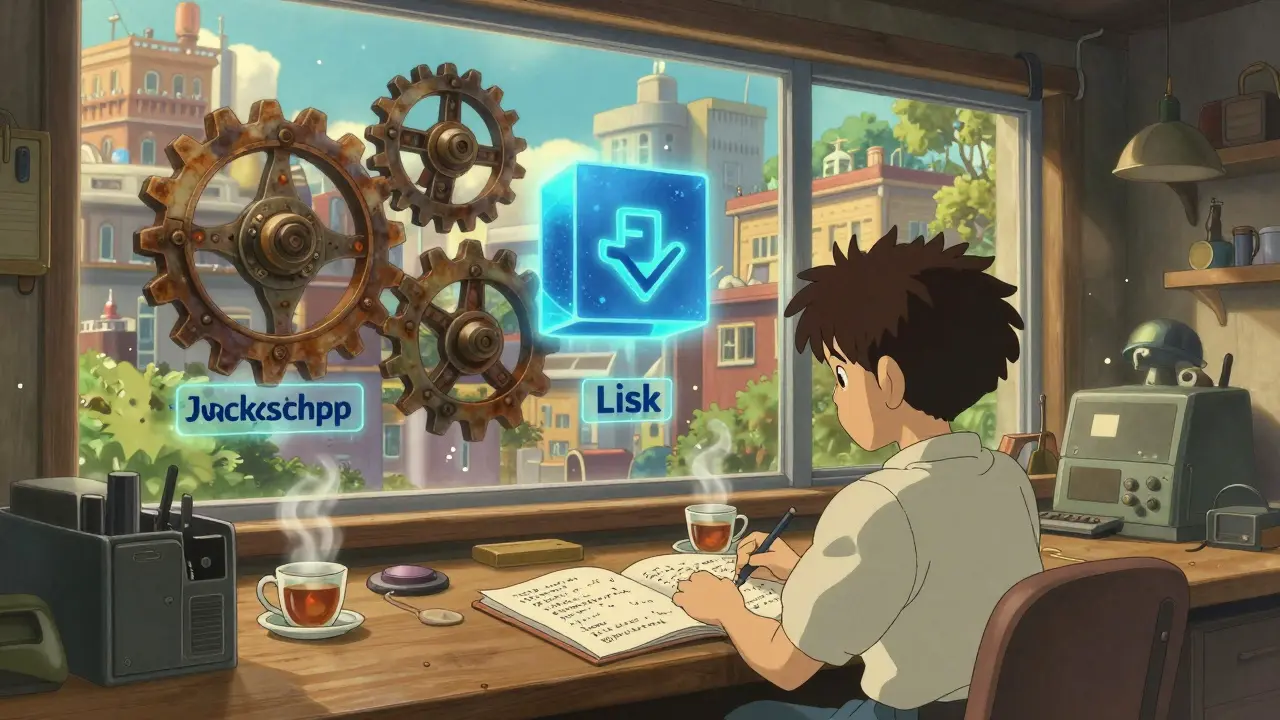
Remember when everyone said you needed to be a coding wizard to build on the blockchain? That was the reality for early Ethereum developers who had to master Solidity. Then came Lisk (LSK), a project that promised anyone who knew JavaScript could build decentralized applications. Launched in 2016, Lisk was once a top-tier player, boasting a market cap over $1 billion and raising 14,000 BTC in its initial coin offering. But like many altcoins from that era, it faced a long winter of declining prices and shifting relevance.
Today, Lisk has reinvented itself. It is no longer just an independent Layer 1 blockchain trying to compete with Ethereum head-on. Instead, it has pivoted to become an Ethereum Layer 2 network focused on low-cost Web3 adoption in emerging markets. This shift aligns it with major scaling solutions like Arbitrum and Optimism, but with a unique focus on geographic niches where transaction fees matter most.
The Evolution: From Sidechains to Ethereum Layer 2
To understand what Lisk is today, you have to look at where it started. Founded by Max Kordek and Oliver Beddows in early 2016, Lisk began as a fork of a project called Crypti. Its original vision was bold: create a platform where every decentralized application (dApp) ran on its own sidechain. These sidechains were linked to the main Lisk chain but operated independently. This meant if one app crashed or got congested, it didn’t bring down the whole network.
This architecture used Delegated Proof-of-Stake (DPoS), where 101 elected delegates forged blocks. It was energy-efficient and fast, with block times around 10 seconds. However, despite its technical merits, Lisk struggled to maintain developer momentum against the rising tide of Ethereum’s ecosystem and newer chains like Solana and Binance Smart Chain. By 2020, its market dominance had faded significantly.
The turning point came with a strategic pivot. Recognizing the power of Ethereum’s security and liquidity, Lisk repositioned itself as an Ethereum Layer 2 solution. According to recent data from Quidax and CoinGecko, the modern Lisk network is now based on Optimism (OP) technology, secured by Ethereum’s base layer. This means Lisk uses optimistic rollups to batch transactions off-chain and post them to Ethereum for final settlement. This move allows Lisk to offer the security of Ethereum while keeping transaction costs pennies instead of dollars.
Why JavaScript Still Matters for Developers
One of Lisk’s enduring strengths is its commitment to JavaScript. While most smart contract platforms force developers to learn new languages like Solidity, Rust, or Move, Lisk originally built its SDK entirely in JavaScript. Even as it transitions to an Ethereum L2, this heritage remains relevant. JavaScript is the most widely used programming language in the world, powering the vast majority of web applications.
For a web developer accustomed to Node.js and React, building on Lisk feels familiar. You don’t need to unlearn your existing skills. This lowers the barrier to entry significantly. If you want to launch a dApp quickly without hiring expensive specialized blockchain engineers, Lisk’s tooling offers a smoother path. The Lisk Foundation and its development arm, Lightcurve GmbH, continue to support this approach, ensuring that the bridge between traditional web development and Web3 remains open.

Focus on Emerging Markets
What sets Lisk apart from other Ethereum Layer 2s like Arbitrum or Base is its target audience. While many L2s focus on DeFi giants in the US and Europe, Lisk explicitly targets emerging markets such as Africa, Southeast Asia, and Latin America. In these regions, high transaction fees are not just an inconvenience; they are a dealbreaker. A $5 fee to send $10 makes no sense.
Lisk addresses this by integrating local on/off-ramps directly into its ecosystem. This allows users to buy, sell, and use crypto with local fiat currencies easily. Imagine a freelancer in Nigeria receiving payment in LSK and converting it to Naira instantly with minimal friction. Or a small business in Brazil using micro-payments for inventory tracking without worrying about gas spikes. This focus on financial inclusion gives Lisk a clear mission beyond just technical specs.
Tokenomics and Market Performance
The LSK token serves multiple roles within the ecosystem. Historically, it was used to pay for transaction fees, reward forging delegates, and participate in governance. As an L2, its utility evolves but remains central. Holders can stake LSK to secure the network and earn rewards. The total supply is capped at 400 million LSK, with approximately 200 million currently in circulation. This deflationary pressure, combined with burning mechanisms often found in L2 ecosystems, can influence price dynamics over time.
| Metric | Value |
|---|---|
| Circulating Supply | ~200 Million LSK |
| Total Supply Cap | 400 Million LSK |
| Consensus Mechanism | Optimistic Rollup (Secured by Ethereum) |
| Primary Use Case | Web3 Adoption in Emerging Markets |
| Development Language | JavaScript / TypeScript |
Market performance tells a story of volatility. LSK hit an all-time high of around $35 in 2018 during the last bull run. Since then, it has traded mostly between $0.10 and $0.50. As of mid-2026, it ranks around #500 in market capitalization. This indicates that while it has a dedicated community, it is no longer a blue-chip asset. Investors should view it as a high-risk, high-reward play on the success of its emerging market strategy rather than a stable store of value.
How Lisk Compares to Other Layer 2s
If you are considering building on or investing in Lisk, it helps to see how it stacks up against competitors. Here is a quick comparison:
- Arbitrum & Optimism: These are general-purpose L2s with massive Total Value Locked (TVL). They have broader developer ecosystems but less specific focus on emerging markets.
- Polygon: Polygon also focuses heavily on emerging markets and has strong partnerships in India and Africa. It is Lisk’s closest direct competitor in terms of mission.
- Solana: Solana offers high speed and low fees but operates as a separate Layer 1. It does not benefit from Ethereum’s security model, which some users prefer.
Lisk’s niche is its combination of Ethereum security, JavaScript familiarity, and targeted geographic focus. It doesn’t try to be everything to everyone.
Is Lisk Safe?
Security in blockchain comes from two sources: code quality and economic incentives. Since Lisk is now an Ethereum Layer 2 secured by Optimism technology, it inherits Ethereum’s robust security. Transactions are finalized on Ethereum, meaning an attacker would need to compromise Ethereum itself to reverse Lisk transactions-a highly unlikely scenario.
Additionally, the Lisk Foundation, a non-profit based in Zug, Switzerland, oversees the project’s direction. Lightcurve GmbH in Berlin handles core development. This separation of governance and execution is a common and healthy structure in the crypto industry. However, always remember that smart contracts can have bugs. Never invest more than you can afford to lose, and always verify contracts through official channels.
Can I still build dApps on Lisk using JavaScript?
Yes. Lisk continues to prioritize JavaScript and TypeScript for its development tools. While it now integrates with Ethereum, the underlying philosophy of making blockchain accessible to web developers remains intact. You can deploy smart contracts and interact with the network using familiar JS libraries.
What is the difference between old Lisk and new Lisk?
Old Lisk was an independent Layer 1 blockchain with its own sidechains and DPoS consensus. New Lisk is an Ethereum Layer 2 network using Optimism-style rollups. This change provides better security, lower fees, and access to Ethereum’s liquidity, but it means Lisk is no longer a standalone chain.
Where can I buy LSK tokens?
You can buy LSK on major cryptocurrency exchanges such as Binance, HitBTC, and Kraken. Many of these platforms offer direct fiat trading pairs, allowing you to purchase LSK with USD, EUR, or GBP. Always ensure you are using a reputable exchange and enabling two-factor authentication.
Is Lisk a good investment for beginners?
Lisk is considered a higher-risk asset due to its smaller market cap and historical volatility. Beginners might find it easier to start with established assets like Bitcoin or Ethereum. However, if you believe in the potential of Web3 adoption in emerging markets, Lisk offers a unique exposure to that narrative. Do your own research before investing.
Who founded Lisk?
Lisk was founded by Max Kordek and Oliver Beddows in 2016. They launched the project after forking Crypti and successfully raising 14,000 BTC in one of the largest ICOs of that year. Today, the project is governed by the Lisk Foundation and developed by Lightcurve GmbH.






Write a comment
Your email address will be restricted to us