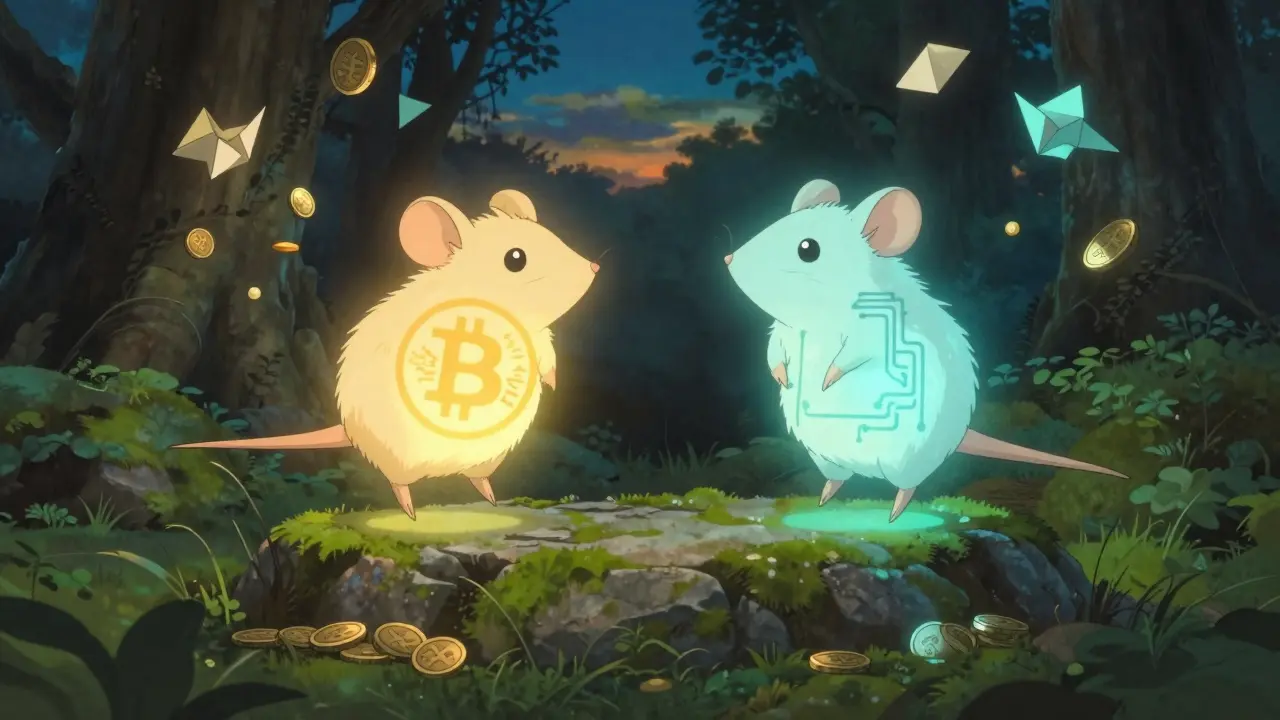
There are two completely different cryptocurrencies called Ratscoin (RATS). And if you’re trying to buy, trade, or even understand it, you’re walking into a mess designed to confuse you.
One version runs on Bitcoin. The other runs on Ethereum. They share the same name, the same ticker, and almost no other similarities. If you buy the wrong one, you could lose your money forever. This isn’t a glitch. It’s by design - and it’s happening right now.
The Bitcoin version: RATS as a BRC-20 token
The first Ratscoin appeared in mid-2023 as a BRC-20 token built on Bitcoin. Unlike traditional tokens, BRC-20 doesn’t use smart contracts. Instead, it uses Bitcoin’s inscription system - the same tech that made Ordinal NFTs popular. Think of it like carving a message into a Bitcoin block, but instead of text, you’re inscribing a token.
This version of RATS was created on the Unisat platform, the same place where ORDI and NALS took off. It’s a meme coin through and through. No team. No roadmap. No utility beyond being a speculative bet on Bitcoin’s growing ordinals trend. Its price jumped from $0.00000244 to $0.00007299 in weeks, a 2,000% spike that attracted traders chasing quick gains. But here’s the catch: even at its peak, the total value of all RATS on Bitcoin was less than $5 million. That’s pocket change compared to Bitcoin’s $1 trillion market cap.
There are only about 1,200 unique wallets holding this version. That’s not a community. That’s a small group of people betting on hype. And as of October 2023, trading volume dropped by 93% from its peak. The momentum is gone.
The Ethereum version: RATS as a reflection token
The second Ratscoin is an ERC-20 token on Ethereum. This one claims to be “hyper-deflationary” and rewards holders with automatic payments. Every time someone trades RATS on this chain, 2% of the transaction is redistributed to everyone else holding the token. That’s the same model used by SafeMoon and other tokens that blew up in 2021 - and collapsed by 99.9% within a year.
The marketing says: “Simply love, pet, and hold.” It sounds cute. It’s designed to feel like a reward system, not a gamble. But here’s the reality: this isn’t a reward. It’s a Ponzi structure. The only way you make money is if new people keep buying in. When the new buyers stop, the price crashes - and the people who bought early cash out. That’s exactly what happened with SafeMoon.
Holder.io lists this version with a $22.1 million fully diluted valuation. But CoinMarketCap shows zero circulating supply. CoinPaprika says the market cap is $0. The data is broken. That’s not a bug. It’s a red flag. No legitimate project lets its market data be this inconsistent.
Why the confusion exists - and why it’s dangerous
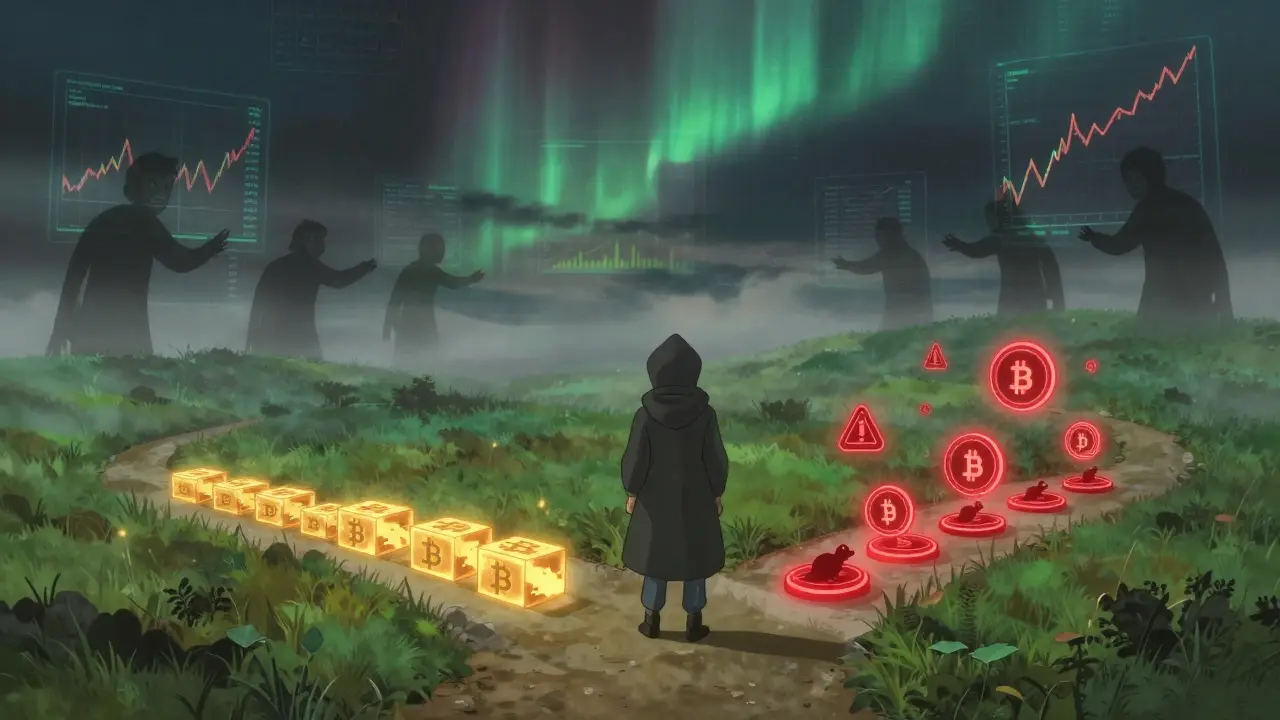
Exchanges list both tokens under the same symbol: RATS. If you search for Ratscoin on Binance, PancakeSwap, or KuCoin, you’ll see one listing. But behind that one name are two completely different assets with different contract addresses, different blockchains, and different risks.
Users are getting burned. On Reddit, someone posted they bought RATS thinking it was the Bitcoin version - but got the Ethereum one instead. They lost $127 because they sent Ethereum tokens to a Bitcoin wallet address. That’s not a mistake you can undo. That money is gone forever.
Trustpilot reviews for exchanges listing RATS show 63% of complaints are about this exact issue: “I didn’t know there were two versions.” Support teams don’t clarify. The websites don’t explain. You’re left to figure it out yourself - and most people don’t have the time or knowledge to do it right.
What you need to know before touching RATS
If you’re still considering RATS, here’s what you must do:
- Check the blockchain. Is it on Bitcoin (BRC-20) or Ethereum (ERC-20)? They are not interchangeable.
- Find the contract address. For Ethereum RATS, the official contract is 0x... (exact address varies - verify on Etherscan). For Bitcoin RATS, there’s no contract. You need the inscription ID from Unisat.
- Use the right wallet. Bitcoin RATS requires a wallet that supports inscriptions - like Unisat Wallet. Ethereum RATS needs MetaMask or Trust Wallet.
- Don’t trust price charts. One site says $0.000022. Another says $0.000000. Neither is reliable. Volume is tiny. Liquidity is near zero.
- Assume you’ll lose money. There’s no team, no product, no real use case. This is pure speculation. Even if you get lucky, you’re gambling on a token that experts classify as high-risk and likely to collapse.
Is Ratscoin worth it?
No.
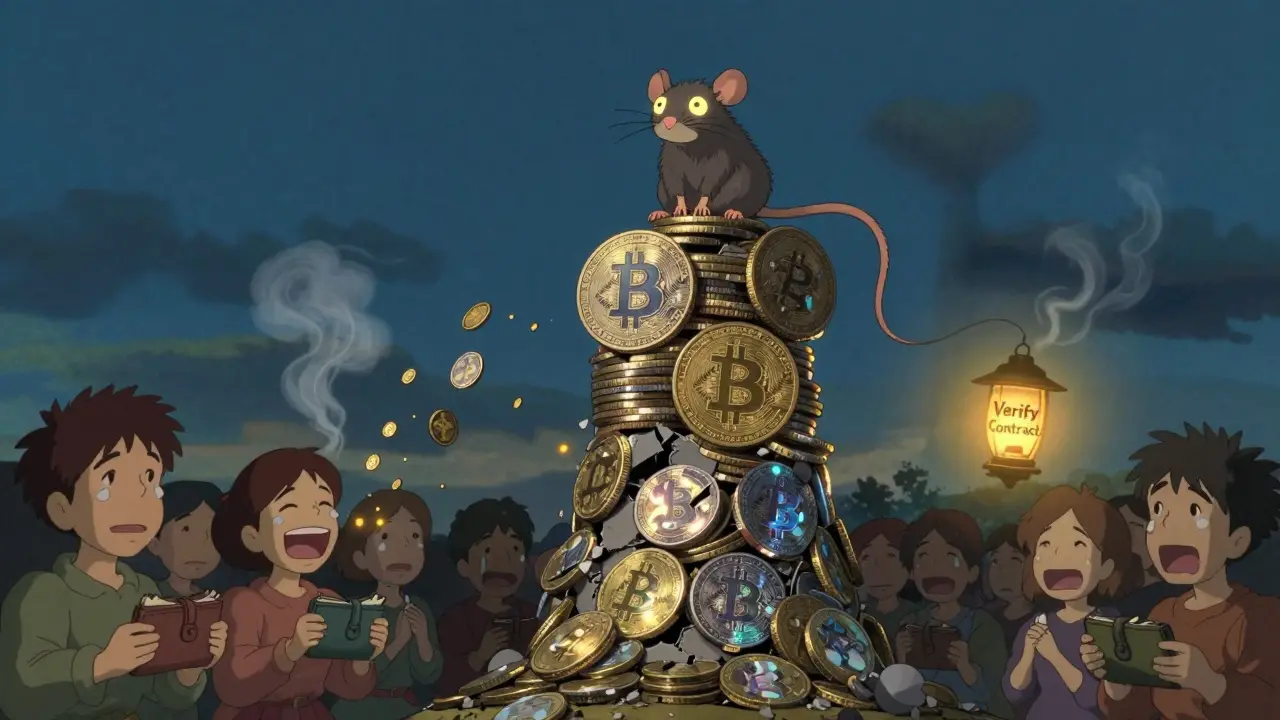
Not because it’s a scam - though many think it is. But because it’s meaningless. There’s no innovation here. No technology being improved. No problem being solved. Just two copies of a meme coin riding on two different trends: Bitcoin ordinals and Ethereum reflection tokens.
Both trends are fading. Bitcoin ordinals are causing network congestion and drawing regulatory scrutiny. Reflection tokens are seen as outdated gimmicks after SafeMoon, Doge Killer, and others imploded. RATS doesn’t stand out. It doesn’t lead. It doesn’t improve.
Even the people who made money on it admit it was luck. One user on CoinGecko said they bought RATS at $0.000003 and sold at $0.000025 for a 20,000% gain in two weeks. That’s not investing. That’s winning a lottery. And the odds are getting worse.
What’s next for Ratscoin?
Nothing.
There’s no GitHub activity. No official blog. No team announcements. No updates since late 2023. The developers are silent. The community is fragmented. The trading volume is collapsing.
Industry analysts from CoinDesk and Chainalysis rate RATS as high-risk with low viability. The “Crypto Viability Index” gave it a 2.1 out of 10. That’s lower than most joke coins.
If you’re looking for a cryptocurrency with real potential, RATS isn’t it. If you’re looking for a gamble with a high chance of losing money, then maybe - but even then, there are better options.
At the end of the day, Ratscoin is a warning sign. It’s what happens when meme culture meets crypto without any guardrails. Two coins. One name. Zero clarity. And a whole lot of risk.
Is Ratscoin (RATS) a real cryptocurrency?
Yes, but not in the way most people think. There are two separate tokens called RATS - one on Bitcoin (BRC-20) and one on Ethereum (ERC-20). Neither has a team, roadmap, or real utility. They exist purely as speculative meme assets.
Can I buy Ratscoin on Coinbase or Binance?
Some exchanges list RATS, but they rarely clarify which version you’re buying. Binance lists it as a single entry, but it could be either the Bitcoin or Ethereum version. Always check the contract address or inscription ID before purchasing. Never trust the name alone.
Is the Ethereum RATS token a good investment?
No. The Ethereum version uses a reflection model that rewards holders with transaction fees. This is a classic Ponzi structure - early buyers profit only when new money enters. Once buying slows, the price crashes. Tokens like SafeMoon with the same model lost over 99% of their value. RATS has no advantage over them.
What’s the difference between BRC-20 and ERC-20 RATS?
BRC-20 RATS runs on Bitcoin using inscription technology. It has no smart contract. ERC-20 RATS runs on Ethereum and uses a 2% transaction tax that redistributes tokens to holders. They are completely separate. Sending one to a wallet for the other will permanently destroy your funds.
Why do some sites say RATS has a $22 million market cap while others say $0?
Because the data is unreliable. Different platforms track different versions. Some use fully diluted valuation (total supply × price), which inflates numbers. Others show zero trading volume or no circulating supply. This inconsistency is a major red flag - legitimate projects have clear, verified data across all platforms.
Should I invest in Ratscoin?
Only if you’re okay losing your money. There’s no team, no utility, no long-term plan. The price swings are based on hype, not fundamentals. Even if you make a quick profit, you’re gambling on a token that experts classify as high-risk and likely to vanish. Better options exist.





Write a comment
Your email address will be restricted to us