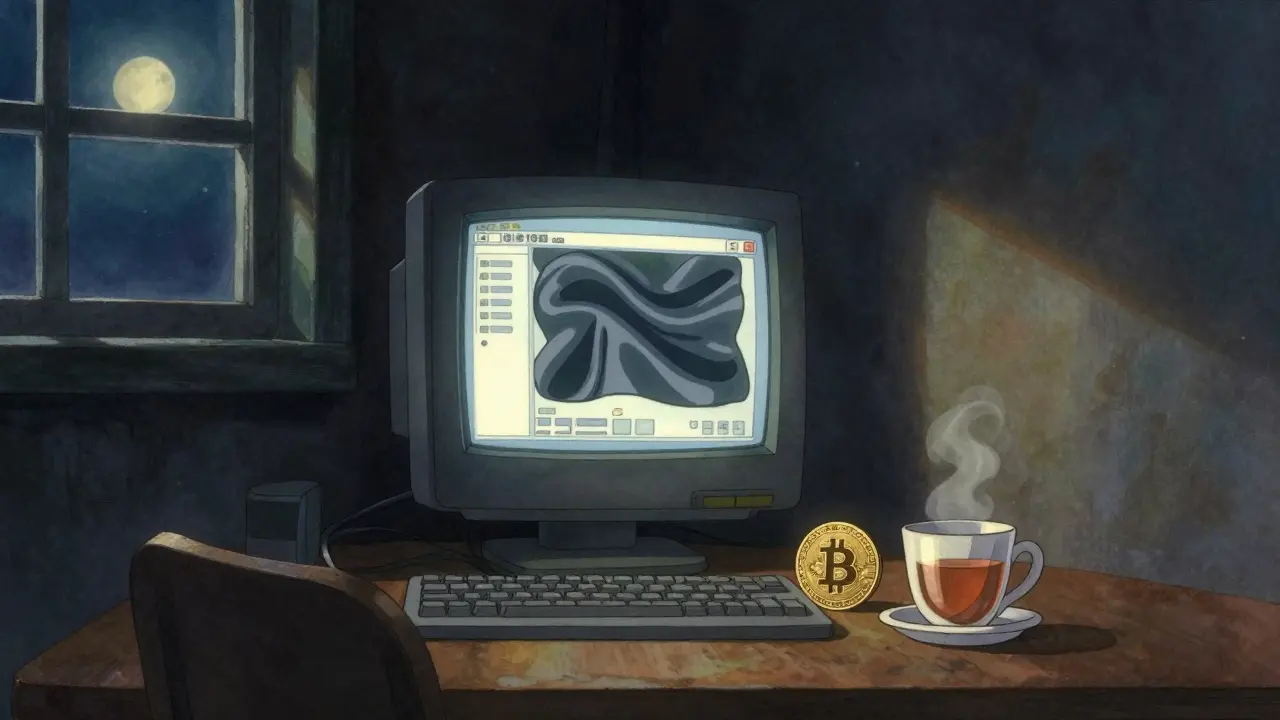
If you're searching for a Silk Road crypto exchange review, you might have stumbled upon a dangerous misunderstanding. Here is the bottom line: Silk Road was never a cryptocurrency exchange. It didn't let you trade Bitcoin for Ethereum or swap your coins for US dollars. Instead, it was a darknet marketplace-essentially an illegal version of Amazon or eBay-where people used Bitcoin to buy drugs and other contraband. Trying to find a "review" of it as a trading platform is like looking for a review of a casino as a library; it simply wasn't built for that.
| Feature | Silk Road (Marketplace) | Modern Exchange (e.g., Coinbase/Binance) |
|---|---|---|
| Primary Purpose | Selling illicit goods | Trading digital assets |
| Identity Verification | None (Anonymous) | Strict KYC/AML laws |
| Access Method | Tor Browser (.onion) | Standard Web Browser/App |
| Legal Status | Illegal (Shut down by FBI) | Regulated/Legal |
What exactly was Silk Road?
Launched in February 2011 by Ross Ulbricht, who used the name "Dread Pirate Roberts," Silk Road is a defunct darknet marketplace that operated as a hidden service on the Tor network. It wasn't a place to invest in crypto; it was a place to spend it. The platform enabled buyers and sellers to transact anonymously, with the site acting as a middleman to ensure the goods were shipped before the money was released.
The technical setup was simple for the time. Users downloaded the Tor Browser to hide their IP addresses and used a Bitcoin wallet to send funds. Because Bitcoin was new and pseudonymous, it provided the perfect payment layer for a business that wanted to avoid the prying eyes of banks and government regulators.
How the "Escrow" system worked
Since you can't call the police if a darknet vendor steals your money, Silk Road implemented an escrow system. When a buyer bought something, the Bitcoin didn't go straight to the seller. Instead, Silk Road held the funds in a temporary account. Once the buyer confirmed they received their package, the site released the money to the vendor, minus a commission of about 8% to 12%.
This created a "reputation economy." Vendors were rated by users, and those with 98% positive feedback became the "gold standard" of the site. It's a fascinating bit of social engineering-creating trust in a place where everyone is technically a criminal. However, this system wasn't foolproof. Many users reported that while the escrow protected them from total non-delivery, it didn't help if the product was low quality or misrepresented.

The scale of the operation
While it may seem like a small niche project, the numbers were staggering. During its 2.5 years of operation, Silk Road facilitated about $183 million in nominal Bitcoin transactions. If you adjust those numbers for the current value of Bitcoin, that amount balloons to over $1.2 billion. The site hosted nearly 147,000 buyers and almost 3,900 vendors.
The platform's growth was so rapid that it actually strained its own infrastructure. It originally ran on Amazon Web Services, but had to migrate to more secure, private servers by early 2012 because the traffic was simply too high for basic cloud hosting to handle while remaining hidden.
The fatal flaw and the FBI shutdown
The very thing that made Silk Road attractive-total anonymity-was also what led to its downfall. The site had a centralized administration. Everything relied on Ross Ulbricht. When the FBI finally tracked him down and arrested him in a San Francisco library on October 1, 2013, the entire operation collapsed within a day.
Law enforcement used blockchain analysis to track the flow of funds. Even though the users were hiding behind Tor, the Blockchain is a public ledger. By following the "breadcrumbs" of Bitcoin transactions, investigators could eventually link anonymous wallets to real-world identities. This was a turning point for the industry, proving that Bitcoin isn't actually anonymous-it's pseudonymous.

The lasting impact on crypto regulations
If you've ever wondered why you have to upload your passport and take a selfie to open an account on a modern exchange, you can thank Silk Road. The site's notoriety triggered a massive regulatory backlash. The U.S. Treasury's FinCEN issued its first major crypto guidance in 2013 specifically because of the Silk Road case.
This led to the creation of the "BitLicense" in New York and the broader Anti-Money Laundering (AML) and Know Your Customer (KYC) rules we see today. It essentially forced the crypto world to split into two camps: the regulated, legal exchanges that cooperate with governments, and the "darknet" markets that continue to operate in the shadows using more advanced privacy coins.
What happened to the Bitcoin?
When the FBI shut down the site, they didn't just arrest Ulbricht; they seized a massive hoard of Bitcoin. The government took about 144,336 BTC. At the time of the arrest, this was worth a few million dollars. By 2025, that haul was valued at over $9 billion.
The U.S. Marshals Service has spent years selling this Bitcoin off in chunks. Interestingly, these government "dumps" often affect the market. Research shows that when the government sells large amounts of seized Silk Road coins, it often causes a temporary dip in the price of Bitcoin across all exchanges.
Can I still access Silk Road today?
No. The original Silk Road was shut down by the FBI in 2013. Any site claiming to be the original Silk Road today is a scam designed to steal your cryptocurrency.
Was Silk Road a legitimate way to trade Bitcoin?
Absolutely not. It was a marketplace for illegal goods. It did not offer trading pairs or financial services like a legitimate exchange would.
Who was the founder of Silk Road?
Ross Ulbricht, operating under the pseudonym "Dread Pirate Roberts," created and managed the site until his arrest in 2013.
Why is Silk Road important for Bitcoin's history?
It was one of the first major use cases for Bitcoin, proving that the currency could facilitate global payments without a middleman. However, it also gave Bitcoin a lasting reputation for being linked to criminal activity.
What happened to Silk Road 2.0?
Silk Road 2.0 was launched shortly after the first site fell, but it was plagued by technical issues-including a $2.7 million theft due to transaction vulnerabilities-and was eventually shut down by law enforcement as well.








Write a comment
Your email address will be restricted to us